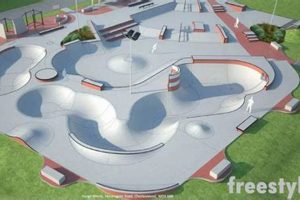
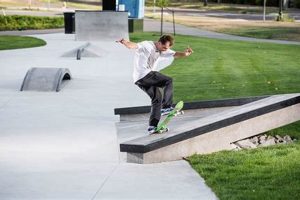
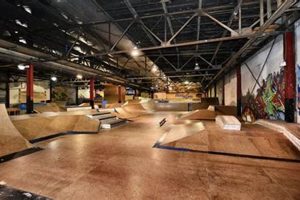
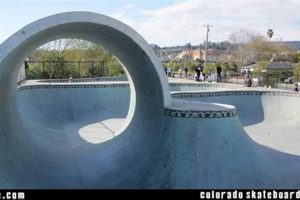
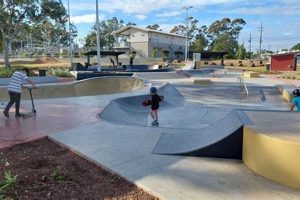
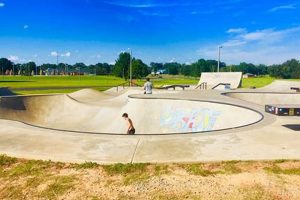
Facilities designed for skateboarding, BMX, and inline skating, characterized by expansive dimensions and a multitude of features, allow numerous users to engage in various skating disciplines simultaneously. These recreational spaces often incorporate elements such as bowls, ramps, rails, and street-like obstacles, providing a diverse and challenging environment for skaters of all skill levels.
The development of larger-scale skating environments fosters community engagement, provides a safe and controlled area for practicing complex maneuvers, and can serve as venues for competitive events. Historically, the creation of dedicated skating areas has reduced instances of skating in public spaces not designed for such activities, promoting safer interactions between skaters and pedestrians and minimizing property damage. Furthermore, these facilities offer opportunities for physical exercise and social interaction, contributing to the overall well-being of participants.
The subsequent sections will delve into the design considerations, construction techniques, notable examples globally, and the economic impact associated with the planning and operation of extensive, purpose-built skating environments.
Considerations for Maximizing Utility of Extensive Skateboarding Facilities
The following outlines strategies for optimizing the design, construction, and operational aspects of large-scale skateboarding venues to enhance user experience and promote community engagement.
Tip 1: Diverse Terrain Incorporation: Prioritize the inclusion of varied terrain features, encompassing both transition and street-style elements. This caters to a broader range of skating disciplines and skill levels. Example: Incorporating both a deep bowl section for experienced transition skaters and a street plaza with ledges and rails for technical street skaters.
Tip 2: Durable Material Selection: Employ high-quality, weather-resistant materials in construction. This minimizes maintenance requirements and ensures long-term structural integrity, particularly in areas subject to heavy use or extreme weather conditions. Example: Utilizing steel coping and reinforced concrete surfaces to withstand constant impact and abrasion.
Tip 3: Strategic Spatial Arrangement: Optimize the layout of the facility to facilitate efficient flow and minimize potential collisions. Clearly delineate areas designated for different skill levels and skating styles. Example: Separating beginner areas from advanced zones with physical barriers or visual cues to prevent overcrowding and accidents.
Tip 4: Adequate Lighting Infrastructure: Implement comprehensive lighting systems to ensure safe usability during evening hours. Properly illuminated facilities extend operating hours and promote accessibility for individuals with varying schedules. Example: Installing high-intensity LED lighting fixtures positioned to minimize glare and shadows across all skating surfaces.
Tip 5: Regular Maintenance Schedules: Establish a consistent maintenance program to address wear and tear, repair damaged surfaces, and maintain overall cleanliness. This proactive approach prevents minor issues from escalating into costly repairs and ensures a safe and enjoyable experience for users. Example: Implementing a weekly schedule for sweeping debris, repairing cracks, and inspecting safety features such as railings and padding.
Tip 6: Community Engagement Programs: Develop and implement community-based programs to foster a sense of ownership and promote responsible use of the facility. Workshops, competitions, and instructional sessions can attract new users and enhance the overall skateboarding culture within the community. Example: Hosting beginner skateboarding lessons, organizing local competitions, and partnering with local skate shops to provide equipment and support.
These considerations, when implemented effectively, contribute to the creation of a sustainable and thriving skateboarding environment, benefiting both individual skaters and the broader community.
The subsequent analysis will address the long-term socio-economic impact of these facilities and explore future trends in skateboarding venue design.
1. Spatial Footprint

The spatial footprint is a primary determinant of a skateboarding facility’s classification as one of the largest. The total area available directly influences the quantity, variety, and scale of skateable features that can be incorporated. A larger footprint allows for the inclusion of diverse elements, such as multiple bowls of varying depths, extensive street sections with numerous obstacles, and dedicated areas for beginners. This feature diversity, in turn, enhances the park’s appeal to a broader range of skaters with varying skill levels and preferences. Conversely, a limited spatial footprint inherently restricts the design possibilities and the number of users the facility can comfortably accommodate. The Alga Norte Community Park Skate Park in San Diego, with its expansive layout, exemplifies the effect of large footprint on the number of skate features.
Consideration of spatial footprint is critical during the planning phase. A sufficiently large area not only facilitates the inclusion of diverse features but also allows for adequate spacing between elements, mitigating the risk of collisions and enhancing overall safety. A larger footprint also provides opportunities for incorporating ancillary facilities, such as spectator seating, restrooms, and concession stands, further enhancing the user experience and the park’s ability to host competitive events. Examples of facilities effectively using large areas include the notable Lake Cunningham Action Sports Complex in San Jose, which has ample space and variety for all skill types.
In summary, the spatial footprint is a fundamental characteristic of large skateboarding facilities. Its magnitude directly impacts the facility’s ability to offer diverse features, accommodate numerous users, and enhance the overall skateboarding experience. Effective utilization of the available space is crucial for maximizing the facility’s potential and ensuring its long-term success within the skateboarding community.
2. Feature Diversity

Feature diversity, within the context of extensive skateboarding facilities, refers to the range of obstacles, ramps, and surfaces designed to accommodate a spectrum of skateboarding styles and skill levels. Its presence is a defining characteristic of larger facilities, distinguishing them from smaller, less versatile spaces.
- Varied Transition Elements
The inclusion of multiple bowls, quarter pipes, and vert ramps of differing sizes and geometries is essential. Larger facilities can accommodate mini-ramps for beginners, snake runs for intermediate skaters, and full-scale vert ramps for experienced users. These elements provide opportunities for fluid, aerial-based skateboarding and are crucial for developing advanced skills. An example is seen in the variety of bowls within the Boneyard Skatepark at the Louisville Extreme Park.
- Street-Style Obstacle Abundance
Street sections should incorporate a wide array of ledges, rails, stairs, and manual pads. The number and variety of these obstacles allow for creative trick execution and the development of technical skills. Larger facilities can replicate street environments more accurately, offering a realistic and challenging experience. The abundant amount of street-style obstacles at the Stoner Plaza Skatepark in Los Angeles, which replicates urban architecture, serves as an example.
- Combination and Flow Design
Effective integration of transition and street elements is critical. The layout should encourage fluid movement and seamless transitions between different sections of the facility. Larger spaces permit more complex and interconnected designs, fostering creativity and allowing skaters to develop their own lines and sequences. The seamless flow designs found in the expansive transitions of the Vans Off The Wall Skatepark are one of many prime examples.
- Skill-Level Progression Considerations
A well-designed facility should cater to all skill levels, from beginners to professionals. This includes providing separate areas for learning basic skills, as well as challenging obstacles for advanced skaters. Larger facilities can dedicate specific zones to different skill levels, ensuring a safe and progressive learning environment. These facilities can implement beginner-friendly flat ground, to expert level obstacles, as seen in the progression based design of the KTR Seattle Skatepark.
In conclusion, feature diversity is a critical component of large skateboarding facilities. It enhances the user experience, promotes skill development, and fosters a vibrant skateboarding community. The scale of the facility directly enables the inclusion of a wide array of features, catering to diverse needs and ensuring a dynamic and engaging environment for all users.
3. User Capacity

User capacity, in the context of expansive skateboarding facilities, directly correlates to the physical dimensions and design characteristics of the park. The ability to accommodate a substantial number of users safely and effectively is a key factor in evaluating the success and functionality of these larger venues. A greater user capacity allows for increased community engagement and a more vibrant skateboarding scene. However, it also necessitates careful planning and design to mitigate potential safety hazards and ensure a positive user experience.
- Spatial Distribution and Flow
Larger facilities necessitate strategic spatial distribution of features to prevent overcrowding and facilitate smooth traffic flow. The layout must accommodate multiple skaters utilizing different areas simultaneously without causing collisions or impeding each other’s progress. Effective design considers sightlines, designated pathways, and clear divisions between beginner and advanced zones. The North Houston Skate Park serves as an example, with its segmented design allowing for multiple user groups to coexist.
- Feature Density and Variety
An increased user capacity demands a corresponding increase in the variety and number of skateable features. A sufficient quantity of ramps, rails, and other obstacles is essential to prevent bottlenecks and ensure that users have ample opportunities to engage with the park. The types of features must cater to varied skill levels and skateboarding styles, ensuring inclusivity and minimizing competition for specific elements. The variety of features found in the expansive Vans Skatepark at the Block serves as an example for appropriate features.
- Safety Considerations and Risk Management
Higher user density directly impacts safety protocols and risk management strategies. Clear signage, well-defined rules, and adequate supervision are crucial for minimizing accidents and ensuring responsible park usage. The presence of trained staff, emergency response plans, and appropriate safety equipment are essential components of managing user capacity effectively. Camp Woodward’s safety-focused design and trained staff exemplifies considerations for high amounts of users.
- Ancillary Facility Support
Supporting a large user capacity requires adequate ancillary facilities, such as restrooms, seating areas, and hydration stations. These amenities enhance the overall user experience and contribute to the comfort and well-being of skaters. Sufficient parking, public transportation access, and bike racks are also essential considerations for accommodating a large number of visitors. Examples of auxiliary facilities that support user count can be found in various skateparks, such as those in the European Union that place public transit, such as bus or train stations, near the parks for users.
The relationship between user capacity and the dimensions of skateboarding facilities is multifaceted, encompassing design considerations, safety protocols, and user experience factors. Successfully managing user capacity is crucial for ensuring the long-term viability and positive impact of these parks on the skateboarding community. Prioritizing safety, accessibility, and inclusivity allows for a more positive outcome when designing the parks.
4. Material Durability

Material durability represents a critical factor in the design and construction of expansive skateboarding facilities. The selection and implementation of robust materials directly influence the longevity, safety, and maintenance requirements of these venues, impacting their long-term viability and user experience.
- Concrete Composition and Reinforcement
The composition of concrete used in skatepark construction significantly affects its resistance to cracking, abrasion, and weathering. Properly proportioned concrete mixes with appropriate aggregate sizes and admixtures enhance durability. Reinforcement with steel rebar or fiber mesh further strengthens concrete structures, minimizing the risk of structural failure under repeated impact and stress. The use of high-performance concrete in facilities such as the SMP Skatepark in Shanghai demonstrates its effectiveness in withstanding heavy use and environmental factors.
- Coping Material Selection
Coping, the material lining the edges of bowls and ramps, is subjected to intense friction and impact from skateboards. Steel coping offers superior durability and resistance to deformation compared to alternatives like concrete or wood. The gauge and type of steel used influence its longevity. For example, thicker, higher-grade steel is employed in demanding areas such as vert ramps to withstand the forces generated by advanced maneuvers. Examples of this implementation can be found in the steel coping of California Skateparks.
- Surface Coating and Sealants
The application of protective coatings and sealants to skatepark surfaces enhances their resistance to moisture penetration, staining, and graffiti. These treatments extend the lifespan of the underlying materials and reduce maintenance costs. The type of coating selected should be appropriate for the specific environmental conditions and usage patterns of the facility. For instance, epoxy coatings are often used in indoor skateparks to provide a smooth, durable surface that resists wear and tear, such as those commonly found in local YMCA skate facilities. These coatings are used as a way to limit the amount of wear and tear the floors will undergo due to constant use.
- Sub-Base Preparation and Drainage
Proper sub-base preparation and drainage are essential for preventing water damage and ensuring the stability of skatepark structures. A well-compacted sub-base provides a solid foundation for the concrete surface, while effective drainage systems prevent water from accumulating beneath the surface, which can lead to cracking and heaving. Failure to address these factors can compromise the integrity of the entire facility. Many outdoor venues, such as city-run skateparks, implement these factors to prevent issues of water damage.
In summary, material durability is paramount in the construction of skateboarding facilities. The careful selection and implementation of durable materials, coupled with sound construction practices, are essential for ensuring the longevity, safety, and overall success of these venues. By prioritizing material durability, designers and builders can create sustainable and enjoyable skating environments for communities worldwide.
5. Community Integration

The relationship between expansive skateboarding facilities and community integration is multifaceted, involving mutual benefits and reciprocal influence. Large-scale skateparks can serve as focal points within a community, fostering social interaction, promoting physical activity, and providing a safe environment for recreation. The presence of such a facility can lead to increased property values, stimulate local business, and improve the overall quality of life for residents. However, effective community integration requires careful planning, proactive engagement with stakeholders, and ongoing management to address potential concerns.
A key aspect of community integration is ensuring accessibility for all segments of the population. This involves providing transportation options, offering programs for diverse age groups and skill levels, and addressing any barriers to participation. The design of the skatepark should reflect the needs and preferences of the local community, incorporating elements that appeal to a wide range of users. Furthermore, ongoing communication with residents and local organizations is essential for addressing concerns, resolving conflicts, and fostering a sense of ownership. Consider the example of the Spring Skate Park in Texas, which provides various skating features and is available to any who want to try it, with little restriction. Another example of these considerations can be found when considering the multiple YMCA skate facilities that exist for community integration and activities.
In conclusion, the successful integration of large skateboarding facilities into a community requires a holistic approach that considers the needs of all stakeholders. By prioritizing accessibility, promoting inclusivity, and fostering collaboration, these facilities can become valuable assets that enhance the social, economic, and recreational fabric of the community. Overcoming challenges such as noise concerns, traffic congestion, and potential safety hazards requires proactive management and ongoing dialogue. The long-term success of any large-scale skatepark depends on its ability to become an integral part of the community it serves, fostering a sense of pride, belonging, and shared ownership.
Frequently Asked Questions Regarding Expansive Skateboarding Facilities
The following addresses common inquiries and misconceptions concerning the design, construction, and operation of skateboarding venues with significant spatial dimensions.
Question 1: What distinguishes a skateboarding facility as one of significant size?
The primary distinguishing factor lies in the overall spatial footprint. Facilities with expansive dimensions typically encompass a wider variety of skateable features, accommodate a larger number of users, and offer greater design flexibility compared to smaller, more constrained spaces.
Question 2: What are the primary benefits associated with constructing skateboarding facilities of considerable size?
Larger facilities provide increased opportunities for skill development, foster community engagement, and offer a safer environment for practicing advanced maneuvers. They can also serve as venues for competitive events and contribute to the overall economic vitality of the surrounding area.
Question 3: What are the principal design considerations for maximizing the utility of a large skateboarding facility?
Key design considerations include incorporating a diverse range of skateable features, optimizing spatial arrangement to minimize collisions, selecting durable construction materials, implementing adequate lighting infrastructure, and establishing a comprehensive maintenance schedule.
Question 4: What safety measures are essential for managing a large number of users within a skateboarding facility?
Effective safety measures include clear signage, well-defined rules, adequate supervision, the presence of trained staff, emergency response plans, and the provision of appropriate safety equipment. Careful monitoring of user behavior and enforcement of regulations are also crucial.
Question 5: How can skateboarding facilities be effectively integrated into the surrounding community?
Effective community integration involves proactive engagement with stakeholders, ensuring accessibility for all segments of the population, addressing concerns regarding noise and traffic, and fostering a sense of ownership and pride among local residents. Collaboration with community organizations is essential.
Question 6: What are the long-term maintenance requirements for skateboarding facilities with expansive dimensions?
Long-term maintenance requirements include regular inspections of concrete surfaces, repair of cracks and damage, replacement of worn-out coping, cleaning and graffiti removal, and upkeep of landscaping and ancillary facilities. A proactive maintenance program is essential for preserving the facility’s safety and aesthetic appeal.
In summary, the successful planning, construction, and operation of large skateboarding facilities require careful attention to design, safety, community integration, and long-term maintenance. These factors are crucial for ensuring the facility’s viability and positive impact on the skateboarding community.
The subsequent section will explore case studies of exemplary skateboarding facilities with expansive dimensions, highlighting their design features, operational practices, and community engagement strategies.
Conclusion
This exploration has examined the characteristics, considerations, and challenges associated with extensive skateboarding facilities. The analysis encompassed spatial footprint, feature diversity, user capacity, material durability, and community integration. Understanding these facets is crucial for stakeholders involved in the planning, design, and management of these environments.
The sustained success of these large-scale venues hinges on a commitment to safety, inclusivity, and proactive community engagement. Continued innovation in design and construction, coupled with responsible operational practices, will ensure these facilities remain valuable assets for both skateboarding enthusiasts and the broader public.