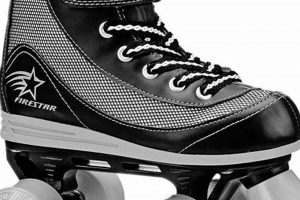
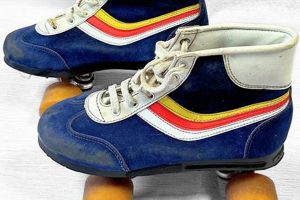
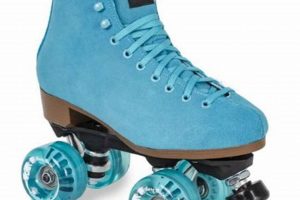
Specialized footwear designed for rhythmic movement and artistic expression on wheels is a niche segment within the broader skating industry. These implements facilitate intricate footwork, spins, and jumps, enabling performers to execute choreography with precision and flair. An example includes a boot made of flexible leather, offering ankle support while allowing a full range of motion, mounted on a lightweight plate with responsive wheels.
The capacity to blend athleticism with artistry makes these devices a compelling tool for both recreational and competitive pursuits. They foster coordination, balance, and spatial awareness, contributing to enhanced physical fitness and creative self-expression. Historically, their development reflects a convergence of roller skating’s evolution with dance forms, resulting in equipment specifically engineered for the demands of this hybrid discipline.
The subsequent sections will delve into the specific components of this equipment, explore techniques employed by performers, and examine the various styles and disciplines associated with this unique activity. This will provide a deeper understanding of the considerations involved in selecting appropriate gear and mastering the skills necessary for proficient use.
Essential Considerations for Dance Roller Skates
Optimal performance with specialized rolling footwear requires careful consideration of several key factors. These recommendations are designed to enhance safety, improve control, and maximize the artistic potential of the skating experience.
Tip 1: Boot Selection: Choose a boot that provides adequate ankle support without restricting mobility. Leather or synthetic materials offer a balance between flexibility and stability. The fit should be snug but not constricting to allow for precise footwork.
Tip 2: Plate Material and Design: Opt for lightweight plates made from aluminum or magnesium alloy to reduce overall weight and improve responsiveness. A shorter wheelbase enhances maneuverability for quick turns and spins.
Tip 3: Wheel Durometer: Select wheel hardness based on the skating surface. Softer wheels (lower durometer) provide greater grip on slick surfaces, while harder wheels (higher durometer) offer faster rolling speed on smoother surfaces.
Tip 4: Bearing Quality: Invest in high-quality bearings (ABEC 5 or higher) for smoother and more efficient rolling. Regular cleaning and lubrication of bearings are crucial for maintaining performance and longevity.
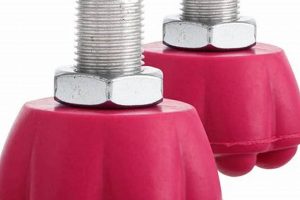
Tip 5: Toe Stop or Jam Plug Adjustment: Properly adjust toe stops or jam plugs to the appropriate height and angle for controlled stops and pivots. Regular inspection and replacement of worn toe stops or jam plugs are essential for safety.
Tip 6: Regular Maintenance: Routine inspection of all components, including bolts, screws, and cushions, is critical for identifying and addressing potential issues before they compromise safety or performance. Tighten any loose hardware and replace worn parts promptly.
Tip 7: Professional Fitting: Consult with a knowledgeable retailer or skating professional to ensure proper boot and plate sizing. A customized setup, tailored to individual foot shape and skating style, can significantly enhance comfort and performance.
Adhering to these guidelines will contribute to a safer, more enjoyable, and ultimately more successful experience with this unique equipment. Careful attention to detail in equipment selection and maintenance is paramount.
The following sections will explore specific techniques and styles within the realm of rolling dance, providing further context for the application of these considerations.
1. Boot Flexibility

Boot flexibility, in the context of rolling dance equipment, directly influences the range of motion and responsiveness available to the skater. It represents a critical design element tailored to the demands of artistic expression and complex footwork.
- Ankle Articulation
Ankle articulation refers to the boot’s ability to allow unrestricted movement of the ankle joint. Boots designed with greater flexibility in this area facilitate deeper edges, sharper turns, and more expressive dance movements. The degree of allowable ankle movement is a primary factor differentiating dance-specific boots from those intended for other skating disciplines, such as hockey or speed skating, which prioritize support over flexibility.
- Material Composition
The materials used in boot construction significantly impact flexibility. Leather, particularly softer grades, tends to offer superior flexibility compared to rigid synthetic materials. Careful selection of leather thickness and reinforcement techniques further contributes to the desired balance between support and freedom of movement. Synthetic alternatives sometimes incorporate articulated panels or strategically placed flex zones to mimic the properties of leather.
- Cut and Construction
The cut and construction of the boot’s upper directly influence its flexibility. Lower-cut boots, which expose more of the ankle, generally provide greater freedom of movement. However, they may sacrifice some ankle support. Strategic stitching patterns, gussets, and the use of flexible linings can also enhance the overall flexibility of the boot without compromising its structural integrity.
- Break-in Period
Even boots designed with inherent flexibility may require a break-in period to achieve optimal comfort and range of motion. During this period, the materials gradually mold to the skater’s foot and ankle, increasing flexibility and reducing stiffness. Proper break-in techniques, such as wearing the boots for short periods and using specialized stretching devices, can accelerate the process and prevent discomfort or injury.
Therefore, boot flexibility directly enables intricate footwork, expressive movement, and advanced techniques used in this field. Understanding the interplay of ankle articulation, material composition, cut, and break-in period is essential for selecting appropriate footwear that optimizes both performance and comfort.
2. Plate Responsiveness

Plate responsiveness, a critical factor in specialized rolling dance equipment, dictates the precision and immediacy with which a skater’s inputs translate into movement. Its influence extends to the execution of intricate footwork, spins, and leaps, directly impacting the overall fluidity and control of a performance.
- Kingpin Angle and Action
The angle of the kingpin, the bolt connecting the plate to the trucks, profoundly affects responsiveness. A shallower angle generally provides greater stability and control at higher speeds, suitable for larger movements. A steeper angle, conversely, offers quicker turning and enhanced maneuverability, advantageous for intricate footwork. The action, determined by the tightness of the kingpin nut and the durometer of the cushions, influences the resistance to turning. Dancers often fine-tune these settings to achieve a personalized balance between stability and agility.
- Plate Material and Rigidity
The material composition of the plate, typically aluminum or magnesium alloy, significantly affects its rigidity. A more rigid plate transmits energy more efficiently, resulting in quicker and more precise responses to the skater’s inputs. However, excessive rigidity can compromise comfort and increase the risk of injury. A carefully chosen material and design optimize energy transfer while mitigating potential negative consequences. Examples include reinforced stress points and strategic flex zones incorporated into plate designs.
- Wheelbase Length
The wheelbase length, the distance between the front and rear axles, directly influences turning radius and stability. A shorter wheelbase offers increased maneuverability, facilitating tighter turns and quicker changes in direction, which are essential for intricate dance routines. A longer wheelbase, conversely, provides greater stability, particularly at higher speeds. Dancers often favor shorter wheelbases to enhance their ability to execute complex footwork and choreography.
- Truck Design and Adjustment
The design of the trucks, the components that hold the wheels, affects the overall responsiveness. Trucks with adjustable pivot pins allow skaters to fine-tune the angle and resistance, further customizing the feel and responsiveness. The use of different cushion materials and shapes also influences truck behavior. The ability to adjust these parameters allows dancers to optimize their equipment for specific styles and performance requirements.
These interconnected facets of plate responsiveness collectively contribute to the skater’s ability to execute precise and fluid movements. A thorough understanding of these factors and their interplay is essential for selecting and configuring rolling dance equipment that meets the specific demands of the discipline, ultimately maximizing performance potential and artistic expression.
3. Wheel Durometer
Wheel durometer, measured on the Shore A scale, defines the hardness of rolling dance equipment wheels. This property directly impacts grip, roll speed, and the overall feel of the equipment during use. A lower durometer indicates a softer wheel, providing greater grip and shock absorption but potentially sacrificing roll speed. Conversely, a higher durometer signifies a harder wheel, offering faster rolling capabilities but reduced grip. For equipment used in dance, the selection of an appropriate durometer is crucial, influencing a skater’s ability to execute intricate footwork, spins, and controlled slides. For example, skaters performing on polished wooden floors might opt for a softer wheel (e.g., 88A-92A) to maximize grip and prevent slippage, enabling precise control during demanding routines.
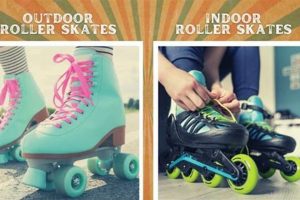
The correlation between wheel durometer and surface conditions is paramount. Surfaces with varying levels of smoothness and traction necessitate adjustments in wheel hardness to optimize performance. Outdoor environments, which often present rough or uneven surfaces, generally require softer wheels to compensate for the lack of grip and absorb vibrations. Indoor surfaces, particularly those designed for skating, may accommodate harder wheels, allowing for greater speed and smoother transitions. Further, a skater’s weight and skating style can influence the ideal durometer. Heavier skaters or those employing more aggressive techniques may benefit from slightly harder wheels to prevent excessive compression and maintain responsiveness.
In summary, the appropriate wheel durometer is essential for optimizing dance-specific performance and safety. Selecting the correct wheel hardness requires careful consideration of skating surface, skater weight, and preferred technique. Compromises may be necessary to balance grip, roll speed, and shock absorption, depending on the specific demands of the skating environment and the skater’s style. Incorrect durometer selection can lead to reduced control, increased risk of injury, and diminished performance quality.
4. Bearing Precision

Bearing precision, quantified using the Annular Bearing Engineers’ Committee (ABEC) scale or similar standards, directly impacts the performance characteristics of rolling dance equipment. The internal tolerances and finish quality of bearings influence rolling resistance, smoothness, and durability. Higher precision bearings, manufactured to tighter tolerances, exhibit reduced friction and provide a more consistent roll, enabling finer control and greater efficiency during dance movements. A noticeable difference exists between a low-precision bearing and a high-precision bearing when performing intricate spins or sustained gliding maneuvers, where the former may introduce unwanted vibrations or require more effort to maintain momentum. The selection of appropriate bearings contributes significantly to the overall fluidity and responsiveness experienced by a skater utilizing rolling dance equipment.
The practical consequences of inadequate bearing precision extend beyond mere performance limitations. Inferior bearings can generate excessive heat due to increased friction, leading to premature wear and potential failure. Bearing failure during a dance routine can create a sudden loss of control, posing a safety hazard to the skater and potentially disrupting the performance. Regular maintenance, including cleaning and lubrication with appropriate synthetic oils, is crucial for preserving bearing precision and prolonging their lifespan. Neglecting these procedures can accelerate degradation and diminish the performance benefits associated with high-quality bearings.
In conclusion, the correlation between bearing precision and the overall functionality of rolling dance equipment is undeniable. While not always immediately apparent to novice users, the subtle differences in rolling characteristics afforded by higher precision bearings translate to improved control, efficiency, and safety for experienced skaters. A thorough understanding of bearing specifications and proper maintenance protocols is essential for maximizing the performance potential and longevity of the equipment, contributing to a more enjoyable and secure skating experience. Challenges include the cost of high-precision bearings, which can be a barrier to entry for some, and the need for consistent maintenance to realize their full potential.
5. Toe Stop Adjustment
Toe stop adjustment is a critical element in the configuration of rolling dance equipment, directly influencing stability, control, and the execution of various dance maneuvers. Precise manipulation of the toe stop or jam plug is essential for optimal performance.
- Height Calibration
The vertical positioning of the toe stop impacts the skater’s ability to initiate stops, pivots, and certain dance steps. A toe stop set too high can impede smooth rolling and increase the risk of tripping, while one set too low may require excessive force to engage, hindering quick transitions. Optimal height calibration enables efficient stops without compromising balance or maneuverability.
- Angle Optimization
The angle at which the toe stop contacts the skating surface influences the direction and stability of stops and pushes. An improperly angled toe stop can cause the equipment to veer unexpectedly or create uneven pressure, compromising control. Correct angle optimization ensures a consistent and predictable response, facilitating precise execution of dance movements.
- Material Selection Influence
The material composition of the toe stop affects its grip and durability, which, in turn, influences braking performance and longevity. Toe stops made from softer compounds offer greater grip on slick surfaces but may wear more quickly. Harder compounds provide longer life but may sacrifice some traction. The material selection should align with the skating surface and the skater’s preferred style to achieve a balance between performance and durability. An example is using harder toe stops for smooth indoor rink to make sliding movements easily, while using softer toe stops for outdoors so that skater can easily push the skates to avoid falling down.
- Maintenance Requirements
Regular inspection and replacement of worn toe stops is essential for maintaining safety and performance. Worn or damaged toe stops can exhibit reduced grip and uneven wear patterns, leading to unpredictable braking behavior and increased risk of injury. Consistent maintenance ensures the toe stops function correctly and reliably, supporting precise control and confident execution of dance routines.
These interconnected aspects of toe stop adjustment demonstrate its vital role in optimizing rolling dance equipment for safe and effective use. Understanding the interplay between height calibration, angle optimization, material selection, and maintenance requirements enables skaters to tailor their equipment to their specific needs and preferences, enhancing their overall performance and enjoyment.
Frequently Asked Questions About Dance Roller Skates
This section addresses common inquiries and misconceptions regarding specialized rolling footwear designed for rhythmic movement and artistic expression.
Question 1: What distinguishes rolling dance equipment from conventional roller skates?
Rolling dance equipment typically features a flexible boot for enhanced ankle articulation, a shorter wheelbase for increased maneuverability, and strategically chosen wheel durometer for optimal grip and slide characteristics. Conventional roller skates often prioritize support and stability over the nuanced movement required for dance.
Question 2: How does wheel durometer affect the execution of dance maneuvers?
Softer wheels (lower durometer) provide greater grip, facilitating precise footwork and controlled slides on smooth surfaces. Harder wheels (higher durometer) offer faster rolling speed, suitable for gliding and sustained momentum. The selection depends on the skating surface and the skater’s preferred style.
Question 3: What role does bearing precision play in performance quality?
Higher precision bearings minimize rolling resistance, promoting smoother and more consistent roll. This translates to improved control, reduced effort, and enhanced fluidity during intricate dance routines.
Question 4: How frequently should rolling dance equipment be maintained?
Regular maintenance, including cleaning, lubrication, and inspection of components, is crucial for preserving performance and safety. The frequency depends on usage intensity and environmental conditions, but a monthly check is generally recommended.
Question 5: What are the potential consequences of improper toe stop adjustment?
Improper toe stop adjustment can compromise balance, hinder smooth transitions, and increase the risk of tripping or falling. Correct height and angle calibration are essential for safe and efficient stops and pivots.
Question 6: Can rolling dance equipment be used outdoors?
While primarily designed for indoor surfaces, rolling dance equipment can be used outdoors with appropriate wheel selection. Softer wheels are recommended to compensate for uneven surfaces and enhance grip. However, outdoor use may accelerate wear and tear on components.
Key takeaways include the importance of understanding equipment specifications, the need for regular maintenance, and the crucial role of proper adjustment for optimal performance and safety.
The subsequent section will explore advanced techniques and training methodologies relevant to the skillful use of rolling dance equipment.
Concluding Remarks on Dance Roller Skates
This exploration has illuminated key aspects of dance roller skates, ranging from component selection and maintenance to performance considerations. A comprehensive understanding of boot flexibility, plate responsiveness, wheel durometer, bearing precision, and toe stop adjustment proves essential for optimizing both safety and artistic expression. The selection and configuration of equipment should reflect individual needs and skating conditions.
Continued advancements in materials and design promise to further enhance the capabilities of dance roller skates, enabling greater technical proficiency and creative innovation within this specialized discipline. A commitment to proper training and equipment maintenance remains paramount for realizing the full potential of the equipment and ensuring the well-being of practitioners. Further research and development in this area will undoubtedly lead to even more refined and sophisticated equipment, expanding the possibilities for artistic expression on wheels.