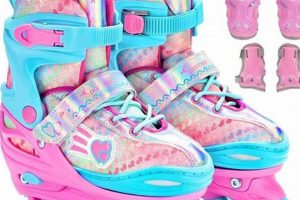
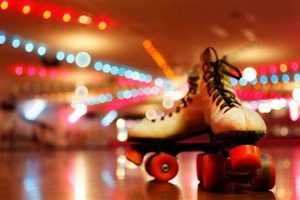
The topic under consideration involves two distinct forms of recreational and athletic footwear, each equipped with wheels for mobility. One configuration features two pairs of wheels arranged in a side-by-side fashion, while the other employs an inline arrangement of wheels. These wheeled boots offer individuals varied experiences in terms of stability, maneuverability, and intended use. For example, one might be preferred for rink skating and dance, while the other is often favored for speed and distance skating.
Understanding the distinctions between these two types of wheeled footwear is essential for making informed decisions regarding purchase, training, and participation in related activities. Their impact extends beyond mere recreation; they provide cardiovascular exercise, improve balance and coordination, and offer a means of transportation. Historically, one emerged earlier, evolving from attempts to simulate ice skating on dry land, while the other represents a more recent innovation inspired by ice skates themselves.
A thorough examination of these wheeled footwear options will involve analyzing their design differences, the skill sets required for each, their respective advantages and disadvantages, and the types of activities for which they are best suited. Furthermore, the discussion will encompass considerations such as maintenance, safety equipment, and appropriate use environments. The following sections will delve into a detailed comparison across these key areas.
Tips for Selecting Wheeled Footwear
The following guidance aids in making an informed choice between the two main types of wheeled footwear based on individual needs and preferences.
Tip 1: Consider Intended Use: Determine the primary activity. For recreational rink skating and artistic routines, the traditional configuration may offer greater stability. For fitness, speed skating, or trail skating, the inline configuration may be more suitable.
Tip 2: Evaluate Skill Level: Assess current skating proficiency. Beginners often find the traditional configuration easier to learn basic balance and stopping techniques. The inline configuration typically requires a steeper initial learning curve.
Tip 3: Assess Ankle Support Needs: The support offered varies between designs. Traditional models may have lower ankle support, while inline models often feature higher, more rigid boots, which offer greater protection and stability at higher speeds.
Tip 4: Check Wheel Durometer and Size: Wheel hardness (durometer) and size impact speed and grip. Softer wheels provide better grip but wear down faster, whereas harder wheels offer higher speeds but less grip. Larger wheels generally equate to faster speeds.
Tip 5: Inspect Frame Material: The frame, which holds the wheels, can be made of plastic, aluminum, or carbon fiber. Aluminum and carbon fiber frames are generally lighter and more responsive, contributing to enhanced performance.
Tip 6: Ensure Proper Fit: A snug but comfortable fit is crucial. Feet should not slide around inside the boot. Ill-fitting boots can lead to blisters and decreased control.
Understanding these considerations allows for a more informed decision, maximizing enjoyment and safety while participating in related activities.
Applying these tips forms a solid foundation for selecting the appropriate wheeled footwear, setting the stage for a safer and more satisfying experience. The article’s subsequent sections will delve into more specific details regarding maintenance and safety considerations.
1. Stability

Stability is a paramount consideration when choosing between the two types of wheeled footwear. The distribution of wheels and the boot design significantly influence the user’s sense of balance and control, particularly for novice skaters.
- Wheelbase and Foot Placement
Traditional configurations offer a wider wheelbase due to the side-by-side wheel arrangement. This wider base provides a lower center of gravity and a more stable platform, making it easier for beginners to maintain balance. Conversely, inline configurations have a narrower wheelbase, requiring greater core strength and balance to maintain stability. Imagine a novice learning to stand upright; the wider base allows for greater error tolerance.
- Boot Height and Ankle Support
The height and rigidity of the boot contribute significantly to ankle stability. Inline models typically feature higher boots offering enhanced ankle support, which is beneficial at higher speeds and during more aggressive maneuvers. Traditional models often have lower-cut boots, allowing for greater ankle flexibility but less inherent stability. A figure skater may prefer the flexibility of a lower boot, while a speed skater requires the support of a higher boot.
- Wheel Size and Hardness
Smaller wheels generally provide greater stability because they position the skater closer to the ground. Conversely, larger wheels offer increased speed but can reduce stability, particularly on uneven surfaces. Wheel hardness also plays a role; softer wheels provide more grip, enhancing stability on smooth surfaces, while harder wheels reduce friction and increase speed but can be less stable on rough terrain.
- Skill Level and Learning Curve
The stability characteristics of each design affect the learning curve. The inherent stability of traditional layouts can make it easier for beginners to learn basic skating skills. However, the enhanced control and maneuverability of inline designs, once mastered, can lead to greater overall stability at higher speeds and during complex maneuvers. This demonstrates a trade-off between initial ease of use and long-term stability potential.
The interplay of these factors dictates the overall stability experienced by the skater. While the traditional configuration offers greater initial stability, particularly for beginners, the inline configuration provides the potential for greater dynamic stability at higher speeds and during advanced maneuvers, provided the skater possesses the necessary skill and experience. Understanding these nuances is essential for selecting equipment that matches individual needs and skating goals.
2. Maneuverability

Maneuverability, in the context of wheeled footwear, encompasses the ease and precision with which a skater can change direction, navigate obstacles, and perform specialized movements. The inherent design of the footwear significantly impacts this aspect, creating distinct advantages and disadvantages for each type.
- Wheelbase and Turning Radius
The wheelbasethe distance between the front and rear wheelsdirectly influences the turning radius. Traditional designs, with their shorter wheelbase and side-by-side wheel configuration, generally offer a tighter turning radius. This allows for quicker, more agile movements, particularly beneficial in confined spaces such as roller rinks. Inline designs, with their longer wheelbase, require more deliberate effort to execute sharp turns, prioritizing stability over immediate responsiveness. For example, a roller derby skater relies on the rapid turning capabilities of the traditional configuration, whereas a long-distance skater might sacrifice some agility for the enhanced stability of the inline setup.
- Wheel Arrangement and Edge Control
The arrangement of the wheels fundamentally alters how a skater can engage with the skating surface. Traditional designs allow for greater edge control due to the ability to tilt the boot and engage different wheels independently. This enhances the ability to execute complex maneuvers like spins and crossovers. Inline designs, with their wheels in a single line, provide less nuanced edge control, emphasizing forward motion and requiring more weight shifting for turns. A figure skater’s routine showcases the advantages of edge control in traditional layouts.
- Frame Design and Responsiveness
The frame, which connects the boot to the wheels, plays a crucial role in transmitting the skater’s movements to the wheels. Traditional designs often have a more flexible frame, allowing for greater responsiveness to subtle shifts in weight and balance. Inline designs typically feature a stiffer frame, providing more direct power transfer for efficient propulsion but reducing sensitivity for fine-tuned maneuvers. A slalom skater benefits from the responsive frame of traditional designs, enabling quick, precise movements around cones.
- Boot Height and Ankle Mobility
Boot height influences ankle mobility, which is critical for certain maneuvers. Lower-cut boots, common in traditional designs, permit greater ankle flexion and extension, facilitating complex footwork and allowing for deeper leans into turns. Higher-cut boots, prevalent in inline models, restrict ankle movement, prioritizing support and stability over agility. A jam skater requires the ankle mobility afforded by a lower boot to execute intricate dance steps.
These facets collectively determine the maneuverability characteristics of each type of wheeled footwear. While traditional configurations generally offer greater agility and responsiveness, particularly in confined spaces, inline designs prioritize stability and power transfer, making them more suitable for activities where sustained speed and efficient forward motion are paramount. Understanding these trade-offs is crucial for aligning equipment choice with intended use and skating style.
3. Wheel Configuration

Wheel configuration represents a defining characteristic differentiating between the two forms of wheeled footwear. This fundamental design choice dictates performance attributes related to stability, maneuverability, and intended application. The arrangement of wheels impacts the user’s experience significantly.
- Quad vs. Inline Arrangement
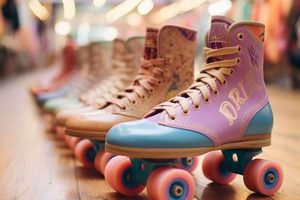
Quad designs feature two pairs of wheels positioned side-by-side, creating a wider base of support. This configuration enhances initial stability, making it easier for beginners to maintain balance. Inline designs arrange wheels in a single line, resembling ice skates. This arrangement prioritizes speed and efficiency in forward motion but requires greater balance control. The quad arrangement finds use in artistic and rink skating, while inline configurations are common in fitness and speed skating.
- Wheel Size and Spacing Implications
Wheel size and spacing vary between configurations, further influencing performance. Quad designs typically employ smaller wheels, contributing to greater maneuverability within confined spaces. Inline designs often feature larger wheels, allowing for increased speed and smoother rolling over varied surfaces. The spacing between wheels also affects stability and responsiveness; closer spacing generally enhances agility, while wider spacing improves stability at higher speeds.
- Frame Material and Wheel Mounting
The frame material and method of wheel mounting influence the overall rigidity and responsiveness of the wheeled footwear. Traditional designs often utilize metal or composite frames with a plate-mounted system, allowing for adjustable truck tightness, which affects turning sensitivity. Inline designs commonly employ aluminum or carbon fiber frames that provide direct power transfer for efficient propulsion. The wheel mounting system in inline models typically allows for wheel replacement and customization.
- Impact on Skating Style and Application
Wheel configuration directly influences skating style and the activities for which each type of wheeled footwear is best suited. The stability and maneuverability of quad designs make them ideal for rink skating, roller derby, and artistic expression. The speed and efficiency of inline designs lend themselves to fitness skating, speed skating, and aggressive skating. The choice of wheel configuration should align with the skater’s skill level, intended use, and desired performance characteristics.
These facets of wheel configuration illustrate the critical role this design element plays in shaping the performance characteristics and suitability of each type of wheeled footwear. Understanding these differences is crucial for selecting the appropriate equipment to match individual needs and skating goals. The selection of configuration profoundly changes the experience.
4. Ankle Support

Ankle support constitutes a critical design element differentiating the two forms of wheeled footwear. The level of support provided directly influences stability, control, and injury prevention, particularly at varying skill levels and across different skating disciplines. Inadequate ankle support increases the risk of sprains and other injuries, impacting performance and user safety. The inherent structural differences between the two designs dictate the degree of support offered.
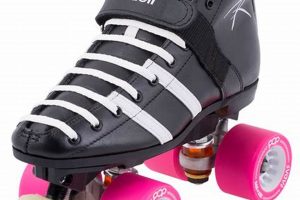
Inline models, commonly referred to as rollerblades, typically feature a high-cut boot design, extending well above the ankle joint. This extended height, often coupled with rigid materials such as hardened plastics or composite materials, provides significant lateral and medial support, restricting excessive ankle movement and promoting stability, especially at higher speeds or during more aggressive maneuvers. In contrast, traditional models, sometimes known as quad skates, frequently incorporate a lower-cut boot design, affording greater ankle flexibility. While this increased flexibility allows for enhanced maneuverability and specialized movements, such as those found in roller derby or artistic skating, it simultaneously reduces the level of inherent ankle support. The trade-off between flexibility and support necessitates careful consideration based on the intended application. For instance, a speed skater benefits from the rigid support of an inline boot, minimizing ankle fatigue and maximizing power transfer, while a roller derby player relies on the ankle flexibility of a traditional skate to execute rapid directional changes.
The choice between these wheeled footwear options hinges on a careful evaluation of individual needs and skating style. Skaters prioritizing speed, stability, and injury prevention may benefit from the enhanced ankle support offered by inline models. Conversely, individuals seeking maximum maneuverability and flexibility for specific artistic or competitive disciplines might opt for the reduced support but increased range of motion found in traditional models. Regardless of the chosen configuration, proper fit and the use of appropriate safety equipment, such as ankle braces, can further mitigate the risk of injury. The understanding of the ankle support characteristics is paramount for optimizing performance and safety.
5. Intended Use

The intended use of wheeled footwear is a primary determinant in selecting between traditional and inline configurations. Different skating styles and environments necessitate specific performance characteristics, influencing the suitability of each design. Understanding the planned application is essential for optimizing performance, safety, and overall enjoyment.
- Recreational Skating
For casual recreational skating, often on smooth surfaces such as rinks or paved trails, traditional designs offer enhanced stability and maneuverability at lower speeds. This makes them suitable for beginners or those seeking a social and leisurely experience. Inline designs can also be used recreationally, but they generally require a higher level of skill to maintain balance and control. An example would be a family outing at a roller rink, where the stability of quad skates allows for easier participation.
- Fitness and Distance Skating
Fitness and distance skating prioritize speed, efficiency, and endurance. Inline designs excel in these areas due to their larger wheels and streamlined configuration, which promote efficient energy transfer and smooth rolling over longer distances. The rigid ankle support of inline boots also contributes to stability at higher speeds. A marathon skater would opt for inline skates due to their superior speed and efficiency.
- Artistic Skating and Roller Derby
Artistic skating and roller derby require agility, precision, and rapid directional changes. Traditional designs are favored in these disciplines due to their enhanced maneuverability and edge control. The ability to execute quick turns and complex footwork is essential for both artistic expression and competitive gameplay. A roller derby athlete needs the agility offered by quad skates to navigate the track effectively.
- Aggressive Skating and Skate Parks
Aggressive skating, performed in skate parks and urban environments, involves performing tricks, jumps, and grinds. Inline designs specifically designed for aggressive skating feature reinforced boots, durable frames, and specialized wheels that can withstand the impact and abrasion associated with these activities. The inline configuration also allows for greater control during grinds. A skater performing tricks at a skate park requires the durability and control provided by aggressive inline skates.
These examples illustrate how the intended use dictates the optimal choice between traditional and inline wheeled footwear. While traditional designs offer advantages in stability, maneuverability, and artistic expression, inline designs excel in speed, efficiency, and aggressive skating. The selection process should consider the specific demands of the intended activity to maximize performance and safety. Selecting between quad and inline options is use-case dependent.
6. Learning Curve

The learning curve associated with wheeled footwear represents a significant factor influencing initial user experience and long-term skill development. Distinct characteristics of traditional and inline configurations contribute to variations in the rate and ease with which individuals acquire proficiency.
- Initial Stability and Balance Acquisition
Traditional designs, with their wider wheelbase and side-by-side wheel arrangement, generally offer greater initial stability. This inherent stability can expedite the acquisition of basic balance skills, reducing the initial learning curve for novice skaters. Inline designs, requiring more precise balance control due to their inline wheel configuration, may present a steeper initial learning curve. A child learning to skate often finds the quad configuration easier to master initially.
- Fundamental Movement Patterns and Techniques
The fundamental movement patterns and techniques differ between the two configurations, influencing the learning process. Traditional designs emphasize lateral movements and edge control, requiring skaters to develop skills in turning, stopping, and maneuvering within confined spaces. Inline designs focus on forward propulsion and efficient energy transfer, necessitating the development of skills in gliding, striding, and maintaining speed over longer distances. The skills required for roller derby differ significantly from those needed for distance skating.
- Complexity of Skill Progression and Specialization
The complexity of skill progression varies between the two configurations. Traditional designs offer a relatively straightforward path to mastering basic skills but may present a steeper learning curve for advanced techniques such as spins, jumps, and intricate footwork. Inline designs, while initially challenging, can facilitate faster progression in certain areas, such as speed skating and aggressive skating, where specialized equipment and techniques enhance performance. Mastering advanced figure skating techniques on quad skates requires dedicated practice.
- Perceived Difficulty and User Motivation
Perceived difficulty and user motivation play a crucial role in the learning process. If an individual finds one configuration inherently more enjoyable or aligns better with their personal skating goals, they may be more motivated to overcome the initial challenges and persist in their learning journey. A skater passionate about speed skating may be more willing to invest time and effort in mastering the skills required for inline designs. This intrinsic motivation influences the perceived steepness of the learning curve.
The distinct learning curves associated with traditional and inline wheeled footwear underscore the importance of aligning equipment selection with individual skill levels, learning preferences, and skating goals. While traditional designs may offer a more accessible entry point for beginners, inline designs can provide a more efficient pathway to specialized skills and advanced performance. Consideration of the learning curve helps in a successful start.
Frequently Asked Questions
The following section addresses common queries regarding the selection and use of two distinct types of wheeled footwear. Clarification of these points promotes informed decision-making and safer practices.
Question 1: Which type of wheeled footwear is more appropriate for beginners?
Traditional designs, featuring a wider base and side-by-side wheel arrangement, generally offer greater initial stability, facilitating balance acquisition for novice skaters. Inline configurations require a higher degree of balance control and may present a steeper initial learning curve.
Question 2: What are the primary distinctions between the two configurations in terms of maneuverability?
Traditional designs allow for tighter turning radii and enhanced edge control, facilitating quick directional changes and specialized maneuvers. Inline configurations prioritize forward momentum and require more deliberate weight shifting for turns, emphasizing stability over immediate responsiveness.
Question 3: Which configuration is better suited for fitness and distance skating?
Inline configurations excel in fitness and distance skating due to their streamlined design, larger wheels, and efficient energy transfer, promoting higher speeds and smoother rolling over longer distances.
Question 4: How does ankle support differ between the two types of wheeled footwear?
Inline designs typically feature higher-cut boots constructed from rigid materials, providing significant ankle support and minimizing the risk of injury, particularly at higher speeds. Traditional designs often incorporate lower-cut boots, allowing for greater ankle flexibility but offering less inherent support.
Question 5: What are the recommended safety precautions for using wheeled footwear?
Regardless of the chosen configuration, users should always wear appropriate safety gear, including a helmet, knee pads, elbow pads, and wrist guards. Skating in designated areas, avoiding traffic, and maintaining awareness of surroundings are also crucial for preventing accidents.
Question 6: How should one maintain wheeled footwear to ensure optimal performance and longevity?
Regular maintenance includes cleaning the wheels and bearings, inspecting the frames for damage, and ensuring that all nuts and bolts are securely tightened. Proper storage in a dry environment can also extend the lifespan of the equipment.
In summary, the optimal selection depends on individual skill level, intended use, and personal preferences. Thorough consideration of these factors contributes to a safer and more enjoyable skating experience.
The next section will address the historical evolution of wheeled footwear.
Conclusion
This exploration has delineated key distinctions between roller skates vs rollerblades, emphasizing variances in stability, maneuverability, wheel configuration, ankle support, intended use, and learning curve. The analysis underscores that the appropriate choice of wheeled footwear hinges on individual needs, skill level, and anticipated application. Selection criteria must consider the trade-offs inherent in each design.
Continued advancements in materials and engineering promise further evolution in both roller skates vs rollerblades. Informed decision-making, grounded in a thorough understanding of their respective attributes, remains paramount. The selection of equipment should prioritize safety, performance optimization, and alignment with specific skating goals. Further research should focus on biomechanical impacts and injury prevention related to each form of wheeled locomotion.