The determination of expenses related to maintaining the blades of ice skates in optimal condition is a common query. Blade maintenance involves honing the edges to provide the necessary grip on the ice for skating performance. The cost associated with this service varies depending on several factors, including the location, the type of skate, and the experience level of the technician performing the work. As an example, a simple recreational skate might have a lower sharpening fee compared to a figure skate requiring more precise edge geometry.
Proper blade maintenance is crucial for safety and performance. Sharp edges allow skaters to execute turns, stops, and other maneuvers with greater control and efficiency. Historically, methods for sharpening involved manual techniques, but modern equipment allows for more consistent and precise results. The benefits of maintaining sharp blades include improved glide, enhanced control, and reduced risk of accidents caused by slipping or losing an edge.
The subsequent sections will explore the specific elements contributing to the overall price, common price ranges, and best practices for ensuring blades are appropriately maintained to optimize the skating experience.
Blade Maintenance Guidance
The following outlines best practices to ensure optimal blade performance and longevity, relating directly to the expenses associated with keeping skates properly maintained.
Tip 1: Determine the Sharpening Frequency: The frequency of sharpening depends on usage. Skaters who are on the ice several times a week will require more frequent sharpening than those who skate occasionally. Visual inspection of the blade edges should be conducted regularly to assess sharpness.
Tip 2: Select a Qualified Technician: Proper sharpening requires skill and experience. Seek out a reputable skate shop or technician with a proven track record. Inquire about their equipment and methods to ensure they are using appropriate techniques for the specific type of blade.
Tip 3: Understand Blade Geometry: Different skating disciplines require different blade geometries. Figure skates, for instance, have a different blade profile compared to hockey skates. Communicate the skating style to the technician to ensure the blade is sharpened accordingly.
Tip 4: Protect Blades When Not in Use: Blade guards are essential for protecting sharpened edges when off the ice. Use hard guards for walking around and soft guards to absorb moisture and prevent rust during storage. Avoid storing skates in bags for extended periods, as this can trap moisture.
Tip 5: Avoid Skating on Abrasive Surfaces: Whenever possible, avoid walking on surfaces other than rubber mats or clean ice. Concrete, asphalt, and other abrasive surfaces will quickly dull the edges and necessitate more frequent sharpening.
Tip 6: Recognize Signs of Dull Blades: A decrease in glide, difficulty performing turns, and a general feeling of instability are all signs that blades require sharpening. Addressing dullness promptly prevents further damage and ensures safe skating.
Tip 7: Document Sharpening History: Maintain a record of when and where blades were sharpened. This information can be valuable in determining the optimal sharpening frequency and identifying technicians who provide consistently high-quality service.
Adhering to these guidelines contributes significantly to extending blade life and reducing the overall expense of skate maintenance, in addition to enhancing the skating experience.
The next section will address factors influencing the cost of blade maintenance.
1. Location

Geographic positioning exerts a tangible influence on the pricing structure associated with skate blade maintenance. Variations in regional economics, overhead expenses, and competitive landscapes directly impact the service fees.
- Urban vs. Rural Pricing
Metropolitan areas, characterized by elevated commercial rents and higher labor costs, typically exhibit higher rates compared to rural locales. Urban skate shops often cater to a more discerning clientele, potentially incorporating advanced technology or specialized services that contribute to increased charges. Rural establishments, benefiting from lower operational overhead, may offer more competitive pricing. This disparity in cost reflects the underlying economic realities of different geographic settings.
- Regional Demand and Competition
Regions with a high prevalence of ice skating, whether recreational or competitive, tend to support a greater number of skate sharpening services. Increased competition can drive prices down as businesses strive to attract customers. Conversely, areas with limited demand may see higher prices due to the scarcity of providers and the absence of competitive pressures. The dynamics of supply and demand within a given region thus play a significant role in price determination.
- Local Economic Conditions
Prevailing economic conditions within a specific locality can influence pricing strategies. Areas experiencing economic prosperity may see higher prices as businesses capitalize on increased disposable income. Conversely, economically depressed regions may necessitate more competitive pricing to attract budget-conscious customers. The overall health of the local economy acts as a moderating factor in determining the cost of skate blade maintenance.
- Proximity to Skating Facilities
Skate sharpening services situated in close proximity to ice rinks or skating facilities often command premium pricing. Convenience factors, such as ease of access for skaters, allow these establishments to charge more for their services. Conversely, shops located farther from skating venues may offer lower prices to compensate for the inconvenience of travel. The geographic relationship between service providers and end-users can therefore affect pricing models.
In summation, location is a significant determinant in blade maintenance expenses. Pricing reflects a complex interplay of economic forces, competitive dynamics, and the geographical relationship between service providers and clientele. Understanding these location-based factors provides skaters with greater insight into the varying costs associated with keeping their blades properly maintained.
2. Skate type

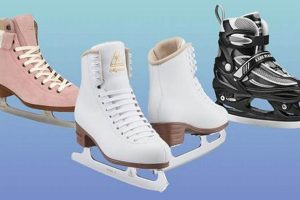
The category of ice skates significantly influences the expenses associated with blade maintenance. Variations in blade materials, designs, and the precision required for sharpening each type contribute to price differentials.
- Recreational Skates
Recreational skates, designed for casual use, typically have simpler blade designs and use softer steel. Sharpening these blades often requires less time and expertise, resulting in lower service fees. The blades’ construction is generally more forgiving, allowing for less precise sharpening methods without significantly impacting performance.
- Hockey Skates
Hockey skates require precise edge alignment for optimal performance. Sharpening involves creating a specific radius of hollow (ROH) that affects the skate’s grip on the ice. The ROH preference varies among players, necessitating skilled technicians and specialized equipment. The complexity and precision involved contribute to higher sharpening costs than those for recreational skates.
- Figure Skates
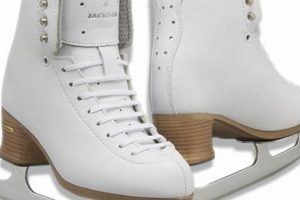
Figure skates demand the highest level of sharpening precision. The blades have a complex profile with a “sweet spot” and a specific rocker. Sharpening figure skates requires specialized knowledge and meticulous attention to detail to maintain the blade’s performance characteristics. The intricate nature of figure skate blades leads to the highest sharpening fees among common skate types.
- Speed Skates
Speed skates feature long, thin blades designed for maximum glide and efficiency. Sharpening these blades requires a delicate touch to maintain their straightness and prevent warping. The process demands specialized equipment and a technician experienced with speed skate blades. Due to their unique design and the precision needed, sharpening speed skates can be more costly than sharpening recreational or hockey skates, but potentially less than figure skates.
In conclusion, the type of skate dictates the complexity of the sharpening process and the expertise required. Recreational skates, being the simplest, generally incur the lowest fees, while figure skates, with their intricate blade profiles, demand the highest level of precision and result in the greatest expense. Hockey and speed skates fall in between, with costs reflecting their specific sharpening requirements. Skaters should consider these factors when budgeting for skate maintenance.
3. Technician skill

The proficiency of the technician directly correlates with the expense incurred in blade maintenance. Skillful technicians possess an in-depth understanding of blade geometry, steel properties, and the specific requirements of various skating disciplines. This expertise enables them to achieve optimal edge alignment and consistent results, minimizing the risk of damage to the blades. For example, a technician with experience in sharpening figure skates understands the nuances of the blade’s rocker and can maintain its specific curvature, ensuring optimal performance for jumps and spins. Consequently, services from highly skilled technicians typically command higher fees, reflecting the value of their expertise and the quality of their work.
Conversely, inexperienced or unqualified technicians may lack the necessary knowledge and precision, potentially resulting in uneven edges, incorrect hollow depth, or even blade damage. Such subpar sharpening not only compromises skating performance but may also necessitate premature blade replacement, incurring additional costs in the long term. Furthermore, correcting errors made by unskilled technicians can add to the overall expense, as it requires additional time and effort to restore the blades to their proper condition. This highlights the economic benefit of investing in the services of a skilled professional who can guarantee quality workmanship and minimize the risk of costly mistakes.
In summary, the expense associated with blade maintenance reflects the level of skill and expertise of the technician performing the work. While opting for lower-cost services may seem appealing initially, the potential risks associated with unqualified technicians can lead to increased costs and compromised skating performance. Selecting a skilled technician ensures optimal blade condition, prolongs blade life, and ultimately provides greater value for the investment, aligning the cost with the long-term benefits of expert service.
4. Sharpening method

The procedure employed to hone ice skate blades demonstrably influences the costs associated with this service. Methods vary in complexity, equipment requirements, and the skill needed by the technician, thus directly impacting the pricing structure. Automated sharpening machines, while offering consistency and speed, require a significant initial investment, and the operational costs contribute to the service charge. Manual methods, conversely, rely heavily on technician expertise and may command a premium based on the precision and care involved. The selection of a specific method, therefore, is a key component in determining the final expense of blade maintenance.
The radius of hollow (ROH), a critical aspect of blade sharpening, can be achieved through diverse methodologies. A deeper ROH, commonly preferred by hockey players for enhanced grip, necessitates specialized equipment and greater precision, potentially increasing costs. Alternatively, a shallower ROH, favoring glide, might require less demanding techniques and thus be less expensive. The choice of ROH, coupled with the employed method, directly affects performance and budget. For instance, automated systems allow for precise ROH adjustments, while manual methods may offer more nuanced control, albeit at a potentially higher price.
In summary, the sharpening method represents a core determinant of the final expenses associated with blade maintenance. Automated systems prioritize consistency and speed, influencing both the cost of service and the quality of the edges. Manual methods provide intricate control and personalization, potentially resulting in higher expenses contingent on the technician’s skill and the skater’s specific requirements. Recognizing the interrelation between sharpening method and price is essential for skaters seeking to optimize performance and budgetary constraints, allowing them to make informed decisions regarding skate maintenance.
5. Blade condition

The state of ice skate blades significantly influences the price of sharpening services. Severely damaged blades, characterized by deep nicks, excessive rust, or significant rounding of the edges, necessitate more extensive work than blades in relatively good condition. This additional labor, often requiring multiple passes or specialized techniques to restore the blade’s proper geometry, directly translates to increased service fees. For instance, a blade with deep gouges might require more aggressive grinding to remove the imperfections, consuming more time and potentially shortening the blade’s lifespan, thus impacting the final expense. A practical example involves a skater who neglected to dry their blades, leading to substantial rust formation. Removing this rust and restoring the edge required significantly more time and effort from the technician, resulting in a higher sharpening charge.
Moreover, blades that have been improperly sharpened previously may require corrective action. An unskilled technician might have altered the blade’s profile or created uneven edges, necessitating skilled intervention to rectify these errors before a standard sharpening can be performed. This corrective work adds to the overall time and complexity of the sharpening process, thereby inflating the associated costs. Consider a scenario where a skater attempted to sharpen their blades at home, resulting in an uneven edge profile. A professional technician then had to re-establish the correct profile before proceeding with a standard sharpening, incurring additional charges for the corrective work.
In conclusion, blade condition is a key determinant in the final expense. Blades with significant damage or previous sharpening errors demand more intensive labor and specialized techniques, leading to higher service fees. Regular maintenance and proper care, such as drying blades after each use and avoiding abrasive surfaces, can help preserve blade condition, minimize the need for extensive repairs, and ultimately reduce the long-term costs associated with skate maintenance. Therefore, maintaining blades in good condition represents a proactive measure in managing the overall expense.
6. Urgency

The temporal dimension of service requests exerts a discernible influence on the price structure associated with ice skate blade maintenance. Expedited service demands typically incur additional charges, reflecting the adjustments necessary to prioritize the request and the potential disruption to scheduled workflow.
- Prioritized Scheduling
Service providers often implement tiered pricing models that account for the speed of service. Immediate or same-day requests, particularly during peak seasons or event periods, necessitate the reallocation of resources and staff, justifying premium rates. For example, a skater requiring blade maintenance immediately before a competition will likely encounter higher fees than a customer willing to wait for standard turnaround times. The cost compensates the provider for the inconvenience and resource commitment.
- Overtime Labor
Fulfilling urgent requests might require technicians to work beyond standard hours or on designated days off, resulting in overtime labor costs. These additional labor expenses are commonly passed on to the customer in the form of higher service fees. A technician who must stay late to sharpen blades for a skater with an unexpected equipment malfunction may charge a higher rate to account for the extra time commitment. This ensures fair compensation for the technician and enables the skater to meet their immediate need.
- Resource Allocation
Urgent service demands often necessitate a prioritization of resources, potentially diverting equipment and personnel from other scheduled tasks. This disruption to standard operating procedures can lead to inefficiencies and increased overhead, which service providers may offset by charging higher prices for expedited services. A shop that must interrupt an ongoing production run to accommodate an urgent sharpening request faces a temporary decrease in overall productivity, justifying the additional charge for the expedited service.
- Opportunity Cost
Service providers might face an opportunity cost when fulfilling urgent requests. By prioritizing a specific customer’s needs, they may forgo other potentially lucrative service opportunities or delay scheduled maintenance. This loss of potential revenue can contribute to higher prices for expedited services. A sharpening shop that must turn away other customers to accommodate a rush request might charge a premium to compensate for the lost income. This practice ensures that the business can remain profitable while providing timely service to customers with urgent needs.
These factors coalesce to establish a positive correlation between the temporal urgency of a request and the expenses incurred for blade maintenance. Skaters seeking immediate service should anticipate paying a premium reflecting the adjustments required to accommodate their time-sensitive needs.
7. Additional services

Beyond basic edge restoration, supplementary offerings associated with ice skate blade maintenance can influence the ultimate expenditure. These additional services, ranging from blade profiling to boot mounting, contribute incrementally to the overall cost and should be considered when assessing maintenance budgets.
- Blade Profiling and Contouring
Blade profiling involves altering the blade’s shape to optimize performance for specific skating styles. This process may encompass adjusting the rocker, flattening the blade, or modifying the sweet spot. Technicians with specialized equipment and expertise perform this service, leading to increased costs compared to basic sharpening. A figure skater seeking to enhance jump performance might opt for blade profiling, adding to the overall maintenance bill. This service adds considerable value to skilled skaters.
- Rust Removal and Corrosion Treatment
Blades exposed to moisture are susceptible to rust and corrosion, compromising edge integrity and glide. Rust removal services involve specialized cleaning agents and abrasive techniques to restore the blade surface. Corrosion treatment may include applying protective coatings to prevent future rust formation. Such services add to the maintenance cost but prolong blade life. Failing to address rust can result in premature blade failure.
- Blade Alignment and Straightening
Impacts or improper storage can cause blade misalignment or bending, negatively affecting skating performance. Blade alignment services involve adjusting the blade’s position relative to the boot to ensure proper balance and edge control. Straightening bent blades requires specialized equipment and technical expertise. This service can be crucial for skaters experiencing balance issues. If alignment is not performed, the life of your blades may be shortened.
- Boot Mounting and Adjustment
Proper boot mounting is essential for optimal skate performance and comfort. Technicians can mount new blades to boots or adjust existing mounts to improve alignment and support. This service ensures a secure and stable connection between the blade and boot. Incorrectly mounted boots can cause discomfort and injury, so professional mounting is recommended. Mounting boots affects the complete cost of skate maintenance.
These additional services, although not always necessary, represent valuable options for skaters seeking to optimize performance and prolong equipment lifespan. The financial implications of these services must be considered when estimating the overall expenses associated with maintaining ice skates.
Frequently Asked Questions
The following addresses common inquiries regarding the costs and considerations associated with maintaining the edges of ice skate blades. The information aims to provide clarity on factors influencing pricing and best practices for ensuring optimal skate performance.
Question 1: What constitutes the typical price range for blade maintenance?
The financial outlay varies considerably based on the skate type, location, and technician’s expertise. In general, the investment may range from approximately $15 to $40. However, rates can exceed this range for specialized blades or services.
Question 2: How frequently should blade sharpening be performed to maintain optimal performance?
The appropriate maintenance interval depends largely on the frequency of usage and the skating surface. Competitive skaters or those using abrasive ice may require sharpening as often as every few sessions. Recreational skaters can often extend this interval considerably.
Question 3: Is there a discernible difference in cost between machine and manual sharpening methods?
Typically, machine sharpening tends to be more economical due to reduced labor time. However, manual sharpening, performed by a skilled technician, may command a premium reflective of the personalized attention and expertise involved.
Question 4: How does blade type factor into the overall cost of sharpening?
Specialized blades, such as those used in figure skating or speed skating, often require more precise and time-consuming sharpening techniques, resulting in higher service fees. Recreational and hockey skates typically incur lower costs.
Question 5: Can neglecting proper blade care contribute to increased sharpening expenses in the long term?
Indeed. Allowing blades to rust, become deeply nicked, or sustain other damage necessitates more intensive and potentially costly restoration efforts. Proactive blade care minimizes the need for extensive repairs.
Question 6: Are there geographical variations in the pricing of blade maintenance services?
Geographical location significantly impacts service costs. Urban areas, characterized by higher operational expenses, typically exhibit higher rates compared to rural locations. Regional competition and demand also play a role.
In summary, the expenses associated with blade maintenance are multifaceted and influenced by various factors. Careful consideration of these factors, along with proactive blade care, enables skaters to optimize performance while managing maintenance budgets effectively.
The subsequent section will provide a comprehensive conclusion, summarizing key insights and recommendations.
Conclusion
This examination of “how much to sharpen ice skates” has elucidated the complex interplay of elements influencing the cost of this essential service. Location, skate type, technician expertise, sharpening method, blade condition, urgency, and additional services all contribute to the final expense. A skater’s choice regarding each of these aspects will directly impact the amount paid to maintain blades in optimal condition.
Ultimately, informed decision-making and proactive blade care are critical in controlling skate maintenance expenditures. Prioritizing qualified technicians and practicing diligent blade preservation methods ensures both safety and prolonged equipment life. Skaters are encouraged to weigh the long-term value of quality service against short-term cost savings, thus optimizing their skating experience and minimizing unforeseen expenses.