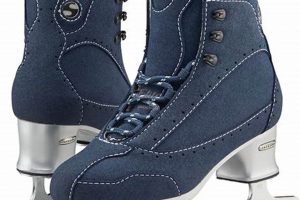
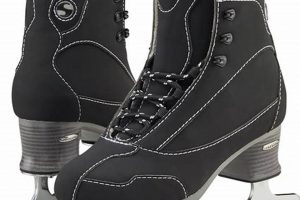
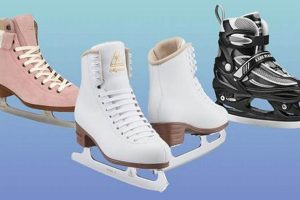
The component at the front of certain figure skating blades, characterized by a series of teeth, serves a critical function. These serrated edges are embedded into the ice to facilitate jumps, spins, and footwork. For instance, a skater executing a Lutz jump uses the implement to launch into the air, while intricate step sequences often rely on controlled engagement with the ice.
The presence of this feature is fundamental to the execution of advanced maneuvers in figure skating. It provides the necessary grip and leverage for take-offs, landings, and maintaining balance during complex rotations. Historically, its design has evolved to optimize performance, with variations in size, shape, and arrangement influencing a skater’s ability to perform specific elements. The proper utilization of this element is essential for competitive success and artistic expression.
The subsequent sections will delve deeper into the specific techniques employing this crucial element, explore the different types available, and examine the maintenance practices necessary to ensure optimal performance and longevity. The discussion will also address the learning curve associated with mastering its use and the common pitfalls to avoid.
Tips for Mastering Blade’s Forward Serrations
This section offers guidance on the effective utilization of the forward-most teeth on a figure skating blade. Proficiency requires dedicated practice and a thorough understanding of its function.
Tip 1: Develop Fundamental Edge Control: Prioritize mastering basic edge control before attempting advanced maneuvers utilizing the serrated edge. Controlled edges are the foundation for leveraging the teeth effectively.
Tip 2: Practice Controlled Engagement: Begin by practicing gentle engagement with the ice, gradually increasing pressure. This develops the necessary feel and prevents accidental catches.
Tip 3: Focus on Body Alignment: Proper body alignment is crucial for efficient energy transfer. Ensure the body’s center of gravity is aligned with the blade to maximize control during take-offs and landings.
Tip 4: Utilize Drills for Targeted Improvement: Incorporate specific drills that isolate and strengthen the muscles used for engaging the ice-contact element. Repetition builds muscle memory and improves technique.
Tip 5: Seek Expert Instruction: Regular feedback from a qualified coach is invaluable. A coach can identify and correct subtle errors in technique, accelerating progress.
Tip 6: Maintain Blade Sharpness: The sharpness of the forward teeth directly impacts performance. Regularly sharpen the blades to ensure consistent and reliable grip.
Tip 7: Understand the Blade’s Profile: Familiarize yourself with the specific profile of the blade. Different blade designs offer varying degrees of assistance for specific maneuvers.
Consistent application of these tips, coupled with diligent practice, will enhance the skater’s ability to utilize the forward serrations of the blade for improved performance and artistry.
The following sections will provide a detailed analysis of specific skating techniques that heavily rely on the correct manipulation of this critical component.
1. Jump Launch Facilitation

The capacity for upward propulsion in specific figure skating jumps is intrinsically linked to the forward-most teeth on the blade. These serrations provide the requisite leverage and stability necessary for initiating rotations and achieving significant airtime. The skater plants these teeth into the ice at a precise angle, converting horizontal momentum into vertical ascent. Without this engagement, the generation of sufficient force for executing jumps like the Lutz or Flip would be severely compromised. For example, a skater attempting a Lutz jump relies heavily on the secure placement of the forward teeth to initiate the rotation and propel themselves into the air. Inadequate engagement results in a loss of height and rotation, leading to a failed jump attempt.
The effectiveness of the teeth in facilitating jump launches is further influenced by factors such as blade sharpness, skater technique, and ice conditions. Dull teeth compromise grip, reducing the power generated during the take-off. Improper technique, such as incorrect angle of engagement or insufficient pressure, can also hinder the jump. Varying ice conditions, from too soft to too hard, necessitate adjustments in technique to maintain optimal grip. The skater’s ability to adapt to these variables is critical for consistent jump execution. Consider, for instance, a skater encountering slightly softer ice; a minor adjustment in the pressure applied to the serrations is required to ensure a solid launch.
In summary, the forward-most teeth on the blade are indispensable for facilitating jump launches in figure skating. Their proper utilization, coupled with consistent maintenance and adaptive technique, is essential for successful execution of these complex maneuvers. Recognizing the significance of this component enables skaters to refine their technique and improve their performance. However, achieving mastery demands persistent practice and meticulous attention to detail.
2. Spin Pivot Point
The stability and control exhibited during certain figure skating spins are critically reliant on the engagement of the forward-most teeth on the blade. These serrations act as a pivot point, allowing for precise rotations and minimizing unwanted deviations from the spin’s axis.
- Controlled Entry and Centering
The initial placement of the teeth on the ice during spin entry is paramount. Precision in this initial contact dictates the spin’s subsequent stability. A controlled entry ensures the spin’s axis aligns correctly, preventing wobbling and facilitating smoother rotations. For example, a poorly executed entry, characterized by a lateral slide before teeth engagement, will disrupt the spin’s center, leading to a less controlled rotation.
- Reduced Lateral Movement
The serrated edge minimizes lateral movement during the spin. The teeth provide a fixed point of contact, resisting forces that would otherwise cause the skater to drift across the ice. This localized contact concentrates rotational energy and prevents dissipation, leading to increased spin duration and control. The reduced lateral movement is directly proportional to the tightness and consistency of the spin’s footprint on the ice.
- Variations in Spin Techniques
Different spin techniques employ varying degrees of reliance on the teeth. Upright spins often utilize a more pronounced engagement, providing a stable base for maintaining balance and height. In contrast, sit spins may involve a shallower engagement, requiring a greater reliance on body control and edge work to maintain the spin. Consequently, the skater’s awareness of the teeth’s role must be adapted based on the specific spin being performed.
- Maintenance and Blade Profile
The sharpness and profile of the teeth directly impact their effectiveness as a pivot point. Dull teeth offer reduced grip, compromising stability and increasing the likelihood of slipping. A properly maintained blade profile ensures optimal contact with the ice, maximizing the teeth’s ability to anchor the spin. Regular sharpening is crucial for maintaining consistent performance and preventing unpredictable spin deviations.
The interplay between entry technique, body alignment, and blade maintenance determines the efficacy of the forward-most teeth as a spin pivot point. Precise engagement with the ice ensures a stable axis of rotation and allows for the consistent execution of various spin techniques. Mastery of this element separates competent skaters from truly exceptional performers.
3. Footwork Precision
The execution of intricate footwork sequences in figure skating is intricately linked to the forward-most serrations on the blade. While not the primary contact point for all footwork, these teeth provide crucial support and stability during specific maneuvers, enabling skaters to achieve the precision and complexity required for high-level performance. The following facets illuminate this connection.
- Bracket and Rocker Turns
These turns, characterized by a change of edge and direction while maintaining a continuous flow, often utilize the teeth for subtle corrections and adjustments. The skater may lightly engage the teeth to maintain balance or alter the arc of the turn, preventing loss of edge control and preserving the fluidity of the sequence. The teeth allow for minute alterations in trajectory, contributing to the overall sharpness and precision of the turns. For example, during a rocker turn, a skater might momentarily use the teeth to redirect the momentum precisely.
- Choctaws and Counters
These turns involve a change of foot, requiring seamless transitions and precise blade placement. In some variations, the teeth provide a brief point of contact for maintaining stability during the transfer of weight. This momentary engagement prevents wobbling and ensures a clean, controlled change of foot. The use of the teeth in these turns is often subtle, requiring a high degree of skill and awareness. During a counter, the teeth can act as a pivot during a swift change of direction.
- Three Turns
The very definition of a Three Turn, hinges on the ability to change direction and blade edge in one motion. The teeth provide vital contact to ensure the turn stays stable.
- Edge Work Enhancement
Even in footwork sequences that do not directly involve the teeth, their presence influences the skater’s overall edge control. The awareness of the teeth’s location and potential for engagement allows skaters to maintain a more controlled and balanced posture. This heightened awareness translates to improved edge quality and a greater ability to execute intricate footwork patterns with precision. Skaters often report a feeling of increased confidence and control when skating on blades with well-defined teeth.
In conclusion, the forward-most teeth of the blade, although not always the primary point of contact, significantly contribute to footwork precision in figure skating. From providing subtle support during bracket turns to enhancing overall edge control, these serrations play a crucial role in enabling skaters to execute complex and demanding footwork sequences with accuracy and finesse. The teeth’s influence highlights the nuanced interplay between blade design, skater technique, and the artistry of figure skating.
4. Blade Design Variation
The forward-most teeth on a figure skating blade are subject to considerable design variations, each intended to optimize performance for specific skating styles and skill levels. These variations encompass aspects of size, shape, angle, and overall configuration, influencing how a skater interacts with the ice during jumps, spins, and footwork.
- Size and Number of Teeth
The size and number of teeth vary significantly across different blade models. Blades designed for advanced freestyle skating often feature larger, more prominent teeth to provide enhanced grip for powerful jumps. Conversely, blades intended for ice dance or synchronized skating may have smaller, less aggressive teeth to facilitate smoother transitions and intricate footwork. A higher number of teeth can increase the overall surface area for grip, while fewer, larger teeth may offer more focused power for takeoffs.
- Shape and Profile
The shape of the teeth can range from sharply pointed to rounded or blunted. Sharply pointed teeth offer maximum grip and are favored for jumps requiring immediate and decisive engagement with the ice. Rounded or blunted teeth provide a more forgiving feel and are often preferred for spins and footwork where controlled, subtle engagement is desired. The overall profile, including the curvature and distribution of the teeth, also contributes to the blade’s performance characteristics.
- Angle and Configuration
The angle at which the teeth are set in relation to the blade’s running surface influences the ease and effectiveness of engagement. A steeper angle allows for quicker, more aggressive engagement, while a shallower angle offers a smoother, more gradual transition. The configuration, including the spacing and alignment of the teeth, affects the overall stability and predictability of the blade’s performance. Some blade designs feature asymmetrical configurations to optimize performance for specific turns or jumps.
- Material and Construction
While the general shape and configuration are key, the material used in the manufacturing of the teeth and how it’s constructed on the blade has a large impact on performance. Forged steel or carbon fiber composites are the usual choices, but different manufacturing methods can influence the weight, durability, and even the acoustic response of the blade when striking the ice.
The selection of a particular blade design is a highly individual process, taking into account the skater’s skill level, skating style, and personal preferences. Understanding the nuances of blade design variations enables skaters and coaches to make informed decisions that optimize performance and enhance the overall skating experience. The continual refinement of these components reflects the ongoing pursuit of innovation within the sport.
5. Sharpening Maintenance Needs

The forward-most teeth on a figure skating blade are subject to wear and tear with consistent use, necessitating regular sharpening to maintain optimal performance. Dull teeth compromise their ability to grip the ice effectively, impacting jump take-offs, spin stability, and footwork precision. The degree and frequency of sharpening depend on factors such as ice hardness, skating frequency, and the skater’s technique. Improperly maintained teeth can lead to inconsistent performance, increased risk of falls, and potential injury. For instance, a skater attempting a Lutz jump with dull teeth may experience a delayed or incomplete take-off, resulting in insufficient rotation and a hard landing. Likewise, spins initiated with poorly sharpened teeth may exhibit instability and reduced duration.
Sharpening the forward serrations requires specialized equipment and expertise. The sharpening process involves carefully grinding the teeth to restore their original sharpness and profile, ensuring proper engagement with the ice. Incorrect sharpening techniques can damage the blade, altering its performance characteristics and potentially rendering it unusable. A qualified skate technician should be consulted to determine the appropriate sharpening schedule and technique for a given blade type and skating style. Routine inspection of the teeth for signs of wear or damage is also crucial. Small chips or burrs can be removed with a fine file, preventing further deterioration and maintaining the integrity of the blade.
In summary, consistent and proper sharpening maintenance is indispensable for preserving the functionality of the forward-most teeth on figure skating blades. Neglecting this maintenance can negatively impact skating performance and increase the risk of injury. Adherence to a regular sharpening schedule, coupled with professional expertise, ensures the teeth remain effective in providing grip, stability, and control during jumps, spins, and footwork. This diligent maintenance is not merely a matter of preference, but a critical aspect of safe and effective figure skating practice.
Frequently Asked Questions
This section addresses common inquiries regarding the component on figure skating blades characterized by a series of teeth.
Question 1: What is the primary function of the forward-most teeth on a figure skating blade?
The primary function involves providing grip and leverage for executing jumps, spins, and specific footwork maneuvers. They facilitate take-offs, landings, and act as a pivot point during rotations.
Question 2: Are the forward serrations necessary for all figure skating disciplines?
While these serrations are integral to freestyle skating, where jumps are prevalent, their utilization may vary in disciplines such as ice dance or synchronized skating. Certain maneuvers in these disciplines may rely less on direct engagement with the teeth.
Question 3: How does the size and shape of the serrations affect skating performance?
The size and shape influence the aggressiveness and precision of engagement. Larger, sharper teeth offer enhanced grip for jumps, while smaller, rounded teeth provide a smoother feel for spins and footwork. The optimal configuration depends on individual skating style and skill level.
Question 4: How frequently should the teeth on a figure skating blade be sharpened?
The sharpening frequency depends on several factors, including ice hardness, skating frequency, and individual technique. Routine inspection and professional sharpening by a qualified technician are recommended to maintain optimal performance.
Question 5: Can improper use of the serrations lead to injury?
Yes, improper use or dull teeth can increase the risk of falls and potential injury. Learning proper technique and maintaining blade sharpness are essential for safe skating practices.
Question 6: Are there different types of blades designed for different levels of skaters?
Indeed, various blade designs cater to different skill levels and skating styles. Blades for beginners typically feature less aggressive teeth, while advanced blades offer more pronounced serrations for complex maneuvers.
The effectiveness of the blade’s forward serrations relies on consistent maintenance, proper technique, and an understanding of blade design principles. Consulting with a qualified coach and skate technician is crucial for maximizing performance and ensuring safety.
The subsequent section delves into the historical evolution of the design and impact of these elements on the progression of figure skating.
Toe Pick Ice Skate
The preceding analysis has illuminated the multifaceted role of the toe pick ice skate. This crucial element, comprising the forward serrations on figure skating blades, is integral to executing jumps, spins, and intricate footwork. Design variations, sharpening maintenance, and skilled utilization collectively determine skating performance. Its functional contribution extends from jump launches to acting as a pivotal point and aiding footwork precision. Understanding the dynamics of this element is paramount to mastering advanced techniques and ensuring safety on the ice.
Continued research and innovation in toe pick ice skate design are poised to shape the future of figure skating. Enhanced material sciences and refined blade profiles may further optimize performance, allowing for greater athleticism and artistry. The continued dedication to the skillful implementation of this component will invariably define the capabilities of future generations of skaters.