![Top Ice Skates: Best Ice Skates for Beginners Child [Guide]](data:image/svg+xml;base64,PHN2ZyB4bWxucz0iaHR0cDovL3d3dy53My5vcmcvMjAwMC9zdmciIHdpZHRoPSI0NzQiIGhlaWdodD0iNjYiIHZpZXdCb3g9IjAgMCA0NzQgNjYiPjxyZWN0IHdpZHRoPSIxMDAlIiBoZWlnaHQ9IjEwMCUiIHN0eWxlPSJmaWxsOiNjZmQ0ZGI7ZmlsbC1vcGFjaXR5OiAwLjE7Ii8+PC9zdmc+ "Top Ice Skates: Best Ice Skates for Beginners Child [Guide] How to Skateboard: A Beginner's Guide to Your First Board & Tricks")
The optimal footwear choice for a young individual initiating ice skating is characterized by features that prioritize support, comfort, and ease of use. These skates typically incorporate a high degree of ankle support to prevent injuries, coupled with a forgiving blade design that promotes balance and control for novice skaters. For example, skates with a wider blade or a more pronounced rocker (the curve of the blade) can aid in stability and forward motion, reducing the initial challenges of learning to balance on the ice.
Selecting appropriate skates for new skaters significantly enhances their learning experience. Properly fitted and designed skates can reduce the risk of injury, instill confidence, and ultimately foster a more positive association with the sport. Historically, early ice skates were simple bone attachments, evolving into iron blades strapped to boots. Modern recreational ice skates blend synthetic materials and advanced blade technology to provide enhanced performance and comfort, making learning more accessible than ever before.
Considerations such as skate type (recreational, figure, hockey), sizing and fit guidelines, materials used in construction, and specific design features affecting stability and maneuverability are critical elements in determining the suitability of various options. A detailed examination of these factors will assist in selecting the most advantageous equipment to support a young beginner’s initial forays onto the ice.
Guidance for Selecting Appropriate Ice Skates
The following provides essential guidance on choosing ice skates that are suitable for a child’s initial experiences on the ice, emphasizing safety and ease of learning.
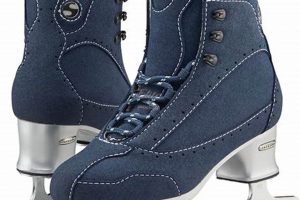
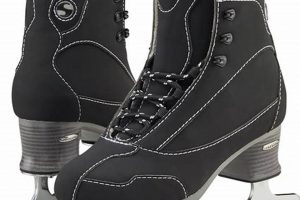
Tip 1: Prioritize Ankle Support: A rigid boot that provides ample ankle support is paramount. This feature minimizes the risk of ankle sprains and aids in maintaining balance, especially crucial for new skaters who are still developing their stability.
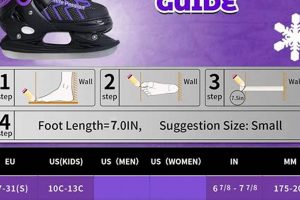
Tip 2: Ensure Proper Fit: Skates should fit snugly without being overly tight, allowing minimal movement of the foot within the boot. Ill-fitting skates can cause blisters, discomfort, and reduced control. Professional skate fitting is highly recommended.
Tip 3: Choose Recreational Skates Initially: Recreational skates are generally designed with more forgiving blades and added comfort features compared to figure or hockey skates. Their construction is more suitable for beginners learning basic movements.
Tip 4: Inspect Blade Sharpness: While new skates might seem ready to use, the blades often require initial sharpening. A slightly sharpened blade provides better grip on the ice, facilitating easier turning and stopping.
Tip 5: Consider Adjustable Skates: For rapidly growing children, adjustable skates can be a cost-effective option. These skates offer size adjustments, extending their usability over a longer period, though ensuring adequate support remains vital.
Tip 6: Evaluate Lacing System: A secure lacing system is essential. Ensure that the laces can be tightened evenly throughout the boot, providing consistent support from the toe to the ankle. Avoid skates with flimsy or easily loosened laces.
Tip 7: Use Skate Guards: Invest in skate guards to protect the blades when walking off the ice. Walking on hard surfaces dulls the blades, diminishing their performance and requiring more frequent sharpening.
These considerations facilitate selecting ice skates that optimize comfort, support, and safety, thereby contributing to a more enjoyable and successful learning experience on the ice. Selecting appropriate skates is pivotal in fostering confidence and reducing the potential for injury during initial ice skating sessions.
Implementing these tips will significantly enhance the likelihood of a positive introduction to ice skating for young learners. Further research into specific brands and models that align with these guidelines is encouraged.
1. Ankle Support

Ankle support serves as a foundational element in the selection of the most suitable ice skates for children initiating their skating journey. The inherent instability associated with learning to balance on a narrow blade necessitates external reinforcement to mitigate the risk of ankle injuries, such as sprains or fractures. Insufficient ankle support can lead to compensatory movements, which hinder the development of proper skating technique and increase the likelihood of falls. For example, a child using skates with inadequate ankle support may excessively pronate or supinate the foot, leading to fatigue and potential long-term biomechanical issues. Therefore, skates designated as optimal choices for beginners invariably prioritize robust ankle support through rigid boot construction or strategically placed reinforcement materials.
The presence of firm ankle support enables novice skaters to maintain a more upright posture and exert greater control over the skate’s blade. This enhanced control translates directly to improved maneuverability and stability on the ice, fostering confidence and accelerating the learning process. Contrastingly, skates lacking adequate support require the child to expend significantly more energy simply to maintain balance, diverting focus from acquiring fundamental skating skills. Consider the example of a group skating lesson; those with supportive skates exhibit visibly improved technique and progress compared to those using less structured models. Consequently, adequate ankle support is not merely a comfort feature but rather a critical performance and safety parameter when determining the appropriateness of ice skates for beginner children.
In summary, the connection between ankle support and optimal ice skates for novice child skaters is inextricably linked to injury prevention, enhanced balance, and facilitated skill development. Prioritizing this characteristic is essential when evaluating skate options, contributing directly to a safer, more enjoyable, and ultimately more successful introduction to the sport. Overlooking the significance of ankle support can impede progress and increase the likelihood of negative experiences, underscoring its fundamental role in selecting appropriate ice skating equipment for young beginners.
2. Proper fit

Proper fit constitutes a fundamental element in determining the suitability of ice skates for beginner children. The connection between correctly sized skates and a positive initial skating experience is direct and significant. Ill-fitting skates, whether too large or too small, impede balance, hinder control, and increase the risk of injury. For instance, skates that are excessively large provide inadequate ankle support, leading to instability and potential ankle sprains. Conversely, skates that are too small restrict foot movement, causing discomfort, blisters, and impaired circulation. A proper fit allows for natural foot movement while maintaining secure contact with the skate boot, translating to improved balance and control on the ice. The practical significance of this understanding lies in the direct correlation between skate fit and a childs confidence and enjoyment of skating.
Achieving a proper fit involves careful consideration of several factors. Foot length and width measurements are crucial, as these dimensions directly influence the appropriate skate size. It is advisable to consult a professional skate fitter, who can assess foot characteristics and recommend a suitable skate model and size. When trying on skates, children should wear socks of the type they intend to use while skating. The heel should be firmly seated in the back of the skate, and the toes should have adequate room to move without being cramped. The lacing system should be tightened evenly to provide uniform support throughout the foot. A real-world example demonstrates this point: a child who initially struggled with skating due to ill-fitting skates experienced immediate improvement in balance and control after being fitted with appropriately sized skates by a professional.
In summary, the selection of ice skates for beginner children necessitates a meticulous focus on proper fit. This involves precise foot measurements, professional consultation, and careful consideration of skate characteristics. Addressing the issue of proper fit is crucial in mitigating risks associated with injury, maximizing comfort, and ultimately fostering a positive and successful introduction to ice skating. The implications of neglecting proper fit extend beyond mere discomfort, impacting a child’s motivation and willingness to continue learning. Therefore, proper fit should be considered a non-negotiable aspect of choosing skates for young beginners.
3. Blade sharpness

Blade sharpness significantly impacts the performance and safety of ice skates, particularly for beginners. Sharp blades create friction with the ice surface, allowing for controlled gliding, turning, and stopping. Conversely, dull blades offer minimal grip, leading to instability and increased risk of falls. For a child new to ice skating, the presence of sharp blades facilitates the learning of fundamental skills by providing greater control over movement. The impact is direct; a child struggling to maintain balance on dull blades may quickly gain confidence and stability with properly sharpened blades. Blade sharpness is, therefore, a critical component of optimal ice skates for beginners.
The effects of blade sharpness extend beyond initial balance and control. Sharp blades allow for efficient edge work, essential for developing proper skating technique. A child learning to turn or stop will find these maneuvers significantly easier with sharp blades, promoting faster skill acquisition and greater enjoyment. Furthermore, the effort required to move across the ice is reduced, conserving energy and allowing for longer practice sessions. Regular blade maintenance, including sharpening as needed, is thus an integral part of ensuring the continued suitability of ice skates for novice skaters. A practical example is the common observation of children struggling to perform basic hockey stops with dull blades, only to execute the maneuver effectively after the blades are sharpened.
In conclusion, blade sharpness is an indispensable characteristic of ice skates intended for children beginning their skating journey. Its influence extends from initial balance and stability to advanced skill development and overall safety. While other factors such as ankle support and proper fit are also important, the role of sharp blades in facilitating controlled movement and reducing the risk of falls cannot be overstated. Prioritizing blade sharpness and implementing a routine maintenance schedule are vital for ensuring a positive and successful introduction to ice skating for young learners.
4. Skate type

The selection of skate type holds significant implications for a child’s initial experience with ice skating. Recreational skates are generally regarded as the most suitable option for beginners due to their design features, which prioritize comfort, stability, and ease of use. Unlike figure skates, characterized by a toe pick and a more aggressively curved blade, or hockey skates, designed for agility and maneuverability in a competitive setting, recreational skates feature a straighter blade profile and softer boot construction. This design facilitates easier balance and control for novice skaters, minimizing the initial challenges of learning to glide and move on the ice. The cause-and-effect relationship is clear: choosing a more forgiving skate type leads to a more positive and less frustrating learning experience.
The practical significance of skate type becomes evident when observing beginners attempting to learn on unsuitable skates. A child using hockey skates, for instance, may struggle to maintain a stable upright posture due to the aggressive forward lean of the boot. Similarly, figure skates with their prominent toe pick can lead to accidental tripping and difficulty in establishing a smooth gliding motion. Recreational skates, with their more neutral stance and less specialized blade, offer a more balanced and controllable platform for learning basic skating skills. This is supported by numerous anecdotal examples from skating instructors who consistently recommend recreational skates for their introductory lessons. Furthermore, the softer boot of a recreational skate typically provides greater comfort, reducing the likelihood of blisters and other foot discomforts that can deter a child from continuing to learn.
In conclusion, the determination of skate type is a crucial component in selecting the most appropriate ice skates for a beginning child skater. Prioritizing recreational skates, with their inherent stability and comfort features, contributes directly to a more successful and enjoyable introduction to the sport. While other skate types may become relevant as the child progresses, the initial focus should remain on selecting a skate that minimizes the challenges of learning and maximizes the potential for a positive skating experience. Overlooking the importance of skate type can lead to unnecessary frustration and hinder the development of fundamental skating skills.
5. Lacing system
The lacing system on ice skates directly contributes to the overall performance and safety, making it a critical component of suitable ice skates for children who are beginners. A well-designed lacing system allows for precise adjustment, securing the foot and ankle within the boot to maximize support and control. Improper lacing can lead to instability, increasing the risk of injury and hindering skill development. The connection between a secure lacing system and positive skating outcomes for beginners is a direct one; insufficient support from the lacing can negate the benefits of otherwise well-designed skates. The practical significance of this understanding is clear in scenarios where loose or ineffective lacing compromises ankle stability, causing novice skaters to struggle with balance and control.
Different lacing systems offer varying degrees of adjustability and support. Traditional laces, when properly tightened, provide a customized fit, allowing for precise control over pressure distribution across the foot and ankle. Speed lacing systems offer quicker tightening but may lack the fine-tuning capabilities of traditional laces. Regardless of the system, the laces should be durable and resistant to loosening during use. A common issue encountered with beginner skaters involves laces that loosen quickly, requiring frequent adjustments and interrupting the learning process. Therefore, selecting skates with a reliable and easily manageable lacing system is a critical consideration. An instance exemplifying this involves children experiencing improved stability and confidence after switching to skates with a robust lacing system that maintained consistent support throughout their skating sessions.
In conclusion, the lacing system is an integral part of ice skates designed for children embarking on their skating journey. The capacity of the lacing system to provide secure and adjustable support directly impacts balance, control, and safety on the ice. While features such as ankle support and blade sharpness are essential, the lacing system serves as the mechanism for optimizing these attributes. Choosing skates with a well-designed and easily manageable lacing system is paramount in fostering a positive and secure learning environment, enabling young beginners to develop their skating skills with confidence.
6. Adjustability
Adjustability presents a practical and economically sound feature in ice skates intended for beginner children. Given the rapid growth patterns typical of childhood, purchasing skates that accommodate size fluctuations over a period of months offers a clear advantage. This capability reduces the frequency of skate replacements, thereby mitigating the financial burden on parents or guardians. The cause-and-effect relationship is straightforward: adjustable skates adapt to growing feet, extending the usable lifespan of the equipment. This adjustability does not negate the need for proper fit; rather, it complements it by allowing the skates to maintain an appropriate fit as the child’s foot size increases. The practical significance of this adjustability is evident in the context of recreational skating, where the demands on the equipment are less rigorous than in competitive disciplines.
The mechanism of adjustability commonly involves a sliding or expanding boot design that allows the user to incrementally increase the skate size. While adjustability is beneficial, the quality of ankle support should not be compromised. It is crucial to select adjustable skates that maintain adequate support throughout the entire size range. A real-world example is the use of adjustable skates in learn-to-skate programs, where instructors appreciate the flexibility of accommodating a range of foot sizes without sacrificing essential safety features. Furthermore, the convenience of adjustable skates simplifies the process of sharing equipment among siblings or friends with similar foot sizes, further enhancing their cost-effectiveness.
In summary, adjustability serves as a valuable attribute in ice skates designed for beginner children, offering both economic benefits and practical convenience. However, it is imperative that this adjustability does not come at the expense of crucial features such as ankle support and overall build quality. Selecting adjustable skates that meet established safety standards and maintain a comfortable and supportive fit throughout their size range remains paramount. While adjustability offers a financial advantage, prioritizing the child’s safety and comfort should remain the primary consideration when selecting ice skating equipment.
7. Safety standards
Adherence to established safety standards is a critical determinant in identifying suitable ice skates for children initiating their skating journey. The primary function of these standards is to ensure that the equipment provides adequate protection against potential injuries. Skates that comply with recognized safety certifications have undergone rigorous testing to verify their structural integrity, impact resistance, and overall safety performance. The direct effect of these standards is to minimize the risk of ankle sprains, fractures, and other injuries commonly associated with learning to skate. Without adherence to these standards, the probability of equipment failure and subsequent injury increases significantly. For example, skates lacking sufficient ankle support, as verified by safety testing, may compromise stability and increase the likelihood of falls, thereby underscoring the importance of these standards as a fundamental component of optimal skating equipment for children.
The practical application of safety standards in skate selection involves scrutinizing product labels and certifications for compliance with recognized testing organizations. Certifications indicate that the skates have met specific performance criteria established by industry experts and regulatory bodies. Parents or guardians should prioritize skates that bear certifications from reputable organizations, as these certifications provide a measure of assurance regarding the equipment’s safety performance. A real-world example involves skates that fail to meet impact resistance standards, resulting in boot deformation and potential foot injuries during minor collisions on the ice. Selecting skates that have been tested and certified to withstand such impacts minimizes this risk, thus highlighting the pragmatic value of safety compliance.
In conclusion, safety standards serve as an indispensable criterion in the selection of ice skates for beginning child skaters. These standards offer a framework for evaluating equipment safety and ensuring that the skates provide adequate protection against potential injuries. While factors such as proper fit and blade sharpness are also important, adherence to safety standards constitutes a foundational element in creating a secure and enjoyable skating experience. Overlooking these standards can expose children to unnecessary risks, underscoring the critical role of safety certifications in guiding skate selection decisions. Prioritizing safety standards is paramount in fostering a positive and injury-free introduction to ice skating for young learners.
Frequently Asked Questions
The following addresses common inquiries regarding the selection and maintenance of ice skates specifically designed for children new to the sport, aiming to provide clarity and informed guidance.
Question 1: What type of ice skate is most suitable for a child who is just learning to skate?
Recreational ice skates are generally considered the most appropriate for beginner children. These skates typically offer greater ankle support, a more forgiving blade design, and a comfortable fit, all of which contribute to increased stability and ease of learning.
Question 2: How important is the proper fit of ice skates for a beginner child?
Proper fit is paramount. Ill-fitting skates can cause discomfort, blisters, and reduced control, increasing the risk of injury. It is essential to have the child’s feet professionally measured and fitted for skates that provide a snug, supportive fit without being overly tight.
Question 3: How frequently should ice skate blades be sharpened, especially for a beginner?
Blade sharpening frequency depends on usage and surface conditions, but generally, new skates require initial sharpening. Thereafter, sharpening should be assessed and performed as needed, typically every 20-40 hours of skating, or when the skater experiences difficulty maintaining edges.
Question 4: What level of ankle support is necessary in ice skates for a beginner child?
A high degree of ankle support is crucial. The boot should be rigid enough to prevent excessive ankle movement and provide stability, reducing the risk of sprains or other injuries. Look for skates with reinforced ankle support features.
Question 5: Are adjustable ice skates a viable option for beginner children?
Adjustable ice skates can be a practical option, particularly for rapidly growing children, as they extend the usable lifespan of the skates. However, it is imperative to ensure that adjustable skates still provide adequate ankle support and a secure fit throughout the adjustment range.
Question 6: What safety certifications should be considered when purchasing ice skates for a beginner child?
While specific ice skate safety certifications are not as prevalent as in other sporting equipment, it is prudent to research the manufacturer’s reputation and read reviews regarding the skate’s construction quality and durability. Prioritize skates from reputable brands known for producing reliable and safe equipment.
In summary, prioritizing proper fit, adequate ankle support, and regular blade maintenance is crucial for ensuring a safe and enjoyable learning experience for children new to ice skating. Consulting with a professional skate fitter is highly recommended to ensure optimal skate selection.
The subsequent section delves into the practical aspects of caring for and maintaining ice skates to maximize their performance and longevity.
Concluding Remarks
Determining the best ice skates for beginners child requires careful consideration of multiple interdependent factors. Ankle support, proper fit, blade sharpness, skate type, lacing system effectiveness, adjustability benefits, and adherence to safety standards collectively influence a young skater’s experience. A deficiency in any of these areas can impede skill development and increase the risk of injury. Therefore, informed selection necessitates a comprehensive evaluation of each characteristic, prioritizing those most critical for initial stability and control.
The acquisition of suitable ice skates represents an investment in a child’s physical development and enjoyment of a recreational activity. Diligent adherence to the outlined guidelines, coupled with professional fitting assistance, will significantly contribute to a positive and safe introduction to the sport. Further advancements in materials science and skate design promise continued improvements in comfort, performance, and safety, potentially enhancing the learning experience for future generations of young skaters.