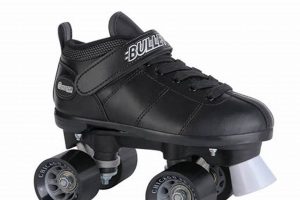
A pre-assembled skateboard, ready for use straight from the box, designed for skaters of all skill levels. These boards include all necessary components such as the deck, trucks, wheels, bearings, and grip tape, providing a convenient and accessible option for beginners and experienced riders alike. For instance, an individual seeking immediate participation in skateboarding can acquire one, bypassing the component selection and assembly process.
The significance of these ready-to-ride skateboards lies in their accessibility and ease of use, fostering broader participation in skateboarding. Their benefits encompass cost-effectiveness, particularly for novices, as they often represent a more economical entry point compared to purchasing individual parts. Historically, pre-assembled skateboards have played a pivotal role in popularizing skateboarding by simplifying the initial setup process and removing barriers to entry.
The ensuing sections will delve into the specific components, quality considerations, and target users of these skateboard configurations, offering a detailed analysis to aid informed decision-making.
Essential Considerations for Pre-Assembled Skateboards
The following guidance aims to provide crucial insights for selecting and maintaining a pre-assembled skateboard to optimize performance and longevity.
Tip 1: Component Assessment: Prior to purchase, examine the quality of individual components. Evaluate the deck for appropriate concave and material (typically maple). Inspect trucks for durable construction and responsiveness. Verify wheel durometer and size suitability for intended terrain. A comprehensive component review aids informed selection.
Tip 2: Bearing Maintenance: Regular bearing cleaning and lubrication are imperative. Remove bearings from wheels, clean with appropriate solvent, and apply skateboard-specific lubricant. Proper bearing maintenance ensures smooth rolling and extends bearing lifespan.
Tip 3: Truck Tightness Adjustment: Truck tightness affects turning responsiveness. Loosening trucks allows for easier turning but reduces stability at higher speeds. Conversely, tightening trucks enhances stability but decreases turning maneuverability. Adjust truck tightness to match riding style and skill level.
Tip 4: Wheel Rotation: Rotate wheels periodically to promote even wear. Rotate wheels from front to back or diagonally. Uniform wheel wear maximizes grip and prolongs wheel utility.
Tip 5: Deck Preservation: Protect the skateboard deck from excessive moisture. Avoid prolonged exposure to rain or standing water. Moisture can weaken the deck and compromise its structural integrity.
Tip 6: Grip Tape Integrity: Maintain grip tape to ensure optimal foot traction. Replace worn or damaged grip tape. Adequate grip tape is essential for board control and rider safety.
Tip 7: Hardware Inspection: Routinely inspect all hardware (nuts, bolts, screws) for tightness and damage. Loose or damaged hardware can compromise the skateboard’s structural integrity and rider safety. Replace any worn or damaged hardware immediately.
Adherence to these guidelines promotes optimal performance, extended product lifespan, and enhanced rider safety when utilizing a pre-assembled skateboard. Proper maintenance is a crucial aspect of responsible skateboard ownership.
The subsequent section will focus on advanced techniques and customization options for experienced skateboarders.
1. Deck Construction

Deck construction represents a foundational element of a complete skateboard. The materials and manufacturing processes directly influence the board’s strength, flexibility, and overall performance. Incomplete skateboards, by definition, include a deck. The properties of the deck, therefore, dictate the suitability of the complete for different skateboarding styles and skill levels. For example, a deck constructed of multiple layers of maple wood, pressed using epoxy resin, generally exhibits greater durability and pop compared to decks made from alternative materials or employing less rigorous manufacturing techniques. Consequently, the quality of deck construction is a primary factor in determining the longevity and usability of the skateboard.
The selection of maple wood as the primary material reflects its balance of strength-to-weight ratio and its inherent flexibility. Deck shape, concave, and dimensions affect the rider’s control and ability to execute tricks. Decks with steeper concave curves provide greater foot lock-in, facilitating more aggressive maneuvers. Similarly, the width of the deck must align with the rider’s foot size and preferred stance. Ignoring deck construction nuances can lead to a mismatch between the skateboard and the rider’s needs, resulting in diminished performance and increased risk of injury.
In summation, deck construction is a crucial determinant of the performance and durability of a complete skateboard. Understanding the materials, manufacturing processes, and shape characteristics allows for an informed selection, matching the complete skateboard to the rider’s skill level and intended use. Overlooking the importance of deck construction can severely limit the lifespan and usability of the product, potentially impacting the skater’s progression and enjoyment.
2. Truck Performance

Truck performance is a critical determinant of a complete skateboard’s overall functionality and riding experience. The trucks, serving as the pivoting mechanisms connecting the deck to the wheels, directly influence stability, turning responsiveness, and grind capabilities. The selection of appropriate trucks significantly impacts the skater’s ability to control the board and execute maneuvers effectively.
- Turning Radius and Responsiveness
Truck design and bushing durometer dictate turning radius and responsiveness. Looser trucks, characterized by softer bushings, allow for tighter turns and greater maneuverability, advantageous for street skating and technical tricks. Stiffer trucks, employing harder bushings, enhance stability at higher speeds, making them suitable for park skating and ramp riding. The selection must align with the rider’s preferred skating style and terrain.
- Grind Capabilities and Durability
Truck materials and construction methods influence grind capabilities and overall durability. Trucks crafted from high-grade alloys, such as aluminum or steel, exhibit greater resistance to wear and tear during grinds. Kingpin design and hanger geometry also contribute to grind clearance and stability. Robust truck construction is essential for withstanding the impacts and stresses associated with aggressive skateboarding.
- Stability and Board Control
Truck width and axle length affect stability and board control. Wider trucks generally provide greater stability, particularly during landings and high-speed maneuvers. Axle length should be appropriately matched to the deck width to ensure proper wheel placement and prevent wheel bite (contact between the wheel and the deck). Consistent stability contributes to rider confidence and reduces the likelihood of falls.
- Kingpin and Bushing Configuration
Kingpin design and bushing configuration impact truck responsiveness and overall ride feel. Inverted kingpins offer increased grind clearance and reduced snagging. Bushing shape and durometer fine-tune turning responsiveness. Conical bushings provide a more responsive feel, while cylindrical bushings offer greater stability. Experimentation with bushing configurations allows skaters to customize truck performance to their individual preferences.
In conclusion, truck performance is an integral aspect of a complete skateboard’s functionality, influencing turning, grinding, stability, and overall rider experience. The selection of appropriate trucks, considering factors such as turning radius, grind capabilities, stability, and component configuration, directly contributes to the skateboard’s suitability for different skateboarding styles and skill levels. The importance of truck performance cannot be overstated when evaluating the overall quality and usability of a complete skateboard.
3. Wheel Durometer
Wheel durometer, a measure of a skateboard wheel’s hardness, exerts a significant influence on the performance characteristics of an element skate complete. This hardness, typically measured on the A scale, directly affects grip, roll speed, and shock absorption. A higher durometer indicates a harder wheel, which generally provides faster roll speeds on smooth surfaces like skateparks, but offers less grip and poorer shock absorption on rougher terrain. Conversely, a lower durometer signifies a softer wheel, which delivers increased grip and enhanced shock absorption, making it suitable for street skating and uneven surfaces, but at the expense of roll speed. This cause-and-effect relationship is a critical consideration when selecting an element skate complete tailored for a specific skateboarding discipline. For instance, an element skate complete intended for skatepark use will often feature wheels with a durometer of 99A or higher, whereas a complete designed for street skating may incorporate wheels with a durometer in the range of 78A-90A. This difference in durometer is vital to optimize the element skate complete‘s performance.
The practical significance of understanding wheel durometer lies in its ability to tailor the element skate complete to specific riding conditions. A skater who primarily rides in skateparks requires wheels that prioritize speed and slide, enabling efficient transitions and technical maneuvers. Harder wheels, with their reduced grip, facilitate controlled slides and maintain momentum on the smooth concrete surfaces. In contrast, a skater who navigates urban environments encounters a variety of surfaces, including asphalt, cracks, and debris. Softer wheels, with their increased grip and shock absorption, provide better traction and a more comfortable ride on these less-than-ideal surfaces. A real-world example is the use of softer, 78A durometer wheels on longboards, where grip and comfort are prioritized for cruising and carving.
In summary, wheel durometer is an indispensable factor in determining the performance profile of an element skate complete. The selection of an appropriate durometer should align with the skater’s intended use and riding environment. Understanding the relationship between wheel hardness, grip, roll speed, and shock absorption allows for an informed decision, ensuring the element skate complete provides an optimal skating experience. The challenge lies in balancing these competing factors to achieve the desired performance characteristics for a given application. The proper wheel durometer enhances the functionality of the skateboard.
4. Bearing Precision

Bearing precision, a measure of the manufacturing tolerances and internal smoothness of skateboard bearings, exerts a demonstrable influence on the performance of an element skate complete. Higher precision bearings, typically rated using the ABEC (Annular Bearing Engineering Committee) scale or a similar metric, exhibit reduced friction and enhanced rotational efficiency compared to lower precision bearings. This translates to improved roll speed, reduced energy expenditure for the skater, and a smoother overall riding experience when using an element skate complete. The cause-and-effect relationship is direct: tighter manufacturing tolerances result in less internal friction, leading to faster and more efficient rolling. The element skate complete benefits from bearings as the ability to achieve and maintain speed depends directly on the quality of these components.
The practical significance of understanding bearing precision extends to various skateboarding disciplines. In competitive skateboarding, where fractions of a second can determine the outcome, higher precision bearings can provide a measurable advantage. Similarly, in longboarding or downhill skateboarding, where maintaining high speeds is crucial, the enhanced roll efficiency of precision bearings contributes to improved performance and reduced fatigue. Even in casual street skating, the smoother and more effortless roll provided by higher precision bearings can enhance the overall enjoyment of the activity. Consider, for example, two identical element skate complete setups, one equipped with ABEC 3 bearings and the other with ABEC 7 bearings. The element skate complete with ABEC 7 bearings will demonstrably roll faster and require less effort to maintain speed on a smooth surface. A rider utilizing the ABEC-7 bearings will have a noticeable advantage.
In summary, bearing precision plays a vital role in determining the performance characteristics of an element skate complete. While higher precision bearings may represent a greater initial investment, the benefits in terms of improved roll speed, reduced energy expenditure, and enhanced riding experience can justify the cost for skaters seeking optimal performance. The challenge lies in balancing the cost of higher precision bearings with the specific needs and riding style of the individual skater. Choosing the right bearing allows for the element skate complete to perform at its best.
5. Grip Tape Quality
Grip tape quality is intrinsically linked to the functionality and safety of an element skate complete. This abrasive material, applied to the deck’s surface, provides the necessary friction between the rider’s shoes and the board, enabling control and stability during various maneuvers. Insufficient grip directly translates to diminished control, increasing the risk of slips, falls, and compromised trick execution. The selection of an element skate complete should, therefore, prioritize grip tape exhibiting adequate coarseness and adhesive strength to ensure a secure and reliable connection between the skater and the board. The quality of this component determines how safely the element skate complete may be used.
The practical implications of grip tape quality are evident in various skateboarding disciplines. In street skating, where intricate footwork and precise board control are essential for executing technical tricks, high-quality grip tape is indispensable. Similarly, in vert skating or park skating, where skaters perform aerial maneuvers and transition between ramps, reliable grip is crucial for maintaining stability and preventing potentially dangerous falls. Consider, for example, an element skate complete used for performing kickflips. If the grip tape lacks sufficient abrasiveness, the skater will be unable to consistently rotate the board under their feet, resulting in missed tricks and potential injuries. Similarly, an element skate complete using adhesive may cause the tape to peel off while performing tricks.
In conclusion, grip tape quality represents a fundamental aspect of an element skate complete, directly influencing rider control, safety, and performance. The selection of an element skate complete should prioritize grip tape that provides adequate abrasiveness and durability. While often overlooked, grip tape plays a pivotal role in the overall skateboarding experience. The long-term quality and reliance of a skateboard depends on choosing and maintaining high-quality grip tape.
6. Hardware Durability
Hardware durability is a critical factor influencing the long-term performance and safety of an element skate complete. The quality and resilience of the nuts, bolts, and screws that secure the various components of the skateboard directly affect its structural integrity and rider safety. Compromised hardware can lead to component failure, resulting in loss of control and potential injury. Proper assessment and maintenance of skateboard hardware are therefore paramount for responsible use of an element skate complete.
- Kingpin Integrity
The kingpin, a central bolt securing the trucks to the skateboard deck, is subjected to significant stress during skateboarding maneuvers. Kingpins constructed from hardened steel alloys exhibit superior resistance to bending and breakage compared to those made from lower-quality materials. A fractured kingpin can lead to sudden truck detachment, resulting in an immediate loss of control. Regularly inspecting the kingpin for signs of stress or damage is essential for preventing catastrophic failure in an element skate complete.
- Axle Nut Security
Axle nuts, responsible for securing the wheels to the truck axles, must maintain a secure grip to prevent wheel detachment. Nylon locknuts, incorporating a nylon insert to prevent loosening, offer enhanced security compared to standard nuts. Loose axle nuts can cause wheels to wobble or detach completely, compromising stability and posing a safety hazard. Regular tightening and replacement of worn axle nuts are crucial for ensuring reliable wheel retention in an element skate complete.
- Mounting Hardware Resilience
Mounting hardware, comprising the nuts and bolts that attach the trucks to the deck, must withstand constant vibration and impact. High-strength steel hardware is preferred over weaker materials to prevent shearing or stripping of threads. Damaged or loose mounting hardware can lead to truck instability and deck separation. Routine inspection and tightening of mounting hardware are necessary for maintaining structural integrity in an element skate complete.
- Bearing Shield Retention
While technically not considered hardware, bearing shields rely on secure placement via a snap ring or similar mechanism. This small component protects the bearing from dirt and debris that can significantly reduce roll speed. If this retention mechanism fails due to low-quality materials or poor design, the bearing is susceptible to increased friction and eventual failure, thereby diminishing performance of the element skate complete.
The long-term reliability and safe operation of an element skate complete are directly contingent upon the durability of its hardware components. Neglecting hardware maintenance and failing to replace worn or damaged parts can compromise the skateboard’s structural integrity, increasing the risk of accidents and injuries. Consistent inspection and prompt replacement of compromised hardware are indispensable practices for responsible skateboard ownership, ensuring the element skate complete remains a safe and reliable tool for skateboarding.
7. Overall Stability
Overall stability, within the context of an element skate complete, denotes the skateboard’s resistance to unwanted movement or imbalance during operation. This characteristic is paramount for both novice and experienced skateboarders, influencing rider confidence, control, and safety. A stable element skate complete facilitates smoother transitions, more precise trick execution, and reduced risk of falls. It is therefore a primary consideration in evaluating the suitability of a given complete skateboard.
- Deck Width and Length Correlation
The dimensions of the skateboard deck significantly influence overall stability. A wider deck generally provides a more stable platform due to the increased surface area for foot placement. Similarly, a longer wheelbase (the distance between the front and rear trucks) enhances stability at higher speeds. An element skate complete featuring a deck that is appropriately sized for the rider’s stance and intended use contributes directly to enhanced stability and control.
- Truck Width and Axle Alignment
The width of the skateboard trucks and the alignment of the axles relative to the deck edges are crucial for maintaining stability. Trucks that are too narrow or axles that are misaligned can induce instability, making it difficult to maintain balance. An element skate complete with properly sized and aligned trucks promotes even weight distribution and enhances overall stability, allowing for more predictable handling.
- Wheelbase and Center of Gravity Relationship
The wheelbase, or distance between the trucks, dictates the responsiveness and stability of the element skate complete. A longer wheelbase offers increased stability, especially at higher speeds, by extending the base of support and lowering the center of gravity. This configuration is often preferred for cruising and downhill skating. Conversely, a shorter wheelbase allows for quicker turning and greater maneuverability, beneficial for street skating and trick execution. The optimal wheelbase depends upon a given user’s preferences.
- Bushing Durometer and Truck Tightness Interaction
The durometer (hardness) of the skateboard truck bushings and the tightness of the kingpin significantly influence stability and turning responsiveness. Softer bushings allow for easier turning but may compromise stability at higher speeds. Conversely, harder bushings enhance stability but reduce turning maneuverability. Adjusting the kingpin tightness allows for fine-tuning the balance between stability and responsiveness to suit the rider’s preferences. A well-tuned element skate complete exhibits a harmonious balance between bushing durometer and truck tightness, optimizing both stability and control.
In summary, overall stability in an element skate complete is a multifaceted characteristic influenced by deck dimensions, truck configuration, wheelbase, bushing durometer, and truck tightness. A stable element skate complete provides a secure and predictable riding experience, enhancing rider confidence and facilitating progression in skateboarding skills. Careful consideration of these factors is essential when selecting an element skate complete to ensure it meets the rider’s individual needs and intended use.
Frequently Asked Questions
The subsequent queries address common concerns and misconceptions surrounding the “element skate complete,” providing concise and informative answers to aid in informed decision-making.
Question 1: What defines the ideal user profile for an “element skate complete”?
The “element skate complete” caters to a wide range of skill levels, from novice skateboarders seeking an entry-level board to intermediate riders desiring a pre-assembled option. Suitability depends on individual riding style and intended use, with more experienced skaters potentially requiring component upgrades for optimal performance.
Question 2: How frequently should component maintenance be performed on an “element skate complete”?
Maintenance frequency varies based on usage intensity and riding conditions. Routine inspections of hardware, bearings, and grip tape are advisable prior to each session. Deep cleaning and lubrication of bearings should occur every 1-2 months, or more frequently under demanding circumstances.
Question 3: Are modifications or component upgrades feasible on an “element skate complete”?
Component customization is indeed possible and often pursued as riders progress. Upgrading trucks, wheels, or bearings can significantly enhance performance characteristics. Compatibility considerations are essential; ensuring new components align with existing hardware specifications is paramount.
Question 4: What is the expected lifespan of an “element skate complete”?
Lifespan is contingent on usage patterns, maintenance practices, and riding environments. With proper care, an “element skate complete” can provide several years of reliable service. Aggressive riding or neglect of maintenance can substantially shorten its usable life.
Question 5: How does wheel durometer selection impact the performance of an “element skate complete”?
Wheel durometer, a measure of hardness, dictates grip, roll speed, and shock absorption. Softer wheels (lower durometer) offer enhanced grip on rough surfaces, while harder wheels (higher durometer) provide increased speed on smooth surfaces. Selection should align with the primary riding environment.
Question 6: Is professional assembly recommended for optimal performance of an “element skate complete”?
While designed for immediate use, ensuring proper component alignment and torque settings is crucial. Individuals lacking experience may benefit from professional assembly to guarantee optimal performance and safety. Verification of hardware tightness should still be performed regularly regardless.
These FAQs offer insights into crucial aspects of the “element skate complete,” enabling users to make informed decisions regarding selection, maintenance, and customization.
The ensuing segment will address advanced skateboarding techniques and strategies.
Concluding Remarks on Element Skate Complete
This exposition has thoroughly examined the element skate complete, elucidating its components, performance characteristics, maintenance requirements, and suitability for various skateboarding applications. Critical aspects such as deck construction, truck performance, wheel durometer, bearing precision, grip tape quality, hardware durability, and overall stability have been addressed. The preceding analysis provides a comprehensive understanding of this readily available skateboarding option.
The element skate complete serves as a foundational element for skateboarding, offering accessibility and convenience. Continued responsible use, coupled with informed component selection and diligent maintenance, will maximize the lifespan and enhance the performance of this equipment, fostering a safer and more rewarding skateboarding experience. Its impact on skateboarding accessibility should not be understated.