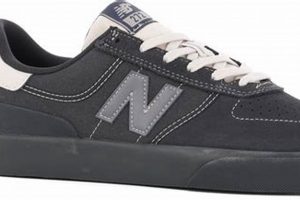
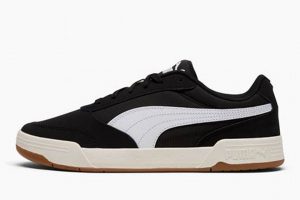
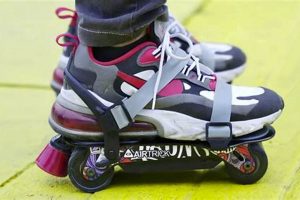
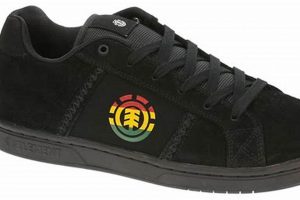
Footwear designed specifically for skateboarding, typically incorporating features that enhance performance and durability, often represents a crucial element for practitioners of this activity. Such specialized products often feature reinforced construction, enhanced grip, and impact cushioning to withstand the rigors of skateboarding. Examples include models engineered for superior board feel and control during tricks and maneuvers.
The importance of appropriate footwear for skateboarding lies in its ability to protect the feet and ankles from injury, while simultaneously optimizing performance. The design features often contribute to improved board control, reduced impact stress, and extended product lifespan. Historically, advancements in materials and manufacturing techniques have led to significant improvements in the functionality and durability of these specialized shoe types.
This article will now delve into the specific attributes, construction, and performance characteristics that define high-quality skateboarding footwear, exploring the features that make such equipment suitable for the demands of the sport. Key areas of focus include materials, construction techniques, and design considerations that contribute to overall performance and longevity.
Footwear Selection Guidance
The following recommendations offer practical insights for selecting durable and performance-oriented skateboarding footwear. These points emphasize key factors influencing longevity and suitability for skateboarding activities.
Tip 1: Prioritize Durable Materials: Look for models constructed with reinforced suede or leather uppers. These materials offer enhanced abrasion resistance, vital for withstanding the wear and tear associated with skateboarding. For example, double-stitched ollie areas significantly extend the shoe’s lifespan.
Tip 2: Evaluate Sole Construction: Cupsole or vulcanized sole construction impacts board feel and durability. Cupsole designs often provide greater impact protection, while vulcanized soles offer enhanced flexibility and board feel. Analyze personal skateboarding style and preferred terrain to determine the most suitable sole type.
Tip 3: Assess Impact Cushioning: Adequate heel and insole cushioning mitigates impact stress. Look for models incorporating impact-absorbing materials in the heel and forefoot areas. High-impact landings can be lessened through the use of specialized insoles or air cushioning systems.
Tip 4: Consider Ankle Support: High-top designs provide increased ankle support, reducing the risk of sprains and injuries. Low-top models offer greater freedom of movement. Selection depends on individual preferences and skateboarding style.
Tip 5: Examine Stitching Reinforcement: Reinforced stitching in high-stress areas, such as the toe and ollie patch, enhances structural integrity. Double or triple stitching significantly improves durability and prevents premature wear.
Tip 6: Inspect Tread Pattern: A durable tread pattern with excellent grip enhances board control. Look for patterns that offer optimal traction on various skateboarding surfaces. A worn tread pattern compromises grip and control.
Tip 7: Ensure Proper Fit: A snug yet comfortable fit is crucial for performance and injury prevention. Ensure adequate toe room and secure heel hold. An ill-fitting shoe can lead to blisters and reduced board feel.
Adhering to these recommendations can lead to the selection of skateboarding footwear that provides optimal performance, durability, and protection, extending the lifespan of the equipment and enhancing the skateboarding experience.
The following sections will explore specific design features and technological advancements in skateboarding footwear, further illuminating the factors that contribute to optimal performance and longevity.
1. Durable cupsole construction

Durable cupsole construction represents a foundational element in the design of many performance skateboarding shoes. Its presence within such footwear is not merely aesthetic; it is intrinsically linked to the impact protection and overall lifespan of the product. The cupsole’s construction involves molding the outsole as a single unit, encasing the upper portion of the shoe within its structure. This design inherently provides greater structural integrity and resistance to the forces exerted during skateboarding activities.
The incorporation of durable cupsole construction directly addresses the high-impact nature of skateboarding. Examples of this significance are evident in scenarios where skaters perform ollies, kickflips, or navigate uneven terrain. The cupsole effectively absorbs and distributes the force of impact, reducing stress on the foot and ankle. Without such robust construction, the likelihood of injury and premature wear on the shoe increases significantly. Furthermore, skaters often seek shoes with cupsole construction precisely because it provides a stable platform for board control and confidence during maneuvers.
In conclusion, durable cupsole construction is an indispensable feature in performance skateboarding footwear. Its integration delivers superior impact protection, enhances the shoe’s durability, and contributes to a more secure and stable skateboarding experience. Understanding this connection allows skaters to make informed decisions when selecting equipment, ultimately improving both performance and safety. The continued evolution of cupsole technology will likely further refine these benefits, ensuring its continued relevance in the skateboarding community.
2. Reinforced suede uppers
Reinforced suede uppers represent a critical design element in skateboarding footwear, directly addressing the sport’s abrasive demands. The integration of reinforced suede enhances durability, extending the lifespan of the shoe and ensuring sustained performance during rigorous activity.
- Abrasion Resistance
Suede, particularly when reinforced, offers superior abrasion resistance compared to alternative materials. Skateboarding involves constant contact with abrasive surfaces such as griptape, concrete, and asphalt. Reinforced suede uppers withstand this friction, preventing premature wear and tear. The reinforcement process, often involving additional layers or specialized treatments, further strengthens the material’s capacity to resist damage.
- Structural Integrity
Reinforced suede uppers contribute significantly to the shoe’s overall structural integrity. The material’s inherent strength, combined with reinforcement techniques like double stitching or internal backing, helps maintain the shoe’s shape and prevents deformation under stress. This structural stability ensures consistent performance and support, crucial for executing tricks and maneuvers with precision.
- Enhanced Board Feel
While durability is paramount, reinforced suede uppers also provide a balance between protection and board feel. Suede, in general, offers a tactile connection with the skateboard, allowing skaters to feel the board beneath their feet. Reinforcement techniques are implemented to maintain this sensitivity while augmenting the material’s resistance to abrasion. The resulting combination allows for precise board control without sacrificing the shoe’s longevity.
- Aesthetic Considerations
Beyond functional benefits, reinforced suede uppers also contribute to the shoe’s aesthetic appeal. Suede offers a distinctive texture and visual character that is often favored in skateboarding footwear. Reinforcement processes can enhance this aesthetic, creating a more refined and durable appearance. This intersection of functionality and style is a key consideration for many skaters when selecting footwear.
The implementation of reinforced suede uppers reflects a commitment to both performance and durability within the skateboarding shoe industry. Its presence signifies a design philosophy that prioritizes the needs of skaters, providing them with equipment that can withstand the rigors of the sport while maintaining a critical connection to the board.
3. Impact-absorbing insole

The incorporation of impact-absorbing insoles within skateboarding footwear, such as within the construction of the hypothetical “globe fusion skate shoes”, represents a critical design consideration. The purpose of such an insole extends beyond mere comfort; it directly addresses the physical demands inherent in skateboarding, mitigating the potential for injury and fatigue.
- Shock Attenuation
The primary function of an impact-absorbing insole is to reduce the magnitude of forces transmitted to the foot, ankle, and lower leg during high-impact activities. Examples of these impacts are the landing of jumps, bailing from tricks, and general vibrations experienced while riding. The insole, typically constructed from materials such as polyurethane or specialized foams, deforms upon impact, converting kinetic energy into other forms and thereby lessening the stress on the musculoskeletal system. In the context of specialized skateboarding footwear, this feature is crucial for maintaining long-term joint health and reducing the risk of chronic injuries.
- Energy Dissipation
Beyond simply absorbing shock, an effective insole also dissipates energy. This involves distributing the force over a larger area and a longer period of time. By spreading the impact, the peak force experienced by any single point within the foot is reduced. Consider the scenario of landing a hard trick: without adequate energy dissipation, the full force of the impact would be concentrated on the heel and forefoot, potentially leading to bruising or stress fractures. Specialized insole designs incorporate features such as gel inserts or multi-density foam layers to optimize energy dissipation.
- Proprioceptive Feedback
While primarily focused on impact absorption, some insole designs also influence proprioception, the body’s awareness of its position in space. Certain materials and contours within the insole can enhance the skater’s feel for the board, allowing for more precise control and quicker reactions. This is particularly important for technical skateboarding, where subtle adjustments and responsiveness are essential for executing complex tricks. However, it is crucial that the insole strikes a balance between shock absorption and board feel, as excessive cushioning can diminish proprioceptive feedback.
- Durability and Longevity
The effectiveness of an impact-absorbing insole is directly tied to its durability. Repeated impacts gradually degrade the material, reducing its ability to absorb shock. High-quality insoles are constructed from materials that resist compression and deformation over time, maintaining their performance characteristics throughout the lifespan of the shoe. The selection of durable materials and construction techniques is therefore paramount in ensuring the long-term benefits of impact absorption. Replacement insoles can also prolong the useful life of the entire shoe.
The aforementioned facets of impact-absorbing insoles illustrate their integral role in the design and performance of skateboarding footwear. Such features can affect skateboarders safety and performance.
4. Breathable inner lining
The integration of a breathable inner lining within skateboarding footwear, such as in “globe fusion skate shoes,” directly addresses issues of moisture management and thermal regulation. This feature is not merely a comfort enhancement; it plays a crucial role in maintaining foot health and optimizing performance during extended periods of activity. The breathable lining facilitates the circulation of air within the shoe, promoting the evaporation of perspiration and preventing the buildup of moisture. This reduction in humidity minimizes the risk of bacterial growth, which can lead to unpleasant odors and skin irritations. Furthermore, a dry environment reduces friction, lessening the likelihood of blisters and discomfort that can impede performance. For example, a skateboarder engaged in a prolonged session in warm weather will experience significant perspiration. A breathable lining effectively wicks away this moisture, maintaining a more comfortable and hygienic environment within the shoe. The absence of such a feature can result in discomfort, reduced performance, and increased risk of foot-related ailments.
Material selection significantly impacts the effectiveness of a breathable inner lining. Common materials include mesh fabrics, moisture-wicking synthetics, and perforated leathers. Mesh fabrics, characterized by their open weave structure, provide excellent airflow. Moisture-wicking synthetics actively draw perspiration away from the skin, facilitating evaporation. Perforated leathers offer a balance of breathability and durability. The specific material chosen often reflects a trade-off between performance, durability, and cost. For example, high-end skateboarding shoes may incorporate advanced synthetic linings that offer superior moisture management, while more affordable models may utilize simpler mesh fabrics. The integration of antimicrobial treatments within the lining can further enhance hygiene by inhibiting bacterial growth. This is particularly important in skateboarding shoes, which are often subjected to demanding conditions and prolonged use.
In summary, a breathable inner lining is a functionally significant component of skateboarding footwear. This element effectively manage moisture, promoting foot health, and enhances overall comfort during skateboarding. The selection of appropriate materials and construction techniques directly impacts the effectiveness of this feature. The absence of a breathable lining can lead to discomfort, reduced performance, and increased risk of foot-related problems. The ongoing development of advanced breathable materials ensures the continued relevance and importance of this feature in performance skateboarding shoes.
5. Enhanced ankle support

Ankle support represents a critical design consideration within skateboarding footwear. Its presence directly influences stability, injury prevention, and overall performance. The following analysis explores key facets of enhanced ankle support in the context of specialized skate shoes, with the ‘globe fusion skate shoes’ serving as a representative example.
- High-Top Silhouette
A high-top design extends the shoe’s upper beyond the ankle joint, providing increased surface area for support and stabilization. This extended coverage restricts excessive lateral movement, reducing the risk of sprains or strains. For instance, during aggressive maneuvers or landings, the high-top collar acts as a physical barrier, preventing the ankle from rolling inward or outward beyond its natural range. The incorporation of a high-top silhouette directly correlates with enhanced ankle protection, particularly beneficial for individuals prone to ankle injuries or those engaging in high-impact skateboarding.
- Reinforced Collar Padding
Padding around the ankle collar further enhances support and comfort. Denser foam or specialized cushioning materials absorb impact and distribute pressure evenly around the ankle joint. This reinforcement minimizes friction and prevents irritation, especially during prolonged use. Examples include strategically placed memory foam inserts that mold to the individual’s ankle contours, providing a customized and secure fit. The presence of reinforced collar padding contributes significantly to ankle stability and reduces the likelihood of discomfort or chafing.
- Internal Heel Counter
An internal heel counter provides structural integrity to the heel cup, preventing excessive movement and maintaining alignment. This feature is often constructed from rigid materials, such as thermoplastic polyurethane (TPU), which cradle the heel and ankle, stabilizing the foot during dynamic movements. For instance, a robust heel counter prevents the heel from slipping within the shoe, ensuring a secure and responsive fit. The effectiveness of the heel counter directly impacts ankle stability and contributes to overall balance and control on the skateboard.
- Lacing System Integration
The lacing system plays a crucial role in securing the foot and ankle within the shoe. Laces that extend higher up the ankle, coupled with strategically placed eyelets, allow for a customized and secure fit. Tightening the laces around the ankle provides additional support and limits excessive movement. Examples include lacing systems that incorporate reinforced loops or integrated straps for enhanced lockdown. A well-designed lacing system, in conjunction with other ankle support features, maximizes stability and minimizes the risk of injury.
The aforementioned features represent key elements of enhanced ankle support in skateboarding footwear. In “globe fusion skate shoes”, each of these aspects would contribute to a design focused on stability, injury prevention, and overall performance. Such supportive design is a strategic advantage for skateboarders performing complex tricks.
Frequently Asked Questions
This section addresses common inquiries regarding the design, construction, and performance characteristics of the designated skateboarding footwear.
Question 1: What specific design elements contribute to the durability of globe fusion skate shoes?
The durability is attributed to several key elements. Reinforced suede or leather uppers provide abrasion resistance against griptape. A cupsole construction offers structural integrity and impact protection. Double or triple stitching in high-stress areas enhances seam strength. These features collectively extend the lifespan of the footwear under demanding skateboarding conditions.
Question 2: How do globe fusion skate shoes address impact absorption during skateboarding activities?
Impact absorption is primarily achieved through the incorporation of specialized insoles. These insoles utilize materials such as polyurethane or closed-cell foam to dissipate energy upon impact. Additionally, some models may feature cushioning in the heel and forefoot areas to further mitigate stress on joints and muscles.
Question 3: What features contribute to the breathability and moisture management within globe fusion skate shoes?
Breathability is facilitated by the integration of a breathable inner lining. This lining, often constructed from mesh fabrics or moisture-wicking synthetics, promotes airflow and wicks away perspiration. Perforations in the upper material may also enhance ventilation, reducing moisture buildup and maintaining a comfortable internal environment.
Question 4: How do globe fusion skate shoes enhance ankle support and stability?
Ankle support is typically addressed through a combination of design elements. A high-top silhouette provides extended coverage and restricts lateral movement. Reinforced collar padding offers cushioning and support around the ankle joint. An internal heel counter stabilizes the heel and prevents slippage. These features collectively minimize the risk of ankle injuries.
Question 5: Are globe fusion skate shoes suitable for all skateboarding styles and skill levels?
The suitability depends on individual preferences and requirements. The features are generally well-suited for various skateboarding styles, from street skating to park riding. However, individual needs may vary. Skaters with a preference for enhanced board feel may opt for models with thinner soles, while those prioritizing impact protection may prefer thicker, more cushioned soles.
Question 6: What is the recommended maintenance procedure for globe fusion skate shoes to maximize their lifespan?
Proper maintenance is essential for prolonging the lifespan of. Regular cleaning with a soft brush and mild soap removes dirt and debris. Allowing the shoes to air dry prevents moisture buildup and odor. Protecting the uppers with a suede or leather protectant can enhance water resistance and prevent staining. Avoiding excessive exposure to harsh chemicals or abrasive surfaces is also recommended.
Understanding the design features and maintenance requirements outlined above contributes to informed decision-making and optimal utilization.
The subsequent section provides a summary of key considerations when selecting skateboarding footwear.
Conclusion
This exploration has dissected key design features of specialized skateboarding footwear, exemplified by “globe fusion skate shoes”. It illuminated the significance of durable construction, impact absorption, breathability, and ankle support. The analysis emphasized how each element contributes to the performance and longevity of skateboarding equipment.
Selecting appropriate skateboarding footwear represents an investment in both performance and safety. The informed consideration of design features and maintenance practices enhances the skateboarding experience. Continued advancements in materials and construction techniques promise further improvements in footwear designed for this demanding activity.