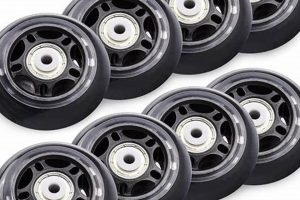
These circular components, affixed to the chassis of roller skates, facilitate movement across surfaces. Commonly manufactured from polyurethane or similar materials, they enable individuals to glide and maneuver. Their design and construction directly influence the skater’s experience, affecting speed, grip, and overall performance.
The operational capabilities of these components are central to the enjoyment and efficiency of roller skating. They contribute significantly to the skater’s ability to execute turns, maintain balance, and achieve desired speeds. Historically, improvements in materials and manufacturing techniques have led to enhanced performance and durability, revolutionizing the sport and recreational activity.
The following sections will delve into the various aspects of these essential elements, including material composition, size and hardness ratings, bearing types, and their impact on different skating disciplines. Understanding these factors is crucial for selecting the appropriate equipment for optimal skating performance and safety.
Guidance on Component Selection and Maintenance
Selecting and maintaining rolling elements effectively prolongs equipment lifespan and enhances the skating experience. Attention to detail in these areas mitigates risks and optimizes performance.
Tip 1: Assess surface type prior to use. Smooth, indoor surfaces necessitate harder compositions for optimal speed, while rougher, outdoor surfaces benefit from softer compositions for enhanced grip and shock absorption.
Tip 2: Regularly inspect for wear and tear. Look for flat spots, cracks, or uneven wear patterns. Replace components exhibiting significant degradation to maintain consistent performance and prevent accidents.
Tip 3: Clean bearings periodically. Remove any accumulated dirt and debris from the bearings to reduce friction and maintain rolling efficiency. Use appropriate solvents and lubricants specifically designed for bearings.
Tip 4: Rotate rolling elements to promote even wear. Changing the position of the components periodically distributes wear across all elements, extending their lifespan and maintaining consistent performance.
Tip 5: Consider diameter when selecting. Larger diameters generally offer higher speeds, while smaller diameters provide increased maneuverability. Choose a diameter appropriate for the intended skating style and terrain.
Tip 6: Pay attention to durometer ratings. Durometer ratings indicate hardness. Lower durometer ratings (softer) offer better grip and shock absorption, while higher durometer ratings (harder) provide greater speed and durability on smooth surfaces.
Proper selection and consistent maintenance of these rolling elements are crucial for ensuring skater safety and maximizing skating enjoyment. Regular attention to these details will contribute to a smoother, safer, and more efficient skating experience.
The subsequent sections will explore specific types of rolling components and their suitability for different skating disciplines, providing a more in-depth understanding of optimal selection strategies.
1. Durometer (Hardness)

Durometer, when applied to roller skates, quantifies the rolling components resistance to indentation. This measurement is a critical determinant of performance characteristics, influencing grip, speed, and durability on various surfaces.
- Durometer Scale
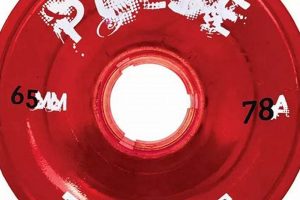
The durometer scale, typically ‘A’ scale for rolling components, ranges from softer (e.g., 74A) to harder (e.g., 101A). Lower values signify increased flexibility and shock absorption, while higher values indicate greater rigidity and rolling efficiency on smooth surfaces. Manufacturers employ this scale to classify and communicate the characteristics of their products.
- Impact on Grip
Softer compositions (lower durometer values) provide enhanced grip, particularly on rough or uneven surfaces. The increased pliability allows the component to conform more effectively to surface irregularities, maximizing contact area and friction. This is particularly beneficial for skaters requiring precise control and maneuverability.
- Effect on Speed
Harder compositions (higher durometer values) minimize energy loss due to deformation. The rolling component maintains its shape more effectively, reducing rolling resistance and enabling higher speeds on smooth, consistent surfaces such as polished concrete or hardwood. This is advantageous for speed skating and long-distance skating.
- Durability Considerations
The durometer also influences durability. Softer compositions tend to wear down more quickly, especially on abrasive surfaces, due to their increased flexibility. Harder compositions are more resistant to abrasion and can withstand extended use on various surfaces, although extremely hard compositions may exhibit reduced grip in certain conditions.
The selection of an appropriate durometer is contingent upon the intended skating environment and the skater’s performance objectives. Consideration of surface conditions and skating style is essential for optimizing performance and extending the lifespan of the rolling components. The skater must balance requirements for grip, speed, and durability in order to effectively choose appropriate durometer rolling components.
2. Diameter (Size)

The diameter of a roller skate wheel is a primary determinant of both speed and maneuverability. A larger diameter directly translates to greater linear distance covered per revolution, resulting in higher potential speeds. Conversely, a smaller diameter enables quicker acceleration and enhanced agility, particularly advantageous in environments requiring rapid directional changes.
The relationship between diameter and skating discipline is readily observable. Speed skating typically employs larger diameters (e.g., 100mm or greater) to maximize velocity and maintain momentum on straightaways. Artistic skating and roller derby, however, often utilize smaller diameters (e.g., 70-80mm) to facilitate tighter turns and more responsive footwork. Downhill skaters often use the biggest diameter possible to reach the highest speeds on a downhill track. Moreover, the wheel well clearance of the skate boot itself dictates the maximum diameter that can be accommodated.
Selecting the appropriate diameter necessitates a careful consideration of the skater’s skill level, intended application, and skating surface. While larger diameters offer speed advantages, they may prove unwieldy for beginners or in confined spaces. Smaller diameters prioritize control and responsiveness, but may compromise top-end speed. Understanding this trade-off is crucial for optimizing performance and ensuring a safe and enjoyable skating experience.
3. Material (Composition)
The material composition of roller skate wheels significantly influences performance characteristics, durability, and overall skating experience. Variations in material properties dictate factors such as grip, rebound, and resistance to wear and tear, making material selection a critical consideration.
- Polyurethane (PU) Variants
Polyurethane is the most prevalent material in roller skate wheel construction due to its versatile properties. Formulations range from high-rebound PU, which maximizes energy return for speed and efficiency, to softer, more pliable PU blends that enhance grip on uneven surfaces. Specific formulations, often proprietary to manufacturers, can be tailored to optimize performance for various skating styles and conditions.
- Shore Hardness (Durometer) Influence
The Shore hardness, measured on the A scale, quantifies the hardness of the wheel material and directly affects its grip and rolling resistance. Lower durometer values indicate softer materials with increased grip, suitable for slippery surfaces or aggressive maneuvers. Higher durometer values denote harder materials that minimize rolling resistance, enhancing speed and durability on smooth surfaces.
- Core Material and Design
While the outer layer primarily dictates performance, the core material provides structural support and affects energy transfer. Cores are typically constructed from rigid plastics or aluminum, with designs varying to optimize weight distribution and responsiveness. A robust core enhances power transfer and reduces deformation under load, contributing to overall efficiency.
- Additives and Fillers
Manufacturers incorporate various additives and fillers into the polyurethane matrix to modify specific properties. These additives can enhance abrasion resistance, increase rebound, or improve the wheel’s aesthetic appeal. The precise composition of these additives remains proprietary, but their impact on performance characteristics is significant.
The strategic selection of materials for roller skate wheels allows skaters to tailor their equipment to specific needs and preferences. Understanding the interplay between material composition, Shore hardness, core design, and additives is essential for optimizing performance and maximizing the lifespan of the wheels. The continuous evolution of materials science promises ongoing improvements in wheel technology, further enhancing the skating experience.
4. Bearing Integration

The integration of bearings within rolling components is paramount to the operational efficiency of roller skates. The bearings facilitate smooth rotation around the axle, minimizing friction and enabling consistent rolling performance. Proper bearing selection and maintenance are critical for optimizing speed, control, and longevity of the equipment.
- Bearing Size and Standardization
Standard roller skate rolling components accommodate 608 bearings, characterized by an 8mm inner diameter, 22mm outer diameter, and 7mm width. Adherence to this standard ensures compatibility across various skate models and bearing brands. Deviations from this standard are rare and typically found in specialized applications.
- ABEC Rating System
The Annular Bearing Engineering Committee (ABEC) rating system is a common metric for evaluating bearing precision and tolerance. Ratings range from ABEC-1 (least precise) to ABEC-9 (most precise), with higher ratings indicating tighter tolerances and potentially smoother, faster performance. However, ABEC ratings primarily reflect manufacturing precision and do not directly correlate with durability or suitability for specific skating conditions.
- Bearing Types: Steel vs. Ceramic
Steel bearings are the conventional and most widely used option. They offer a balance of performance and cost-effectiveness. Ceramic bearings, constructed with ceramic balls, are lighter and generate less friction than steel bearings, leading to potentially higher speeds and smoother rolling. Ceramic bearings are generally more expensive and may be more susceptible to damage from impacts.
- Maintenance and Lubrication
Proper bearing maintenance is essential for maintaining optimal performance. Regular cleaning and lubrication reduce friction and prevent corrosion. Bearings should be cleaned with appropriate solvents to remove dirt and debris, followed by lubrication with a light oil or grease specifically designed for bearings. Neglecting maintenance can lead to increased friction, reduced speed, and premature bearing failure.
Effective bearing integration is a crucial factor in the overall performance and reliability of roller skates. Selecting appropriate bearings based on skating style, surface conditions, and budget, coupled with diligent maintenance practices, ensures a smooth, efficient, and enjoyable skating experience. Furthermore, advancements in bearing technology continue to push the boundaries of roller skating performance.
5. Profile (Shape)

The profile, or cross-sectional shape, of roller skate wheels significantly influences handling characteristics and performance across various skating disciplines. The geometry of the wheel’s contact patch dictates grip, maneuverability, and rolling efficiency. Different profiles cater to specific skating styles and surface conditions, optimizing performance for each application.
- Flat Profile
A flat profile maximizes the contact area between the wheel and the skating surface. This results in enhanced grip and stability, particularly beneficial for recreational skating, aggressive skating on ramps, and roller derby. The larger contact patch provides a more secure feel and predictable handling characteristics.
- Rounded Profile
A rounded profile reduces the contact area and facilitates smoother turning and increased maneuverability. This profile is commonly favored by artistic skaters, speed skaters navigating tight corners, and slalom skaters requiring quick directional changes. The reduced contact patch allows for easier transitions and more fluid movements.
- Elliptical/Bullet Profile
An elliptical or bullet-shaped profile minimizes rolling resistance and maximizes speed on straightaways. This profile concentrates the contact force into a narrow line, reducing friction and enhancing rolling efficiency. It is primarily utilized by speed skaters seeking minimal resistance and optimal velocity. This profile is not ideal for turning or rough surfaces.
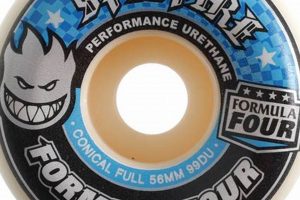
- Conical Profile
A conical profile can be used to enhance grip at certain angles while enabling smooth slides or transitions. This specialized profile may have applications in aggressive skating or freestyle disciplines where controlled slides and directional changes are necessary.
The selection of a suitable wheel profile is crucial for achieving optimal performance in roller skating. The skater’s choice should align with their skating style, the type of surface encountered, and the desired handling characteristics. Experimentation with different profiles can provide valuable insights into their impact on performance and enable skaters to fine-tune their equipment for maximum effectiveness. Ultimately, the profile is a key element in determining a skater’s control and enjoyment of the sport.
Frequently Asked Questions
This section addresses common inquiries and clarifies essential aspects pertaining to roller skates rolling components. It aims to provide comprehensive and accurate information to optimize understanding and decision-making.
Question 1: What is the significance of the durometer rating on roller skates rolling components?
The durometer rating quantifies the hardness of the rolling components. A lower number indicates a softer component, offering greater grip, while a higher number denotes a harder component, facilitating higher speeds on smooth surfaces.
Question 2: How does the diameter of the rolling components affect performance?
Larger diameter rolling components generally achieve higher speeds, while smaller diameters enhance maneuverability and acceleration. The optimal diameter depends on the skating style and the intended environment.
Question 3: What materials are commonly used in the manufacturing of roller skates rolling components?
Polyurethane is the predominant material, offering a balance of durability, grip, and rolling efficiency. Variations in polyurethane formulations and additives alter specific performance characteristics.
Question 4: What is the purpose of the ABEC rating on bearings used in roller skates rolling components?
The ABEC rating indicates the precision and tolerance of the bearings. Higher ABEC ratings generally correspond to smoother and faster performance, but the rating does not solely determine durability.
Question 5: How frequently should roller skates rolling components be replaced?
Replacement frequency depends on usage intensity, skating surface, and material composition. Regular inspection for wear, such as flat spots or cracks, is crucial for determining when replacement is necessary.
Question 6: Can roller skates rolling components from different manufacturers be interchanged?
In most cases, yes, provided the rolling components adhere to standard sizing and bearing specifications. However, mixing rolling components with significantly different durometers or profiles may affect handling and stability.
Selecting the appropriate rolling components requires consideration of individual skating needs and preferences. Careful attention to durometer, diameter, material, bearings, and profile will yield optimal performance.
The following section will explore advanced topics related to roller skates and their technological advancements.
Conclusion
The preceding analysis has comprehensively explored roller skates wheels, examining the critical attributes that govern their functionality and performance. From material composition and durometer to diameter, bearing integration, and profile, each element contributes significantly to the skater’s experience. Understanding these factors allows for informed selection and optimized utilization of equipment.
The continued evolution of material science and engineering promises further advancements in rolling component technology. Skaters are encouraged to remain informed about emerging innovations and to prioritize safety and maintenance in their pursuit of enhanced performance. The rolling components directly influence both enjoyment and risk; diligent consideration is therefore paramount.