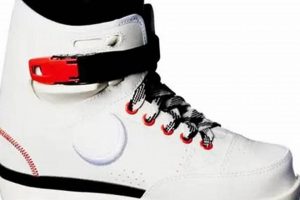
These sporting goods are defined as high-quality roller skates designed for recreational or competitive use, featuring wheels arranged in a single line within a frame attached to a boot. These skates facilitate smooth gliding and maneuverability on paved surfaces. An example includes models recognized for superior performance, comfort, and durability in the skating community.
The selection of suitable models offers numerous advantages, including enhanced fitness levels, improved cardiovascular health, and the enjoyment of outdoor activities. Historically, the evolution of these skates has progressed from rudimentary designs to sophisticated equipment incorporating advanced materials and engineering, thus increasing their appeal to a wide range of users from casual skaters to professional athletes.
The subsequent sections will delve into key aspects to consider when choosing roller skates, explore various types available in the market, and offer guidance on proper maintenance and safety precautions to ensure a rewarding and secure skating experience.
Guidance on Selecting Superior Inline Skates
The following recommendations are designed to assist in the informed selection of high-performing roller skates. Consider these points to optimize the skating experience and ensure user satisfaction.
Tip 1: Prioritize Boot Comfort and Fit: A well-fitting boot is crucial for control and injury prevention. Ensure ample support around the ankle and consider heat-moldable options for a customized fit.
Tip 2: Evaluate Frame Material and Construction: Aluminum frames generally offer superior stiffness and power transfer compared to composite materials. Examine the frame’s mounting system for adjustability and durability.
Tip 3: Analyze Wheel Size and Durometer: Larger wheels provide faster speeds and smoother rolls, while smaller wheels offer greater maneuverability. A higher durometer rating indicates harder wheels suitable for smoother surfaces.
Tip 4: Inspect Bearing Quality and Rating: ABEC ratings signify bearing precision; higher ratings generally indicate smoother, faster rolls. Consider sealed bearings for enhanced protection against dirt and moisture.
Tip 5: Assess Closure System Security: A reliable closure system, typically involving buckles, laces, and power straps, ensures a secure and stable fit. Evaluate the quality and adjustability of each component.
Tip 6: Consider Brake System Effectiveness: Ensure the brake is easily accessible and provides adequate stopping power. Removable brakes can be customized to suit individual preferences.
Tip 7: Research Reputable Brands and Models: Established brands often offer superior quality, durability, and customer support. Read reviews and compare specifications to identify the best options.
Adhering to these guidelines can lead to the selection of roller skates that meet individual needs and preferences, thereby enhancing performance, safety, and overall enjoyment.
The article will now transition into a discussion on maintenance and safety practices for these skates, further ensuring a positive and long-lasting experience.
1. Precision Bearings

The integration of precision bearings is a critical factor in defining superior inline skates. These components significantly influence the skate’s rolling efficiency, speed, and overall performance, making them a key differentiator in the marketplace.
- Reduced Friction for Enhanced Speed
Precision bearings minimize frictional resistance between the wheel hub and axle, resulting in smoother, faster rolls. Skates equipped with high-quality bearings require less effort to maintain speed, thereby increasing efficiency and reducing fatigue. An example is the use of ABEC-7 or higher rated bearings, which are manufactured to tighter tolerances and exhibit superior performance compared to lower-rated bearings.
- Improved Energy Transfer Efficiency
Less energy is lost to friction when using precision bearings, optimizing the transfer of force from the skater’s push-off to forward momentum. This enhanced energy transfer translates into greater efficiency, allowing skaters to cover more distance with less effort. In competitive skating, this can provide a decisive advantage.
- Extended Bearing Lifespan
High-quality bearings are typically constructed from durable materials and feature robust seals to protect against contaminants. This construction extends their lifespan and reduces the need for frequent replacements. The use of ceramic or hybrid ceramic bearings, for example, offers increased resistance to wear and corrosion compared to traditional steel bearings.
- Consistent Performance Over Time
Precision bearings maintain their performance characteristics for a longer period compared to lower-quality alternatives. Their ability to resist wear and degradation ensures consistent rolling efficiency throughout their lifespan. This is particularly important for skaters who demand reliable performance in varying conditions.
The contribution of precision bearings to rolling efficiency, speed, and durability underscores their importance in high-performing roller skates. Selecting skates with well-designed, high-quality bearings is a crucial factor for skaters seeking optimal performance, long-term reliability, and an overall enhanced skating experience. This ultimately affects user satisfaction and separates these skates from standard models.
2. Durable Frames

The integration of durable frames is paramount in discerning superior models of roller skates. Frame integrity directly affects the skate’s stability, responsiveness, and longevity. Consequently, the materials and construction methods employed in frame production are critical determinants of overall performance and user safety. A frame’s capacity to withstand stress and impact underpins the skate’s ability to transfer energy efficiently, influencing speed, maneuverability, and control. An example of this is the utilization of extruded aluminum in frame construction. Aluminum frames provide a higher strength-to-weight ratio compared to plastic or composite alternatives, allowing skaters to exert greater force without frame deformation. This translates to enhanced power transfer and a more responsive skating experience.
Moreover, frame durability significantly impacts the skate’s suitability for different skating styles and environments. Aggressive skaters, for instance, subject their equipment to intense stress through jumps, grinds, and other maneuvers. Therefore, reinforced frames are essential to prevent breakage and ensure rider safety. Conversely, recreational skaters may prioritize lightweight frames for enhanced comfort and maneuverability on smooth surfaces. The design of the frame also plays a crucial role. Frames with strategically placed reinforcements and optimized geometry distribute stress more evenly, minimizing the risk of failure under load. Frames featuring adjustable wheel bases cater to the diverse preferences of users, adapting to varying skating styles and conditions.
In summary, the selection of frame material and construction directly influences the performance, safety, and durability of roller skates. The use of robust materials like extruded aluminum, combined with intelligent frame design, is a hallmark of superior models. Understanding the relationship between frame durability and skating performance is essential for consumers seeking roller skates that meet their specific needs and withstand the rigors of their chosen skating discipline.
3. Comfortable Boots
The presence of comfortable boots is an indispensable feature of superior roller skates. Discomfort during use degrades the overall skating experience and negatively impacts performance. The correlation is direct: elevated boot comfort fosters extended use and optimal control. Manufacturers of quality inline skates recognize this connection, integrating ergonomic designs and advanced materials to create boots that minimize pressure points and maximize support. For example, high-end models often incorporate heat-moldable liners that conform to the individual skater’s foot, creating a custom fit that eliminates discomfort and improves responsiveness.
The impact of boot comfort extends beyond mere enjoyment; it directly influences safety and skill progression. A skater distracted by discomfort is more prone to errors and injuries. Conversely, a comfortable and supportive boot allows the skater to focus on technique and maintain proper form, leading to improved performance and reduced risk. This is particularly crucial for longer skating sessions and more demanding maneuvers. Real-world examples include competitive skaters who rely on customized, ultra-comfortable boots to endure hours of training and performance without experiencing debilitating foot fatigue. Another instance is recreational skaters who can enjoy extended outings without the discomfort associated with poorly designed or ill-fitting boots.
In summary, the link between comfortable boots and top inline skates is intrinsic. The quality and design of the boot directly influence the skating experience, impacting comfort, performance, safety, and enjoyment. Challenges remain in accommodating the diverse range of foot shapes and sizes, necessitating ongoing innovation in boot design and materials. Understanding the practical significance of boot comfort is essential for consumers seeking the best skating experience and for manufacturers striving to produce superior skates.
4. Wheel Hardness

Wheel hardness is a pivotal characteristic in the design and selection of inline skates, directly influencing performance, durability, and suitability for various skating disciplines. Measured using the durometer scale (A scale), wheel hardness dictates the wheel’s resistance to deformation and wear, thus impacting grip, speed, and overall skating experience.
- Grip and Control
Softer wheels (e.g., 78A-82A) offer enhanced grip, particularly on rough or uneven surfaces. This improved grip translates to greater control and stability, making softer wheels suitable for recreational skating and beginners. Conversely, harder wheels (e.g., 84A-90A+) reduce grip, resulting in less rolling resistance and increased speed on smoother surfaces. Advanced skaters often prefer harder wheels for enhanced glide and performance in speed skating or competitive environments. The appropriate level of grip ensures safety and maneuverability, crucial aspects of high-performing roller skates.
- Speed and Rolling Resistance
Wheel hardness is inversely proportional to rolling resistance. Harder wheels exhibit lower rolling resistance, enabling faster speeds and more efficient energy transfer. This makes them advantageous for speed skating and long-distance skating. Softer wheels, while providing better grip, have higher rolling resistance, which reduces speed and increases energy expenditure. The tradeoff between speed and rolling resistance is a critical consideration in selecting wheels for high-performance inline skates.
- Durability and Wear
Wheel hardness directly influences wear resistance. Softer wheels tend to wear down faster than harder wheels, especially on abrasive surfaces. This means that skaters using softer wheels may need to replace them more frequently. Harder wheels offer greater durability and longer lifespans, making them a cost-effective choice for skaters who prioritize longevity over maximum grip. The selection of wheel hardness should consider the typical skating environment and the skater’s tolerance for wear.
- Surface Conditions and Skating Style
The optimal wheel hardness is contingent on the skating surface and the skater’s style. Smooth, indoor surfaces often call for harder wheels to maximize speed and efficiency. Rough, outdoor surfaces may require softer wheels to provide adequate grip and absorb vibrations. Aggressive skaters, who perform tricks and grinds, often use harder wheels to withstand the impact and abrasion associated with those maneuvers. The versatility of wheels is further enhanced by features such as wheel profile (shape) and core design which are chosen to complement particular hardness values.
The careful selection of wheel hardness is integral to maximizing the performance and enjoyment derived from roller skates. By considering the interplay between grip, speed, durability, and surface conditions, skaters can optimize their equipment for their specific needs and preferences. Top inline skates are characterized by their ability to accommodate different wheel hardness levels, allowing skaters to fine-tune their skating experience.
5. Secure Closures

Secure closures are a critical, yet often underappreciated, component of high-caliber inline skates. The efficacy of a skate’s closure system directly impacts stability, control, and safety. An inadequate closure mechanism can result in foot slippage, compromising maneuverability and increasing the risk of ankle strain or other injuries. The relationship between secure closures and the overall performance of roller skates is therefore axiomatic; reliable retention systems are essential for transmitting the skater’s movements effectively to the frame and wheels.
Various closure technologies exist, each with distinct advantages and disadvantages. Traditional lacing systems offer a high degree of customization but can be time-consuming to adjust. Buckle closures provide quick and convenient fastening but may lack the fine-tuning capabilities of laces. Power straps, often used in conjunction with laces or buckles, enhance ankle support and prevent heel lift. Top models of inline skates frequently incorporate hybrid systems, combining the benefits of multiple closure types to achieve an optimal balance of adjustability, security, and ease of use. For instance, a skate might utilize a combination of laces for precise fit in the forefoot, a buckle for mid-foot security, and a power strap to stabilize the ankle. This holistic approach to closure design ensures that the foot remains firmly and comfortably secured within the boot, even during vigorous activity.
In conclusion, the design and implementation of secure closures are integral to the overall performance and safety profile of roller skates. The selection of an appropriate closure system necessitates careful consideration of factors such as adjustability, ease of use, and the specific demands of the intended skating discipline. By prioritizing secure closure mechanisms, manufacturers can enhance the skater’s control, minimize the risk of injury, and elevate the overall skating experience. Neglecting this vital component can lead to compromised performance and potential safety hazards, underscoring the practical significance of secure closures in defining superior roller skates.
6. Brake Responsiveness

Brake responsiveness is a fundamental performance characteristic of superior inline skates. The immediacy and effectiveness of braking systems directly influence safety, control, and the skater’s confidence. Skates exhibiting delayed or inadequate braking capabilities are inherently less desirable due to the elevated risk of accidents and reduced maneuverability.
- Stopping Distance and Control
The primary function of a responsive braking system is to minimize stopping distance while maintaining control. Effective brakes allow skaters to decelerate rapidly and predictably, even in emergency situations. Top inline skates incorporate braking mechanisms that provide consistent stopping power across various surfaces and conditions, thus enhancing safety and maneuverability. Examples include skates utilizing high-friction brake pads and ergonomically designed brake levers for optimal leverage and responsiveness.
- Modulation and Progressive Braking
Responsive brakes enable precise modulation, allowing skaters to control the rate of deceleration. This progressive braking capability is essential for navigating crowded areas, maintaining balance during turns, and executing controlled stops. Skates with overly sensitive or unresponsive brakes can result in abrupt stops and loss of control. Superior inline skates feature braking systems engineered to deliver smooth, predictable deceleration, enabling skaters to maintain composure and stability in diverse scenarios.
- Brake Pad Material and Durability
The composition of the brake pad significantly influences braking performance and longevity. High-quality brake pads exhibit superior friction coefficients, ensuring effective stopping power and minimal wear. Top inline skates are equipped with durable brake pads formulated to withstand prolonged use and resist degradation due to heat, moisture, and abrasion. The longevity of brake pads directly impacts maintenance costs and the overall reliability of the braking system.
- Ergonomic Design and Accessibility
The ergonomic design of the braking system influences its accessibility and ease of use. Responsive brakes are characterized by their intuitive design and comfortable operation, allowing skaters to engage the braking mechanism quickly and effortlessly. The positioning and adjustability of the brake lever are critical factors in optimizing brake responsiveness and accommodating individual preferences. Top inline skates prioritize ergonomic design to enhance skater comfort, control, and safety.
The relationship between brake responsiveness and superior inline skates is one of interdependence. Skates that exhibit responsive, reliable braking systems offer enhanced safety, control, and confidence, thereby elevating the overall skating experience. Conversely, skates with inadequate braking capabilities pose significant risks and detract from the enjoyment of the sport. The pursuit of optimal brake responsiveness remains a critical focus for manufacturers striving to produce top-tier inline skates.
Frequently Asked Questions
The following section addresses common inquiries regarding high-quality inline skates, providing detailed information to assist in informed decision-making.
Question 1: What distinguishes high-performance roller skates from standard models?
High-performance roller skates are differentiated by the utilization of superior materials, advanced engineering, and precision manufacturing. Key distinctions include enhanced boot comfort, durable frames, precision bearings, optimized wheel composition, and reliable closure systems. These features collectively contribute to improved speed, maneuverability, and longevity.
Question 2: How does wheel hardness impact the skating experience?
Wheel hardness, measured on the durometer scale, directly influences grip, speed, and wear resistance. Softer wheels provide enhanced grip and are suitable for rough surfaces, while harder wheels offer reduced rolling resistance and increased speed on smooth surfaces. The selection of appropriate wheel hardness depends on the intended skating discipline and surface conditions.
Question 3: What role do bearings play in the performance of roller skates?
Bearings minimize friction between the wheel hub and axle, thereby enhancing rolling efficiency, speed, and energy transfer. High-precision bearings, characterized by higher ABEC ratings, ensure smoother, faster rolls and extended lifespan.
Question 4: Why is frame durability a critical factor to consider?
Frame durability dictates the skate’s stability, responsiveness, and capacity to withstand stress and impact. Frames constructed from robust materials, such as aluminum, provide superior power transfer and minimize the risk of deformation or breakage.
Question 5: How important is the boot fit in the overall skating experience?
A properly fitting boot is crucial for comfort, control, and injury prevention. Boots should provide adequate support around the ankle and offer a secure, customized fit to minimize pressure points and maximize responsiveness. Heat-moldable liners can further enhance comfort and fit.
Question 6: What safety precautions are essential when using roller skates?
Essential safety precautions include wearing appropriate protective gear, such as helmets, wrist guards, elbow pads, and knee pads. Skaters should also be aware of their surroundings, adhere to traffic regulations, and inspect their equipment regularly for signs of wear or damage.
In summary, selecting models requires careful consideration of various factors, including component quality, design features, and intended use. Prioritizing performance characteristics, materials, and safety features ensures an optimal skating experience.
The following segment will delve into maintenance practices to prolong the life of the user’s roller skates.
Top Inline Skates
This article has explored the defining characteristics of superior roller skates. Key attributes include precision bearings, durable frames, comfortable boots, wheel hardness, secure closures, and brake responsiveness. The interplay of these elements dictates performance, safety, and the overall user experience. Understanding these factors is essential for discerning quality and making informed purchasing decisions.
The selection of suitable roller skates represents a significant investment in recreational or athletic pursuits. Continued advancements in materials science and engineering promise further enhancements in skate design and performance. Prioritizing quality and adhering to safety guidelines will ensure a rewarding and enduring skating experience.

![Top Best Inline Skate Brands in [Year]: Expert Picks | How to Skateboard: A Beginner's Guide to Your First Board & Tricks](https://cruzskateshop.com/wp-content/uploads/2026/03/th-163-300x200.jpg "Top Best Inline Skate Brands in [Year]: Expert Picks How to Skateboard: A Beginner's Guide to Your First Board & Tricks")