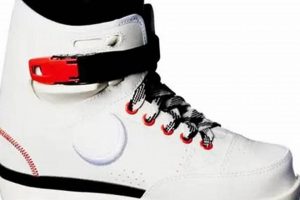
The comparison of quad skates and inline skates centers on wheel configuration and its impact on performance and user experience. Quad skates, also known as roller skates, feature two pairs of wheels arranged side-by-side. Inline skates, conversely, have wheels arranged in a single line. This fundamental difference dictates maneuverability, stability, and intended use.
Understanding these differences is crucial for selecting appropriate equipment for recreational skating, fitness activities, or competitive sports. The choice between the two impacts learning curves, injury risk, and overall enjoyment. Historically, quad skates predated inline skates, enjoying widespread popularity before the latter gained prominence through advancements in materials and design that catered to speed and agility.
The following sections will delve into specific aspects, including stability, maneuverability, speed, braking mechanisms, and suitability for various skill levels. This detailed analysis will provide a comprehensive understanding, aiding individuals in making informed decisions based on their individual needs and preferences.
Selecting between quad and inline models requires careful consideration of intended use, skill level, and physical capabilities. Understanding key differences optimizes the skating experience and minimizes potential risks.
Tip 1: Evaluate Intended Use: Determine primary activities. Quad skates are often preferred for rink skating and artistic expression, while inline skates cater to speed skating and hockey due to their streamlined design.
Tip 2: Assess Skill Level: Beginners often find quad skates more stable initially. Inline skates demand greater balance and control, benefiting from prior skating experience.
Tip 3: Consider Ankle Support: Inline skates generally offer more rigid ankle support, crucial for high-impact activities. Quad skates provide greater freedom of movement but may require additional ankle reinforcement.
Tip 4: Prioritize Proper Fit: Regardless of type, ensure a snug and secure fit. Ill-fitting skates lead to blisters, instability, and reduced control.
Tip 5: Understand Braking Systems: Quad skates typically use a toe stop brake. Inline skates utilize a heel brake, requiring different techniques for effective stopping.
Tip 6: Inspect Wheel Hardness: Harder wheels provide greater speed and durability on smooth surfaces. Softer wheels offer better grip and shock absorption on rougher terrain.
Tip 7: Invest in Protective Gear: Helmets, wrist guards, elbow pads, and knee pads are essential for injury prevention, irrespective of skill level or skate type.
Adherence to these guidelines maximizes safety, performance, and enjoyment when engaging in skating activities. Careful evaluation ensures a selection aligned with individual needs and capabilities.
The following sections will provide a concluding overview of key factors to consider when making a final selection, reinforcing the importance of informed decision-making.
1. Stability

Stability, in the context of quad skates versus inline skates, refers to the resistance to unwanted tipping or wobbling. Quad skates inherently possess greater static stability due to their wider base of support, created by the two pairs of wheels positioned laterally. This configuration provides a lower center of gravity relative to the contact points, reducing the likelihood of lateral instability. For instance, a novice skater on quad skates is less prone to ankle roll compared to a novice on inline skates, particularly during initial attempts at balancing and forward motion. The cause of this difference lies directly in the wheel arrangement: the spread-out wheels of quad skates offer more ground contact and a broader foundation.
The importance of stability becomes paramount when considering the learning curve and injury prevention. Individuals with pre-existing balance issues or those new to skating generally benefit from the increased stability offered by quad skates. This allows them to focus on fundamental movement patterns without being constantly challenged by maintaining upright posture. Real-life examples include recreational skaters who prefer the perceived security of quad skates on uneven surfaces like boardwalks or outdoor rinks, where subtle variations in the terrain can easily disrupt balance. Furthermore, the stability advantage is leveraged in activities like roller derby, where players require the ability to withstand lateral forces and maintain their footing during collisions.
However, it is essential to recognize that dynamic stability, or the ability to maintain balance during motion and transitions, is not solely determined by wheel configuration. Skill development, core strength, and body awareness play crucial roles in achieving dynamic stability on both quad and inline skates. While quad skates offer an initial advantage, experienced inline skaters develop compensatory mechanisms to maintain balance, often exceeding the stability capabilities of less skilled quad skaters. Understanding this distinction allows individuals to tailor their skate selection based on their current skill level and desired progression trajectory. Choosing a skate that suits one’s stability needs is vital for both safety and enjoyment. Challenges in transferring the static stability of quad skates to dynamic movements may lead to a plateau in skill development for some, whereas others find that inline skates accelerate their balance control once the initial learning hurdle is overcome.
2. Maneuverability
Maneuverability, a critical attribute in skating, exhibits a notable divergence between quad skates and inline skates. This characteristic relates to the ease and precision with which a skater can change direction, navigate obstacles, and execute complex movements. The fundamental distinction in wheel arrangement quad skates with wheels arranged in pairs and inline skates with wheels in a linear fashion directly influences this aspect. Inline skates, owing to their streamlined profile, typically afford greater agility for sharp turns and rapid directional shifts. The cause of this lies in reduced rolling resistance and the ability to lean more deeply into turns without the risk of wheel contact. Examples include hockey players employing quick pivots on inline skates to evade opponents or speed skaters maintaining tight lines around a track. Quad skates, while potentially offering a tighter turning radius in some scenarios, generally require a different set of techniques, such as weight shifting and specialized footwork, to achieve comparable agility.
The importance of maneuverability extends beyond athletic performance, impacting recreational skating experiences and even certain occupational applications. Messengers navigating urban environments on inline skates benefit from the ability to deftly avoid pedestrians and traffic. Conversely, artistic skaters on quad skates utilize specific maneuverability characteristics to perform dance steps and choreographed routines, relying on the stability and control afforded by their skate type. The choice, therefore, becomes a function of intended application. For example, in a roller derby setting, the maneuverability of quad skates, combined with their stability, allows players to maintain balance while executing forceful blocks and evasive maneuvers. Furthermore, the capacity to skate backwards often more readily achieved on quad skates contributes to tactical advantages within this discipline.
Understanding the interplay between maneuverability and skate type allows users to make informed decisions aligned with their specific requirements. The challenge rests in recognizing that no single skate configuration universally surpasses the other; rather, each possesses unique strengths applicable to distinct contexts. For the user seeking rapid acceleration and precise directional control, inline skates may present the preferable option. Conversely, quad skates may be favored for activities demanding greater stability, deliberate movement, and artistic expression. As proficiency increases, skaters may adapt their techniques to mitigate the inherent limitations of their chosen skate type, underscoring the significance of skill development and tailored training regimes. Ultimately, the optimal choice hinges on a comprehensive assessment of skating goals, physical capabilities, and environmental conditions.
3. Speed

The potential for speed represents a significant differentiating factor between quad skates and inline skates. The inherent design characteristics of each skate type influence the attainable velocity and the effort required to achieve it. Understanding these differences is crucial for selecting appropriate equipment based on desired performance.
- Wheel Configuration and Rolling Resistance
Inline skates, with their wheels arranged in a single line, minimize rolling resistance compared to quad skates. The reduced surface area in contact with the ground translates to greater efficiency at higher speeds. This is exemplified in speed skating competitions, where inline skates are the universally adopted standard due to their superior aerodynamic profile and reduced energy expenditure per stride.
- Wheel Size and Durometer
Inline skates typically accommodate larger wheel diameters than quad skates. Larger wheels cover more ground per revolution, thereby increasing speed potential. Furthermore, inline skate wheels often feature higher durometer (hardness) ratings, resulting in lower rolling resistance on smooth surfaces. Conversely, quad skate wheels tend to be smaller and softer, providing enhanced grip and control at lower speeds, but limiting top-end velocity.
- Boot Design and Ankle Support
The boot design of inline skates, particularly those intended for speed, generally offers more rigid ankle support than traditional quad skate boots. This increased support allows for more efficient power transfer from the skater’s leg muscles to the wheels, minimizing energy loss and maximizing speed. The stiffer construction also contributes to greater stability at higher velocities, mitigating the risk of ankle instability.
- Skating Technique and Skill
While equipment plays a crucial role, skating technique and skill level significantly impact attainable speed. Efficient stride mechanics, proper body positioning, and effective push-off techniques are essential for maximizing velocity on either skate type. However, the nuanced techniques required for high-speed inline skating often necessitate specialized training and practice to fully realize the skate’s potential. Even with advanced equipment, suboptimal technique can significantly hinder speed performance.
In summary, while both quad skates and inline skates facilitate movement, inline skates possess inherent design advantages that generally translate to higher attainable speeds. However, the optimal choice remains dependent on the intended application, skill level, and individual preferences. The enhanced stability of quad skates may be preferable for beginners or those prioritizing control over raw velocity, while the streamlined efficiency of inline skates caters to experienced skaters seeking maximum speed performance.
4. Braking

Braking mechanisms represent a critical safety component that differentiates quad skates from inline skates. The primary braking system in quad skates typically employs a toe stop, a rubber or composite block mounted at the front of the skate. Activation involves tilting the skate forward, applying pressure to the toe stop against the skating surface. Inline skates, conversely, commonly utilize a heel brake, a rubber pad affixed to the rear of one or both skates. Braking with a heel brake requires extending the braking leg forward and pressing the heel brake down, transferring weight to the braking skate. This fundamental difference influences braking efficiency, control, and the learning curve associated with each skate type. The cause of these variances lies in the physics of force application and the biomechanics of each braking technique. A real-life example of this is the emergency stop, where the quad skate’s toe stop, when properly engaged, provides a stable point of deceleration; with inline skates, however, beginners might struggle with the balance required for the heel brake stop.
The effectiveness of each braking system is further contingent upon surface conditions, skate maintenance, and skater proficiency. Wet or uneven surfaces reduce braking efficiency for both skate types. Worn toe stops or heel brakes compromise stopping power and increase the risk of accidents. Improper braking technique, such as insufficient pressure or incorrect body positioning, similarly diminishes braking effectiveness. Practical applications of this understanding involve regular inspection and replacement of braking components, as well as consistent practice of proper braking techniques in controlled environments. Moreover, the choice of skate can depend on the activity. For instance, roller derby players often remove the toe stops to increase their turning mobility.
In summary, braking mechanisms constitute a significant distinction between quad skates and inline skates, influencing safety, control, and the overall skating experience. The toe stop on quad skates provides a stable, albeit sometimes less efficient, braking method, while the heel brake on inline skates demands greater balance and coordination. The practical significance of understanding these differences is underscored by the need for regular maintenance, consistent practice, and informed skate selection based on intended use and skill level. Challenges arise in mastering each braking technique, requiring dedicated practice and adaptation to varying environmental conditions. This detailed understanding helps mitigate the risks associated with skating activities, contributing to safer participation and enhanced enjoyment.
5. Skill Level

Skill level constitutes a primary determinant in selecting between quad skates and inline skates. Novice skaters often find quad skates more manageable due to their inherent stability. The wider base of support afforded by the two sets of wheels facilitates balance and reduces the likelihood of ankle roll, permitting greater focus on fundamental movements such as gliding and basic turning. The cause of this initial stability advantage lies in the increased surface area in contact with the ground, creating a more stable platform. A real-life example involves introducing young children to skating; instructors frequently start with quad skates to build confidence and basic motor skills. The importance of skill-appropriate equipment is underscored by the potential for injury; attempting complex maneuvers on a skate ill-suited to one’s ability increases the risk of falls and sprains. Conversely, experienced skaters often gravitate towards inline skates, drawn by their superior speed and maneuverability. The practical significance of this understanding rests in optimizing the learning process, minimizing injury risk, and maximizing enjoyment based on individual proficiency.
Intermediate and advanced skaters often tailor their skate choice to specific disciplines. For instance, artistic skaters, while potentially starting on quads, may transition to specialized inline frames that mimic the feel and performance characteristics of ice skates for advanced routines. Aggressive skaters, performing tricks and stunts in skate parks, often prefer inline skates due to their durability and ability to withstand high-impact landings. These specialized applications demonstrate how skill level interacts with specific performance demands to influence equipment selection. The practical implications extend to specialized training programs; aspiring speed skaters invariably train on inline skates, while roller derby participants primarily utilize quad skates to leverage their stability and maneuverability within the constraints of the sport. Recognizing this nuanced relationship allows individuals to tailor their equipment and training to achieve specific performance goals.
In summary, skill level is inextricably linked to skate selection. Beginners often benefit from the stability of quad skates, while experienced skaters may prefer the speed and agility of inline skates. This choice is further refined by specific performance requirements and individual preferences. A critical challenge lies in accurately assessing one’s own skill level and selecting equipment accordingly. Incorrectly assessing skill, either overestimating or underestimating ability, can lead to frustration, injury, or suboptimal performance. Understanding this relationship is crucial for safe and effective participation in skating activities, regardless of skill level or intended discipline.
Frequently Asked Questions
This section addresses common inquiries regarding the distinctions between quad skates and inline skates, providing clarity on their respective advantages and disadvantages.
Question 1: What are the primary structural differences between roller skates and inline skates?
Roller skates, also known as quad skates, feature two pairs of wheels arranged side-by-side. Inline skates possess wheels aligned in a single row. This difference in wheel configuration significantly impacts stability, maneuverability, and overall skating experience.
Question 2: Which skate type is generally recommended for beginners?
Quad skates often provide greater initial stability due to their wider base of support. This can facilitate the learning process for novice skaters by reducing the likelihood of balance-related falls. However, individual learning curves may vary.
Question 3: How does maneuverability differ between roller skates and inline skates?
Inline skates typically offer enhanced maneuverability, enabling tighter turns and more agile movements. Quad skates, while capable of intricate maneuvers, generally require different techniques and may exhibit a slightly wider turning radius.
Question 4: Are inline skates inherently faster than quad skates?
In most scenarios, inline skates possess a greater speed potential due to reduced rolling resistance and aerodynamic advantages. The larger wheel diameters commonly found on inline skates also contribute to increased velocity.
Question 5: What are the typical braking mechanisms employed on roller skates versus inline skates?
Roller skates commonly utilize a toe stop brake, located at the front of the skate. Inline skates typically feature a heel brake. Each system requires distinct techniques and practice for effective braking.
Question 6: Which skate type is more suitable for roller derby?
Roller derby is predominantly played on quad skates. The stability and maneuverability characteristics of quad skates are favored within the context of the sport’s unique demands.
Understanding these fundamental differences assists in making an informed decision based on individual needs, preferences, and intended skating activities.
The subsequent sections will provide concluding remarks, summarizing the key considerations when choosing between roller and inline skates.
Conclusion
The preceding analysis has dissected the nuanced distinctions between “roller vs inline skates,” encompassing stability, maneuverability, speed, braking, and skill level appropriateness. These factors collectively inform the optimal choice for any given individual or application. The stability afforded by quad skates benefits novice skaters, while the speed and agility of inline skates cater to experienced practitioners and specialized disciplines. The selection process necessitates a thorough evaluation of intended use, skill level, and safety considerations.
The enduring debate surrounding “roller vs inline skates” underscores the significance of informed decision-making. As technology advances and skating disciplines evolve, the comparative advantages of each skate type may shift. Continued engagement with relevant information and careful self-assessment remain critical for maximizing performance and minimizing risk within the diverse landscape of skating activities. Individuals are encouraged to seek professional guidance and prioritize safety measures when engaging in skating activities.

![Top Best Inline Skate Brands in [Year]: Expert Picks | How to Skateboard: A Beginner's Guide to Your First Board & Tricks](https://cruzskateshop.com/wp-content/uploads/2026/03/th-163-300x200.jpg "Top Best Inline Skate Brands in [Year]: Expert Picks How to Skateboard: A Beginner's Guide to Your First Board & Tricks")