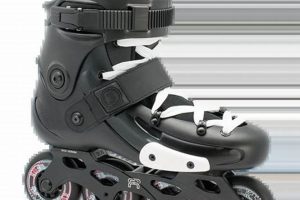
The selection of appropriate footwear for navigating city environments on wheels hinges on several key factors. This specialized equipment is engineered to withstand the rigors of pavement, traffic, and obstacles commonly encountered in metropolitan areas. Characteristics such as durability, maneuverability, and impact resistance are paramount in defining quality. A robust frame, supportive boot, and high-performance wheels contribute to a safe and efficient skating experience in such settings.
The adoption of such specialized skates provides numerous advantages for urban dwellers. These include efficient transportation, enhanced fitness, and a unique form of recreation. Historically, the development of inline skates evolved from simple recreational devices to sophisticated tools for urban exploration and commuting. The increased efficiency and maneuverability they offer compared to traditional skates have made them a popular choice for navigating congested cityscapes.
Subsequent sections will delve into specific features that differentiate models, exploring key considerations such as boot construction, frame material, wheel size and hardness, and bearing quality. A comparative analysis of various brands and models will be presented, providing readers with the information needed to make informed decisions based on their individual needs and skill levels.
Essential Considerations for Urban Inline Skating
Optimizing the urban inline skating experience requires careful attention to equipment selection and maintenance. The following guidelines emphasize crucial aspects for enhanced performance and safety.
Tip 1: Prioritize Boot Fit and Support: A secure and well-fitting boot is fundamental for control and comfort. Ensure the boot provides adequate ankle support to prevent instability and potential injuries during maneuvers.
Tip 2: Select Appropriate Wheel Hardness: Wheel durometer (hardness) significantly impacts grip and wear. Softer wheels (e.g., 84A-86A) offer increased grip on varied urban surfaces, while harder wheels (e.g., 88A+) provide greater speed and durability on smoother terrains.
Tip 3: Maintain Bearings Regularly: Clean and lubricate bearings periodically to minimize friction and maximize roll efficiency. This extends the lifespan of the bearings and enhances overall skating performance.
Tip 4: Choose a Durable Frame Material: The frame should be constructed from a robust material, such as extruded aluminum, to withstand the stresses of urban skating. A sturdy frame improves power transfer and responsiveness.
Tip 5: Inspect and Replace Components as Needed: Regularly examine wheels, bearings, and frame for signs of wear or damage. Timely replacement of worn components is crucial for maintaining safety and optimal performance.
Tip 6: Practice Safe Skating Techniques: Mastering fundamental skating skills, such as efficient braking and turning techniques, is essential for navigating urban environments safely and confidently. Regular practice builds proficiency and reduces the risk of accidents.
Tip 7: Consider Protective Gear: The use of protective gear, including helmets, knee pads, elbow pads, and wrist guards, can minimize the risk of injuries in case of falls or collisions. Protective equipment is a vital component of responsible skating practices.
By adhering to these recommendations, urban inline skaters can enhance their safety, improve performance, and extend the lifespan of their equipment. Careful attention to detail in equipment selection and maintenance is paramount for a positive and fulfilling skating experience.
The following sections will provide a detailed overview of specific models and brands, assisting in the selection of appropriate equipment tailored to individual needs and skill levels.
1. Maneuverability
Maneuverability, in the context of urban inline skates, dictates the ease and precision with which a skater can navigate complex environments. Its relevance stems from the need to avoid obstacles, negotiate tight turns, and react quickly to unpredictable conditions prevalent in urban settings.
- Frame Length and Wheelbase
Shorter frame lengths and wheelbases directly contribute to enhanced maneuverability. This configuration allows for quicker turns and more agile movements in confined spaces. For instance, skates with a shorter frame can execute sharper turns around pedestrians or street furniture, increasing efficiency and safety.
- Wheel Size and Configuration
Smaller wheel diameters, typically ranging from 72mm to 80mm, facilitate greater agility compared to larger wheels. A ‘flat’ configuration, where all wheels are in contact with the ground, provides a stable and predictable platform for maneuvering, whereas rockered configurations slightly raise the first and last wheel to offer enhanced turning ability.
- Boot Height and Cuff Flexibility
Lower boot heights and flexible cuffs allow for a greater range of motion in the ankle, facilitating sharper turns and more dynamic movements. Skaters are able to lean more aggressively into turns without compromising stability, leading to enhanced control and responsiveness.
- Bearing Precision and Responsiveness
High-quality bearings, rated with a higher ABEC or ILQ rating, reduce friction and improve wheel spin, resulting in smoother and more responsive turns. This increased precision allows skaters to maintain momentum and control during complex maneuvers.
The interplay of frame length, wheel size, boot design, and bearing quality collectively determines the overall maneuverability of urban inline skates. Skates optimized for maneuverability provide skaters with the necessary tools to navigate urban environments safely and efficiently, allowing for agile avoidance of obstacles and precise control in dynamic situations. Selection of components related to the factors above is essential.
2. Durability
Durability constitutes a foundational requirement for skates designed for urban environments. The capacity to withstand constant abrasion from rough surfaces, impacts from jumps and obstacles, and the general rigors of city skating directly correlates with the longevity and safety of the equipment.
- Frame Material and Construction
The frame, typically constructed from aluminum alloys or reinforced composite materials, bears the brunt of impact forces. Extruded aluminum frames offer a high strength-to-weight ratio, while composite frames provide vibration dampening. Frame design, including reinforcement in high-stress areas, contributes significantly to the skate’s ability to withstand repeated use.
- Boot Shell Material and Integrity
The outer boot shell protects the foot and provides structural support. High-density plastics and carbon fiber composites offer varying degrees of impact resistance and abrasion protection. The integrity of the shell, including its resistance to cracking or deformation under stress, is crucial for maintaining stability and protecting the skater from injury.
- Wheel Composition and Hardness
Urban skating wheels are typically made from polyurethane with varying degrees of hardness (durometer). Higher durometer wheels (84A and above) offer greater resistance to abrasion and wear, making them suitable for rough surfaces. However, they may sacrifice some grip compared to softer wheels. The quality of the polyurethane and its bonding to the wheel core influence wheel longevity.
- Bearing Seals and Lubrication
Bearings facilitate smooth wheel rotation and are susceptible to damage from dirt and moisture. Sealed bearings offer protection against contaminants, extending their lifespan and maintaining performance. Regular lubrication with appropriate skate-specific oils or greases minimizes friction and prevents premature wear.
The cumulative effect of these factors dictates the overall durability of urban inline skates. Skates engineered with high-quality materials, robust construction techniques, and attention to component protection offer a significantly longer service life and enhanced safety for skaters navigating the demands of the urban landscape. Selecting a model with these durable attributes ensures long-term performance and value.
3. Comfort
The relationship between comfort and “best urban inline skates” is paramount, influencing the duration and enjoyment of the skating experience. Discomfort can lead to premature fatigue, reduced control, and an increased risk of injury. Comfortable skates allow for extended use, enabling skaters to cover greater distances and engage in more prolonged sessions without experiencing debilitating pain or discomfort. This directly impacts the skater’s ability to fully utilize the skate’s intended purpose: efficient and enjoyable urban mobility.
Boot design is central to comfort. Features such as anatomical padding, breathable liners, and customizable fit systems contribute to a secure and comfortable fit. A poorly fitting boot can cause blisters, pressure points, and chafing, all of which detract from the skating experience. For instance, a boot with insufficient ankle support can lead to instability and muscle strain, while a liner that does not wick away moisture can result in discomfort and reduced performance. The integration of shock-absorbing materials in the heel and insole mitigates the impact forces generated during skating, further enhancing comfort, particularly on uneven urban surfaces.
Ultimately, the perceived comfort of urban inline skates is a critical factor in their overall usability and effectiveness. Investing in a model that prioritizes comfort features, such as a well-padded boot, breathable liner, and customizable fit, can significantly enhance the skating experience, promoting longer sessions, improved performance, and reduced risk of injury. The selection of comfortable skates is not merely a matter of preference but a practical necessity for maximizing the benefits of urban inline skating.
4. Wheel Performance

Wheel performance is a critical determinant of the overall quality and suitability of inline skates for urban environments. It encompasses several interrelated characteristics that directly impact speed, grip, shock absorption, and durability. Ineffective wheel performance compromises maneuverability, increases energy expenditure, and reduces the lifespan of the equipment. Skates with superior wheel performance offer greater control, efficiency, and safety, essential factors for navigating the variable surfaces and unpredictable conditions found in urban settings. The specific characteristics of wheel performance define user satisfaction.
Polyurethane durometer, or hardness, serves as a primary indicator of wheel performance. Softer wheels (e.g., 84A) provide enhanced grip and shock absorption, advantageous for rough pavement, but exhibit faster wear. Harder wheels (e.g., 88A+) offer increased speed and longevity on smoother surfaces, albeit with reduced grip and vibration dampening. The optimal choice depends on the skater’s skill level and the typical skating environment. For example, a novice skater might benefit from softer wheels for increased stability and control, while an experienced skater prioritizing speed might opt for harder wheels on well-maintained paths. The appropriate selection influences directly the value and functionality of the skate.
The integration of high-quality bearings further enhances wheel performance. Bearings with tighter tolerances and superior lubrication minimize friction, resulting in smoother and faster roll. Regular maintenance, including cleaning and lubrication, is crucial for preserving bearing performance and extending their lifespan. Ultimately, wheel performance represents a critical nexus of material science, engineering design, and user needs, collectively determining the effectiveness of urban inline skates. Prioritizing wheels that balance durability, grip, and speed, in conjunction with high-quality bearings, is paramount for maximizing the performance and enjoyment of urban skating. The right performance will extend longevity of the skates.
5. Boot Support
Boot support constitutes a fundamental attribute of urban inline skates, directly impacting stability, control, and injury prevention. Inadequate boot support compromises a skater’s ability to execute precise movements, increasing the risk of ankle sprains, muscle fatigue, and overall instability when navigating the dynamic challenges of the urban landscape.
- Ankle Cuff Height and Rigidity
The height and stiffness of the ankle cuff determine the level of lateral support provided. Higher and more rigid cuffs offer greater stability, particularly beneficial for novice skaters or those navigating uneven surfaces. Conversely, lower and more flexible cuffs allow for greater range of motion and enhanced maneuverability, preferred by experienced skaters executing complex maneuvers. The selection should align with skating style and terrain.
- Lacing System and Closure Mechanisms
The lacing system, often augmented by buckles or power straps, secures the foot within the boot and distributes pressure evenly. A well-designed system prevents heel lift and minimizes foot slippage, crucial for maintaining control during turns and jumps. The effectiveness of the lacing system directly influences the responsiveness and stability of the skate.
- Boot Shell Material and Construction
The boot shell, typically constructed from rigid plastics or composite materials, provides the structural foundation for support. A properly molded shell conforms to the contours of the foot, distributing pressure and enhancing stability. The shell’s resistance to deformation under stress is paramount for maintaining support during high-impact activities.
- Internal Padding and Liner Design
Internal padding and liner design contribute significantly to both comfort and support. Dense, anatomically shaped padding cushions the foot and minimizes pressure points, while a well-designed liner wicks away moisture and prevents slippage. The liner’s ability to conform to the foot over time enhances the overall fit and support characteristics of the boot.
The interplay of ankle cuff design, lacing system, shell material, and internal padding collectively defines the boot support characteristics of urban inline skates. Prioritizing models with robust support features is essential for skaters seeking stability, control, and injury prevention when navigating the varied terrains and dynamic conditions of the urban environment. Skates offering superior boot support not only enhance performance but also promote a safer and more enjoyable skating experience.
6. Frame Strength
Frame strength is a critical determinant of performance and longevity in urban inline skates. It is directly related to the skate’s ability to withstand the considerable forces exerted during jumps, slides, and aggressive maneuvers commonly performed in urban environments. A frame lacking adequate strength is susceptible to bending, cracking, or even complete failure, leading to instability, potential injury, and premature equipment replacement. The selection of models deemed “best” invariably hinges on the robust construction and durable materials of their frames.
The cause-and-effect relationship between frame strength and skate performance is evident in various scenarios. For instance, a skater attempting a stair jump with skates featuring a weak frame risks deformation upon impact, compromising balance and potentially leading to a fall. In contrast, a skate with a high-strength frame, typically constructed from extruded aluminum or reinforced composites, efficiently absorbs and distributes the impact force, maintaining stability and allowing for controlled landing. This differential in performance is not merely theoretical; it is directly observable in the field, with durable frames exhibiting far greater resilience and longevity under demanding conditions.
Understanding the practical significance of frame strength is crucial for informed decision-making. Skaters intending to engage in aggressive urban skating should prioritize models with frames engineered for high-impact resistance, even if it entails a higher initial investment. Conversely, skaters primarily focused on recreational cruising may find that frames with moderate strength levels provide adequate performance at a more accessible price point. The key lies in aligning the skate’s frame strength with the intended use and anticipated stresses to ensure both safety and optimal performance. Therefore, frame strength is an essential feature of urban inline skates.
Frequently Asked Questions
This section addresses common inquiries regarding urban inline skates, offering clarity on key features and considerations relevant to their selection and use.
Question 1: What distinguishes urban inline skates from recreational models?
Urban inline skates are engineered for the demands of city environments, emphasizing durability, maneuverability, and impact resistance. Recreational models are typically designed for smoother surfaces and less rigorous use.
Question 2: How should the appropriate wheel hardness for urban skating be determined?
Wheel hardness, measured in durometer, impacts grip and wear. Softer wheels (84A-86A) offer increased grip on varied surfaces, while harder wheels (88A+) provide greater speed and durability on smoother terrains. The choice depends on the skater’s skill level and typical skating environment.
Question 3: What frame materials offer the best balance of strength and weight for urban inline skates?
Extruded aluminum frames provide a high strength-to-weight ratio, making them suitable for absorbing impact forces. Composite frames offer vibration dampening but may not be as durable as aluminum in high-stress situations.
Question 4: How often should urban inline skate bearings be cleaned and lubricated?
Bearing maintenance frequency depends on usage conditions. Cleaning and lubrication are recommended every 2-4 weeks for regular use, or more frequently if exposed to dirt, moisture, or abrasive surfaces.
Question 5: What protective gear is essential for urban inline skating?
Essential protective gear includes a helmet, knee pads, elbow pads, and wrist guards. These items mitigate the risk of injuries in case of falls or collisions, particularly in unpredictable urban environments.
Question 6: How does boot fit influence performance and comfort in urban inline skates?
A secure and well-fitting boot is crucial for control and comfort. The boot should provide adequate ankle support to prevent instability and potential injuries. Improper fit can lead to blisters, pressure points, and reduced maneuverability.
The above responses clarify essential aspects of urban inline skates, emphasizing the importance of informed decision-making in equipment selection and maintenance.
The next section will delve into specific urban inline skate models.
Conclusion
The preceding exploration has examined the multifaceted considerations inherent in selecting the most appropriate equipment for navigating urban environments on inline skates. Key factors such as maneuverability, durability, comfort, wheel performance, boot support, and frame strength have been dissected to provide a comprehensive understanding of their individual and collective impact on the skating experience. Understanding of material science, combined with construction techniques, contribute significantly to the performance and safety attributes of these skates.
The ultimate selection of “best urban inline skates” requires careful consideration of individual needs, skating style, and environmental conditions. Prioritizing the factors outlined above and conducting thorough research will enable skaters to make informed decisions, maximizing performance, safety, and the overall enjoyment of this dynamic urban activity. Further advancements in materials and design principles hold the potential to enhance the capabilities and accessibility of urban inline skates, broadening their appeal as a viable mode of transportation and recreation.