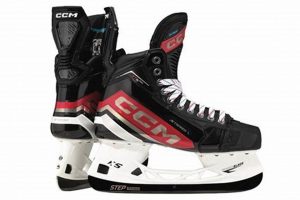
The steel blades affixed to the bottom of ice hockey skates, crucial for gliding and maneuvering on the ice surface, are essential components enabling players to execute skating techniques. These elements directly impact a skater’s speed, agility, and overall performance during gameplay. CCM, a renowned manufacturer of hockey equipment, produces these vital components to varying specifications.
The quality and design of these blades influence a player’s ability to maintain edge control, accelerate quickly, and execute precise turns. High-performance models often feature advanced steel alloys and unique profiles designed to optimize glide efficiency and enhance responsiveness. Historically, improvements in blade technology have paralleled advancements in skating techniques and the overall pace of the sport, allowing for more dynamic and skillful play.
Understanding the different types, materials, and profiles available is paramount when selecting the optimal equipment. The following will explore the features, benefits, and considerations associated with choosing the appropriate replacement or upgrade options, ensuring peak performance on the ice.
Essential Considerations for Optimal Performance
Selecting and maintaining blades is critical for maximizing skating efficiency and ensuring player safety. Proper care and informed choices contribute significantly to on-ice performance.
Tip 1: Choose the Appropriate Profile: Blade profile impacts agility and stability. A shorter profile enhances maneuverability, while a longer profile provides greater stability at higher speeds. Select a profile that complements playing style and position.
Tip 2: Inspect Regularly for Damage: Prior to each ice session, thoroughly examine blades for nicks, burrs, or excessive wear. Addressing minor damage promptly prevents further degradation and potential performance issues.
Tip 3: Hone Edges Consistently: Regular honing maintains sharp edges, which are essential for grip and control. Use appropriate honing tools and techniques to preserve the blade’s integrity.
Tip 4: Consider Steel Quality: Different steel alloys offer varying levels of hardness and edge retention. Premium steel provides superior performance and durability, but requires specialized sharpening techniques.
Tip 5: Protect Against Rust: Moisture accelerates corrosion. Always dry blades thoroughly after each use and apply a rust preventative to prolong their lifespan and maintain optimal performance.
Tip 6: Proper Installation is Key: Ensure blades are securely and correctly installed in the chassis. Improper installation can compromise stability and potentially lead to equipment failure.
Consistent attention to blade selection, maintenance, and care yields significant improvements in skating performance, enhances player confidence, and extends the lifespan of the equipment. Implementing these practices is essential for optimizing on-ice effectiveness.
The subsequent section will delve into specific maintenance procedures and troubleshooting techniques for common blade-related issues.
1. Steel Grade

Steel grade in CCM ice skate blades fundamentally dictates the blade’s performance characteristics, including edge retention, durability, and resistance to corrosion. Higher-grade steels, often containing specific alloys, exhibit increased hardness, resulting in longer intervals between sharpenings and sustained edge quality. The selection of steel grade directly influences a skater’s ability to maintain consistent grip on the ice, facilitating precise turns and powerful strides. For example, a player consistently executing sharp turns and rapid transitions would benefit from a higher-grade steel, minimizing edge degradation and maximizing responsiveness.
Conversely, lower-grade steels, while often more economical, are prone to faster edge wear and may require more frequent sharpening. This can lead to inconsistencies in performance and potentially compromise a skater’s stability. The practical implication is that choosing an appropriate steel grade directly correlates with a skater’s skill level and playing style; advanced players generally require higher-grade options to meet the demands of intense gameplay, while recreational skaters may find lower-grade steels adequate. However, even for recreational use, understanding the trade-offs between cost and performance is crucial.
Therefore, the steel grade within CCM blades is not merely a material specification but a critical factor influencing overall on-ice performance. Selecting the correct grade involves weighing the benefits of enhanced edge retention and durability against budgetary considerations and skill level. Failure to adequately consider steel grade can lead to diminished performance and increased maintenance costs, ultimately hindering a skater’s potential. Proper assessment of this key attribute ensures optimal blade performance and longevity.
2. Profile Radius

The profile radius of CCM ice skate blades significantly impacts a skater’s maneuverability, stability, and overall performance. Understanding the relationship between blade profile and skating style is crucial for selecting appropriate equipment.
- Maneuverability and Agility
A smaller profile radius, characterized by a more curved blade, enhances agility and quick turning capabilities. This curvature allows for rapid weight transfer and tighter turns, benefiting players who require exceptional maneuverability in confined spaces, such as offensive players or those specializing in quick transitions. The reduced contact area with the ice facilitates quicker directional changes, but may sacrifice some stability at higher speeds.
- Stability and Speed
Conversely, a larger profile radius, representing a straighter blade, provides increased stability and glide efficiency at higher speeds. The extended contact area with the ice distributes weight more evenly, resulting in a more stable platform for straight-line skating. This profile is advantageous for defensive players or skaters who prioritize maintaining speed and balance during long strides. However, the reduced curvature may compromise agility and the ability to execute rapid turns.
- Impact on Stride Mechanics
The profile radius also influences stride mechanics. A smaller radius often promotes shorter, quicker strides, ideal for accelerating rapidly and maintaining close control. A larger radius encourages longer, more powerful strides, optimizing speed and efficiency over greater distances. Selecting a profile that complements a skater’s natural stride length and power output can significantly improve overall skating performance and reduce fatigue.
- Customization and Personal Preference
While general guidelines exist, the optimal profile radius ultimately depends on individual skating style, player position, and personal preference. Custom profiling services allow skaters to fine-tune the blade’s curvature to match their specific needs and optimize performance characteristics. Experimentation and consultation with experienced skate technicians can help determine the ideal profile for maximizing individual skating potential.
The profile radius in CCM blades is a critical determinant of skating performance. Its impact on maneuverability, stability, stride mechanics, and the possibility of personalization highlights the importance of careful consideration when selecting or customizing equipment. Correctly matching the profile radius to individual skating style is essential for maximizing on-ice capabilities and overall enjoyment of the sport. Players must balance the trade-offs to select the profile most appropriate for their style.
3. Blade Hardness

Blade hardness, a critical material property of CCM skate runners, dictates the blade’s resistance to wear, edge retention, and overall durability. Measured using scales such as Rockwell or Vickers, blade hardness significantly influences a skater’s performance and the longevity of the equipment.
- Edge Retention and Sharpening Frequency
Higher blade hardness directly correlates with improved edge retention. Blades with greater hardness maintain a sharp edge for longer periods, reducing the frequency of necessary sharpenings. This minimizes downtime and ensures consistent performance during gameplay. For instance, professional hockey players, who demand maximum edge control for quick turns and precise movements, often prefer blades with higher hardness ratings.
- Wear Resistance and Blade Lifespan
Harder blades exhibit superior resistance to wear and tear from impacts with the ice surface, skate guards, and other environmental factors. This enhanced durability extends the overall lifespan of the skate runners, reducing the need for frequent replacements. A recreational skater, encountering varying ice conditions and less rigorous usage patterns, might still benefit from a harder blade due to its increased resistance to nicks and abrasions.
- Material Composition and Manufacturing Processes
Blade hardness is directly related to the material composition and the manufacturing processes employed. CCM utilizes different grades of steel alloys, each with specific hardness characteristics. Heat treatment and other hardening techniques further influence the final hardness rating. The choice of steel alloy and manufacturing method represents a critical design consideration, balancing hardness with other factors such as brittleness and corrosion resistance.
- Impact on Skating Performance
While higher hardness generally offers benefits, extremely hard blades may become brittle and more susceptible to chipping or cracking under extreme stress. The ideal blade hardness represents a balance between edge retention, wear resistance, and structural integrity. A skater should consider their skill level, playing style, and typical ice conditions when selecting blades with a specific hardness rating. Proper maintenance and sharpening techniques are also crucial to maximizing the performance and lifespan of any blade, regardless of its hardness.
Therefore, blade hardness is a key determinant of CCM skate runner performance and longevity. Considerations of steel alloy, edge integrity, material cost, manufacturing and maintenance should be carefully weighed to maximize the use of the CCM product.
4. Edge Sharpness
Edge sharpness on CCM skate runners is paramount for optimal on-ice performance, directly influencing a skater’s ability to control movement, execute turns, and maintain stability. The condition of the blade’s edge dictates the degree of grip achieved on the ice surface, a critical factor for both recreational and competitive skaters.
- Grip and Control
A well-sharpened edge provides the necessary grip for skaters to effectively push off and maintain directional control. The sharp edge digs into the ice, creating friction that enables powerful strides and precise maneuvering. Without adequate edge sharpness, skaters experience slippage, reduced acceleration, and difficulty in executing controlled turns, all of which compromise overall performance. For example, a hockey player attempting a quick stop or sharp turn with dull edges will likely lose control and potentially compromise their balance.
- Impact on Skating Efficiency
Edge sharpness directly influences the efficiency of each stride. Sharp edges allow for maximum power transfer from the skater’s leg to the ice, minimizing wasted energy and maximizing propulsion. Dull edges, on the other hand, require increased effort to achieve the same level of acceleration and speed, leading to fatigue and reduced skating efficiency. Competitive skaters rely on sharp edges to maintain peak performance throughout prolonged gameplay, ensuring consistent power output and minimizing energy expenditure.
- Factors Affecting Edge Sharpness
Several factors contribute to the degradation of edge sharpness on CCM skate runners. Regular contact with the ice surface, skate guards, and even the skate sharpening process itself can gradually dull the edges. The quality of the steel used in the blade also plays a role, with higher-grade steels generally retaining their sharpness for longer periods. Consistent maintenance and proper sharpening techniques are essential for preserving edge sharpness and maximizing the lifespan of the blades.
- Sharpening Techniques and Maintenance
Maintaining optimal edge sharpness requires the use of appropriate sharpening techniques and regular maintenance. Skilled skate technicians utilize specialized sharpening equipment to create a precise and consistent edge. Regular honing and deburring can help to prolong the sharpness between professional sharpenings. Proper storage and handling of the skates, including the use of skate guards, are also crucial for preventing damage to the edges and preserving their sharpness. Consistent attention to these maintenance practices ensures that CCM skate runners provide optimal performance and longevity.
In conclusion, edge sharpness is a fundamental aspect of CCM skate runner performance, directly impacting grip, control, skating efficiency, and overall safety. Understanding the factors that influence edge sharpness and implementing proper maintenance practices are essential for skaters of all levels to maximize their potential on the ice.
5. Mounting System

The mounting system is a critical, yet often overlooked, component of CCM skate runners, directly influencing performance, stability, and energy transfer. It serves as the interface between the steel blade and the skate boot, ensuring a secure and precise connection. A properly functioning system effectively transmits the skater’s power to the ice, optimizing stride efficiency and control. Conversely, a poorly designed or maintained mounting system can lead to energy loss, instability, and even potential equipment failure. CCM employs various mounting systems, each engineered to specific skate models and performance requirements. These systems typically involve rivets, screws, or composite materials designed to withstand the rigorous demands of ice hockey. A common issue arises when rivets loosen or screws become stripped, causing the blade to shift during skating, resulting in a loss of edge control and increased risk of injury. Real-world examples include players experiencing difficulty executing sharp turns or noticing a “wobble” in their stride, often attributable to a compromised mounting system. Therefore, a thorough understanding of the mounting system’s design and proper maintenance is essential for maximizing the benefits of CCM skate runners.
Furthermore, the mounting system plays a crucial role in blade alignment and adjustability. Modern systems often allow for minor adjustments to blade positioning, enabling skaters to fine-tune their balance and optimize performance based on individual skating styles and preferences. This adjustability can be particularly beneficial for addressing pronation or supination issues, providing customized support and improving overall comfort. For instance, a skater with a tendency to pronate may benefit from adjusting the blade slightly inward to compensate for the imbalance and improve edge control. Improper alignment, however, can lead to uneven blade wear and increased risk of ankle strain or injury. This emphasizes the importance of professional installation and alignment services to ensure the mounting system is correctly configured for each individual skater. The materials used in the mounting system also contribute significantly to its overall performance. Lightweight composites, for example, can reduce the overall weight of the skate, enhancing agility and reducing fatigue. However, durability and resistance to impact forces remain critical considerations in the selection of appropriate materials.
In summary, the mounting system is an indispensable element of CCM skate runners, directly impacting performance, stability, and adjustability. Its proper function is paramount for ensuring efficient energy transfer, maintaining blade alignment, and minimizing the risk of equipment failure. While often hidden from view, the mounting system plays a vital role in the overall skating experience. Ensuring the system is properly maintained, professionally installed, and aligned is critical for skaters seeking to maximize their on-ice potential and maintain equipment longevity. Challenges may arise from material degradation or improper installation, underscoring the need for regular inspection and professional servicing. Recognizing the significance of this component links to the broader theme of optimizing equipment performance through a holistic understanding of all contributing elements.
6. Corrosion Resistance
Corrosion resistance is a critical performance characteristic of CCM skate runners, impacting their longevity, structural integrity, and overall performance. The electrochemical degradation of the steel, induced by exposure to moisture and various chemicals encountered on and off the ice, presents a significant challenge. Addressing this susceptibility is essential for maintaining optimal functionality and preventing premature failure.
- Material Composition and Alloying Elements
The inherent corrosion resistance of CCM skate runners is primarily determined by the composition of the steel alloy used in their construction. Alloying elements, such as chromium, nickel, and molybdenum, are incorporated to enhance resistance to oxidation and other forms of corrosion. For example, stainless steel variants offer superior protection compared to carbon steel, but may compromise other performance characteristics like edge hardness. The precise balance of alloying elements is carefully engineered to optimize both corrosion resistance and skating performance.
- Surface Treatments and Coatings
In addition to material selection, surface treatments and coatings are employed to further enhance the corrosion resistance of CCM skate runners. These treatments can include passivation, which forms a protective oxide layer on the steel surface, and the application of specialized coatings designed to repel moisture and inhibit electrochemical reactions. Examples include titanium nitride (TiN) coatings, known for their hardness and corrosion resistance, and zinc coatings that provide sacrificial protection, corroding in place of the steel. The effectiveness of these treatments is contingent on proper application and maintenance.
- Environmental Factors and Maintenance Practices
The corrosive environment to which CCM skate runners are exposed significantly impacts their long-term durability. Factors such as humidity, exposure to road salt (during transport), and the chemical composition of ice resurfacing water contribute to accelerated corrosion. Proper maintenance practices, including thorough drying after each use, application of rust inhibitors, and regular inspection for signs of corrosion, are essential for mitigating these effects. Neglecting these practices can drastically reduce the lifespan of the runners, regardless of the inherent corrosion resistance of the materials.
- Impact on Performance and Safety
Corrosion directly affects the performance and safety of CCM skate runners. Rust and pitting on the blade surface compromise edge sharpness, reducing grip and control on the ice. Severely corroded runners may also exhibit reduced structural integrity, increasing the risk of breakage or failure during use. Such failures can lead to serious injuries. Therefore, maintaining adequate corrosion resistance is not merely a matter of extending the lifespan of the equipment, but also of ensuring the safety and performance of the skater.
The selection of materials, application of protective treatments, adherence to proper maintenance practices, and a comprehensive understanding of corrosion are critical for extending the lifespan and ensuring the performance of CCM skate runners. The interplay of these facets underscores the importance of a holistic approach to corrosion management in this specialized application. Failure to address corrosion effectively can lead to diminished performance, increased replacement costs, and potential safety hazards.
7. Blade Height

Blade height in CCM skate runners is a critical dimensional parameter directly influencing a skater’s attack angle, power transfer efficiency, and overall maneuverability on the ice. This measurement, typically taken from the bottom of the holder to the top of the blade, dictates the skater’s stance and leverage, impacting stride mechanics and agility. A taller blade height raises the skater’s center of gravity, increasing the potential for a more aggressive forward lean, often favored by offensive players seeking enhanced power and acceleration. Conversely, a shorter blade height lowers the center of gravity, improving stability and balance, potentially preferred by defensive players prioritizing stability and quick pivoting. Variations in blade height among different CCM skate runner models reflect these diverse performance requirements. For example, a power forward might select a CCM runner with a taller profile to maximize force generation during skating strides, while a defenseman might opt for a shorter profile for increased agility in defensive maneuvers.
The practical significance of understanding blade height extends to customizing skate setups to individual skating styles and physical characteristics. Adjusting blade height through different runner options or aftermarket modifications allows skaters to optimize their stance and leverage, improving overall skating efficiency and reducing fatigue. However, alterations to blade height can also impact ankle stability and increase the risk of injury if not properly implemented. A sudden increase in blade height without adequate ankle strength and conditioning may lead to instability and potential ankle sprains. Moreover, the height of the blade affects the depth of the hollow (or radius of hollow) on the blade. A taller blade necessitates a flatter hollow to maintain comparable edge bite, while a shorter blade requires a deeper hollow. This interaction between blade height and hollow depth must be considered to maintain desired turning characteristics. Maintenance becomes important here; blade height gradually diminishes as the blade is sharpened over time, altering the original skating characteristics. This necessitates periodic evaluation and potential blade replacement to preserve the intended performance profile.
In summary, blade height is an essential element of CCM skate runners, directly affecting a skater’s attack angle, power transfer, and maneuverability. Selecting the appropriate blade height requires careful consideration of individual skating style, physical characteristics, and the interplay between blade height and hollow depth. While customization offers opportunities to optimize performance, it is crucial to prioritize safety and stability through proper installation and conditioning. The gradual reduction in blade height due to sharpening necessitates ongoing evaluation and potential replacement to maintain the intended skating profile, linking blade height and CCM skate runners in practice.
Frequently Asked Questions About CCM Skate Runners
This section addresses common inquiries regarding CCM skate runners, providing factual information to aid in informed decision-making concerning selection, maintenance, and performance optimization.
Question 1: What is the expected lifespan of CCM skate runners?
The lifespan varies significantly based on usage frequency, skating style, ice conditions, and maintenance practices. Competitive skaters requiring frequent sharpening may experience a shorter lifespan compared to recreational users. Regular inspection for wear, corrosion, and damage is crucial for determining replacement needs.
Question 2: How does blade profile impact skating performance?
Blade profile affects agility, stability, and glide efficiency. A shorter profile enhances maneuverability for quick turns, while a longer profile provides greater stability at higher speeds. The optimal profile depends on individual skating style and positional requirements.
Question 3: What is the recommended sharpening frequency for CCM skate runners?
Sharpening frequency depends on factors such as steel hardness, ice quality, and skating intensity. Edges should be sharpened when a loss of grip or control is noticeable. Over-sharpening can prematurely reduce blade lifespan; professional assessment is advised.
Question 4: How should CCM skate runners be properly stored?
Runners should be thoroughly dried after each use to prevent corrosion. Skate guards are recommended to protect the edges during transport and storage. A rust inhibitor may be applied to further mitigate corrosion risk.
Question 5: What are the common signs of worn or damaged skate runners?
Signs include excessive wear, nicks, burrs, rust, and deformation of the blade. Reduced edge sharpness and difficulty maintaining control are also indicators. Compromised runners should be replaced to ensure safety and optimal performance.
Question 6: Can CCM skate runners be customized?
Blade profiling and aftermarket modifications are possible to tailor performance characteristics to individual preferences. However, alterations should be performed by qualified technicians to avoid compromising blade integrity and safety.
In summary, understanding the factors that influence the performance and longevity of CCM skate runners enables informed decisions regarding maintenance and replacement. Prioritizing proper care ensures both safety and optimal on-ice performance.
The following section will discuss troubleshooting techniques for common CCM skate runner issues.
Comprehensive Insights on CCM Skate Runners
The preceding analysis has meticulously examined diverse facets of CCM skate runners, emphasizing their crucial role in skating performance. Considerations of steel grade, blade profile, hardness, edge sharpness, mounting system, corrosion resistance, and blade height collectively determine a skater’s agility, control, and power on the ice. Each element necessitates careful evaluation to optimize equipment for individual needs and skating style.
Continued advancements in materials science and manufacturing processes will undoubtedly further refine the capabilities of CCM skate runners. Therefore, skaters and equipment technicians must remain abreast of these developments to harness the full potential of this essential component. Proper maintenance and informed selection are paramount for maximizing performance, ensuring safety, and extending the lifespan of these vital assets.